


- Latest news▼
-
10:55, October 22 LSD does more than disrupt brain rhythms: It speeds them up and increases signal complexity
-
23:27, October 21 Nine-year study links changing loneliness patterns to increased heart disease risk

-
15:23, October 21 Tea May Benefit Heart Health — but Drinking It Scalding Hot Could Be Risky

-
13:25, October 21 Why Some People Avoid Alzheimer’s Despite Carrying a High-Risk Gene

-
10:47, October 20 SciRep: Walking More Than 8,000 Steps a Day Is Linked to Better Attention

-
08:32, October 20 Nature: AI Links Brown Fat to Heart, Vascular, and Mental Health

-
18:51, October 19 Oxytocin May Make Childhood Memories More Negative in People with Relationship Anxiety

-
16:48, October 19 Polyphenols in coffee and fruit linked to lower risk of telomere shortening

-
14:50, October 19 Anesthesiology: Noise-Canceling Headphones Reduce the Risk of Nausea After Anesthesia

-
12:44, October 19 PLOS: Yogurt and Canned Beans May Help Reduce the Risk of Colorectal Cancer

-
10:39, October 19 AJOG: Birth Weight Is Linked to Later Performance in Math and Reading

-
08:41, October 19 Postoperative Monitoring Apps Reduced Hospital Readmissions by 15%

-
23:12, October 18 Noise-Canceling Headphones Reduced the Risk of Nausea After Gynecological Surgery by 32%

-
18:17, October 18 HealthDay: Strength Training After 60 Helps Strengthen Bones and Maintain Brain Health

-
12:43, October 18 Scientists Unveil Scanner That Captures Whole-Body Images in Just 60 Seconds
All materials
Rare Nerve Tumor Successfully Removed in Budapest, Restoring Patient’s Ability to Walk
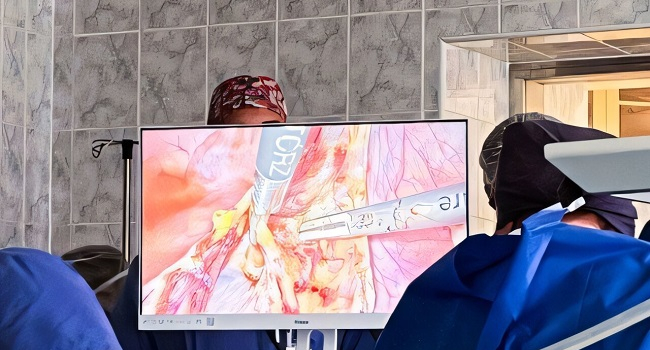
A multidisciplinary team at Semmelweis University in Budapest has successfully performed a laparoscopic removal of a rare benign nerve sheath tumor—a schwannoma (also known as a neurinoma)—from the pelvis of a young woman, according to Medical Xpress.
Following the procedure, the patient's quality of life and ability to walk independently were fully restored.
The surgery was performed on May 6, 2026, through a collaboration between the Department of Obstetrics and Gynecology and the Department of Neurosurgery and Neurointervention.
The surgical team included neuropelveology specialists, neurosurgeons, and intraoperative neuromonitoring experts, who used specialized equipment to continuously monitor nerve function throughout the operation.
According to Loránd Erőss, head of the Department of Neurosurgery and Neurointervention, the patient had a rare type of schwannoma located in the retroperitoneal space behind the uterus. Such tumors account for only 1–3% of all schwannomas and require particularly careful diagnosis because their symptoms often resemble those of spinal disorders.
“In this case, we encountered a very rare form of schwannoma—a tumor located behind the uterus in the pelvis, within the retroperitoneal space,” Erőss said.
The patient sought medical attention because of persistent pain radiating into her leg, caused by compression of nearby nerves. According to Attila Bokor, head of the Center for Endometriosis and Laparoscopic Surgery, the tumor measured approximately five centimeters and was located close to where the sacral nerve roots exit the spine.
“The patient came to us because of unbearable pain radiating into her right leg,” Bokor said.
During the approximately five-hour operation, surgeons used a 32-channel neuromonitoring system together with electrophysiological monitoring, enabling them to precisely identify critical nerve structures and minimize the risk of nerve damage. The procedure was particularly challenging because the tumor was located in an anatomically difficult area containing nerves responsible for bladder, bowel, and reproductive functions.
“This ensured a high level of safety throughout the procedure,” Bokor noted.
The medical team emphasized that the goals of the surgery extended beyond removing the tumor and relieving pain. Preserving nerve function and the patient's future reproductive potential was equally important.
The operation attracted international attention, with specialists from Slovenia, Türkiye, and Portugal observing the procedure live. The patient was discharged the following day in satisfactory condition.
Follow NEWS.am Medicine on Facebook and Twitter

- Related News
- SS: Inflammation under a baby's fingernail helped reveal a rare brain tumor The tumor was a glioblastoma, an aggressive form of brain cancer...
- Daughter’s wedding nearly caused a heart attack: doctors diagnose “happy heart syndrome” Doctors initially suspected a heart attack and performed coronary angiography...
- Acute Hepatitis B Reported in Fully Vaccinated Patient Due to Possible Vaccine-Escape Mutation The patient initially sought medical attention for symptoms resembling heartburn...
- “Just Holding On”: New Treatments Offer Hope in the Fight Against Pancreatic Cancer “That was really hard,” admits Stinson, who describes herself as an optimist. “And I decided not to accept that prognosis,” she says with a laugh...
- “Like Winning Twice”: Patient Cured of HIV After Bone Marrow Transplant for Cancer Treatment HIV is notoriously difficult to eliminate because it can hide within cells across different tissues...
- Video



- Event calendar
- Archive
- Most read
month
week
day
- Cardiologists Urge Inclusion of Physical Exercise in Heart Disease Prevention 538
- Frontiers: Poor Sleep May Increase the Risk of Breast Cancer by 30% 523
- Stem Cell Reports: Nicotine Exposure During Pregnancy Permanently Weakens Offspring’s Immune Systems 520
- Nature: Researchers Link Faster Wound Healing to Female Sex Hormones 498
- BJN: Asparagus extract helps improve sleep and reduce anxiety 455
- Science Corporation Implants Vision-Restoring Chip in First Patient With Stargardt Disease 438
- Why Some People Avoid Alzheimer’s Despite Carrying a High-Risk Gene 274
- Nine-year study links changing loneliness patterns to increased heart disease risk 271
- Tea May Benefit Heart Health — but Drinking It Scalding Hot Could Be Risky 251
- Smartphone Habits Can Detect Stress With Up to 76% Accuracy, Scientists Find 239
- LSD does more than disrupt brain rhythms: It speeds them up and increases signal complexity 204
- PLOS: Yogurt and Canned Beans May Help Reduce the Risk of Colorectal Cancer 189
- AJOG: Birth Weight Is Linked to Later Performance in Math and Reading 165
- Noise-Canceling Headphones Reduced the Risk of Nausea After Gynecological Surgery by 32% 164
- Anesthesiology: Noise-Canceling Headphones Reduce the Risk of Nausea After Anesthesia 149
- Find us on Facebook
- Poll