


- Latest news▼
-
22:46, September 3 At-Home Urine Test Could Detect Most Bladder Cancer Cases, Study Finds

-
20:38, September 3 Alcohol-Related Cancer Deaths Double in the U.S. as the Number of Such Deaths Rises Over 33 Years

-
18:29, September 3 An Unexpected Paradox: Both Very Low and Very High Testosterone Levels May Be Equally Dangerous for the Heart

-
16:11, September 3 The Independent: Aging Is the Main Risk Factor for Cancer

-
14:13, September 3 CC: Age-Related Changes in Memory May Begin as Early as 50

-
08:34, September 3 Scientists Find Who May Benefit More from Coffee in Terms of Parkinson’s Disease Risk

-
23:37, September 2 LDE: Popular Diabetes Drugs Linked to Risk of a Dangerous Complication in Certain Patients

-
19:45, September 2 European Journal of Nutrition: Some Additives in Ultra-Processed Foods May Be Linked to Depression Risk

-
17:29, September 2 Neuron: Human Brain Immune Cells Mature Hundreds of Times More Slowly Than Those in Mice

-
15:21, September 2 Frontiers in Nutrition: Sucralose and Stevia Altered the Gut Microbiome for Two Generations in Mice

-
13:13, September 2 Frontiers: Frequent Consumption of Sugary Drinks Linked to a 23% Higher Risk of ADHD in Children

-
11:12, September 2 Food & Function: Nuts May Accelerate Blood Vessel Recovery After Stroke

-
08:39, September 2 Scientists Discover Hidden Sign of Crohn’s Disease and Ulcerative Colitis Before a Flare-Up

-
22:41, September 1 Not Just APOE4: Scientists Identify 44 Genes That May Alter Alzheimer’s Risk

-
20:39, September 1 The Word “Diet” May Put Men Off: Study Suggests Easier Ways for Them to Lose Weight

All materials
Scientists Develop a Patch That Can Continuously Monitor Cholesterol Through Sweat
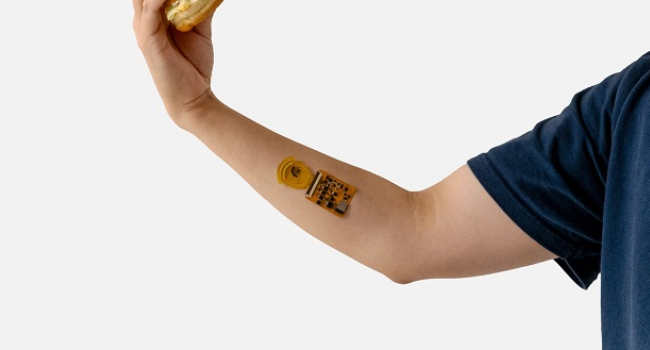
Engineers at the California Institute of Technology have developed a wearable sensor in the form of a small patch that can estimate cholesterol and triglyceride levels without a blood test. The device analyzes the composition of sweat and uses machine learning to calculate blood lipid levels.
The study was published in the journal Nature Sensors.
Unlike conventional lipid testing, which requires periodic blood samples to be analyzed in a laboratory, the new sensor could potentially provide continuous monitoring of changes in lipid levels.
The main challenge was that lipid concentrations in sweat and blood are related in a nonlinear way. To address this, the researchers used a causal machine-learning model that takes into account additional physiological factors, including body mass index, sex, and sweating rate. This allows the system to more accurately estimate blood lipid levels based on sensor readings.
The developers believe the technology could provide early warning of cardiovascular and metabolic disease risks. According to the researchers, many people do not have their cholesterol and triglyceride levels tested regularly, making continuous, noninvasive monitoring potentially particularly useful.
Developing the sensor required the researchers to overcome several challenges related to the chemical composition of sweat. A significant proportion of cholesterol in sweat is present in the form of esterified cholesterol, which cannot be measured directly. The researchers therefore developed a two-step enzymatic reaction: first, the esterified form is converted into free cholesterol, which is then oxidized to produce hydrogen peroxide that can be detected by the sensor.
To measure triglycerides, the researchers incorporated a special polymer into the patch that gradually releases ATP, a molecule required for the system to function. This allows the sensor to maintain measurements for more than 20 hours.
The device was tested on 24 participants. The authors note that the results are promising, but the technology is still at the research stage and requires further validation in larger groups of people.
Follow NEWS.am Medicine on Facebook and Twitter





- Most read
month
week
day
- An Unexpected Paradox: Both Very Low and Very High Testosterone Levels May Be Equally Dangerous for the Heart 884
- Alcohol-Related Cancer Deaths Double in the U.S. as the Number of Such Deaths Rises Over 33 Years 806
- European Journal of Nutrition: Some Additives in Ultra-Processed Foods May Be Linked to Depression Risk 794
- LDE: Popular Diabetes Drugs Linked to Risk of a Dangerous Complication in Certain Patients 790
- The Independent: Aging Is the Main Risk Factor for Cancer 784
- CC: Age-Related Changes in Memory May Begin as Early as 50 784
- Frontiers in Nutrition: Sucralose and Stevia Altered the Gut Microbiome for Two Generations in Mice 779
- At-Home Urine Test Could Detect Most Bladder Cancer Cases, Study Finds 769
- Neuron: Human Brain Immune Cells Mature Hundreds of Times More Slowly Than Those in Mice 765
- Frontiers: Frequent Consumption of Sugary Drinks Linked to a 23% Higher Risk of ADHD in Children 757
- Food & Function: Nuts May Accelerate Blood Vessel Recovery After Stroke 708
- Scientists Find Who May Benefit More from Coffee in Terms of Parkinson’s Disease Risk 657
- Scientists Discover Hidden Sign of Crohn’s Disease and Ulcerative Colitis Before a Flare-Up 349
- Find us on Facebook
- Poll