


- Latest news▼
-
20:39, August 27 ERJ Open Research: Frequent Use of Rescue Inhalers Linked to Increased Risk of Heart Disease

-
18:25, August 27 When Parents Live to 100: How Their Children Differ From Others

-
16:36, August 27 More Than Two Hours of Scrolling May Be a Warning Sign: Social Media Linked to Depression

-
14:40, August 27 Scientists Develop 3D Model of Human Brain Tissue to Study Alzheimer’s Disease
-
12:45, August 27 Study: The Amount of Nutrients Matters More Than Their Type for Intestinal Cell Turnover
-
10:44, August 27 Scientists Develop a New Model to Predict the Risk of Tooth Decay in Children

-
08:27, August 27 Calories Aren’t All the Same: Study Highlights the Benefits of the Mediterranean Diet

-
23:32, August 26 Scientists “Resurrect” 160-Million-Year-Old Proteins in Search for New Weapons Against Antibiotic-Resistant Bacteria

-
21:37, August 26 Nature Communications: “Genetic Junk” Helps Chromosomes Find Their Correct Partners
-
17:26, August 26 “Molecular Switch” Helps Breast Cancer Spread: Scientists Identify a Way to Turn It Off

-
15:39, August 26 A Hundred Years Is Not a Prescription: Scientists Explain Why a Healthy Lifestyle Does Not Guarantee a Long Life

-
13:21, August 26 Scientists Reveal How Social Isolation May Increase the Risk of Alcohol Use

-
10:45, August 26 Even Low Levels of Traffic Noise Can Diminish the Stress-Relieving Benefits of Birdsong

-
08:47, August 26 Biomolecules: Mulberries May Alter the Composition of the Gut Microbiota

-
21:42, August 25 Scientific Reports: A Daily Acetic Acid Drink May Help Relieve Constipation

All materials
Study: The Amount of Nutrients Matters More Than Their Type for Intestinal Cell Turnover
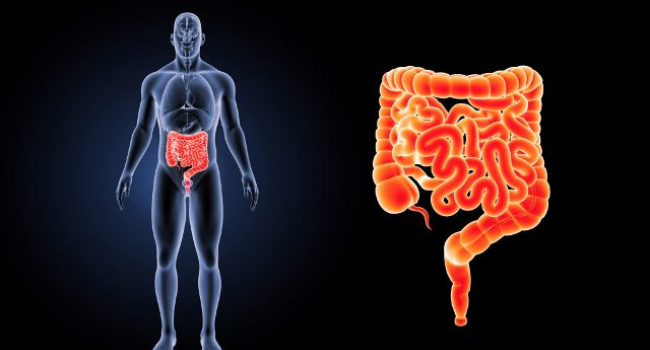
Researchers led by Sa Kan Yu of the RIKEN Center for Biosystems Dynamics Research (BDR) in Japan have found that the natural turnover of intestinal cells in fruit flies depends on how much food the insects receive rather than on any particular nutrient. The scientists discovered that more intestinal cells were replaced when nutrient levels were low and the cells’ cytoplasm was more fluid and watery.
The findings, published in Proceedings of the National Academy of Sciences, challenge the traditional understanding of nutrient biology, which holds that nutrient sensing is largely controlled by biological signaling pathways activated by specific substances.
When we consume nutrients such as carbohydrates or proteins, their molecules eventually enter our cells and trigger biological responses. For example, pancreatic cells respond to blood glucose levels by producing insulin. Amino acids found in proteins, particularly leucine, stimulate the growth of most cells, while their absence can lead to cell death through self-digestion. In both cases, biological signaling depends on the type of nutrient involved.
The cells lining the intestine are in direct contact with nutrients and are known to be replaced frequently. Yu and his team previously discovered that the rapid turnover of these cells is driven by a new type of cell death, which they named erebosis. Scientists do not yet fully understand this process, so in the new study the team set out to determine how nutrients influence erebosis.
At first, the researchers obtained results they expected. They found that erebosis increased on a low-carbohydrate, high-sugar diet. Changing the concentration of sugar in the food had no effect, whereas reducing the concentration of amino acids by 90% triggered erebosis.
This was where the results became strange and unexpected. The team initially assumed that the cells were sensing amino acids through conventional biological pathways. However, when the researchers blocked these signaling pathways, erebosis continued.
The scientists then tested each individual amino acid at the concentration found in a high-amino-acid diet that suppresses erebosis. None of the amino acids suppressed the process on its own. But when their concentrations were increased substantially, erebosis was suppressed in every case. This indicated that the effect was not linked to any particular amino acid.
The researchers then examined individual components common to all amino acids. Yet erebosis was still suppressed even when amino acid metabolism was blocked. The team concluded that metabolism itself might not be required.
“The unexpected results were disappointing. Initially, we thought amino acids affected specific biochemical processes or that their byproducts, such as ammonia, urates and uric acid, were involved,” Yu explained. “However, no matter what we changed, the results were the same. The project stalled for a year.”
If the effect was not caused by a specific amino acid or metabolite, what was responsible? The breakthrough came when the researchers focused on the amount of nutrients. They hypothesized that when cells are saturated with amino acids, the fluid inside them becomes thicker and more viscous.
“Our struggle ended when we used a non-metabolizable amino acid analog that, surprisingly, affected erebosis,” Yu said. “From this, we concluded that amino acids affect the biophysical properties of the cytoplasm. After that, everything fell into place.”
The researchers identified two biochemically different molecules that can enter fruit fly cells and make their cytoplasm more viscous while remaining metabolically inactive. Introducing these molecules into the flies produced the same result.
“Based on these findings, we introduce the concept of ‘viscosity sensing’, in which intestinal cells determine their state of nutrient abundance or starvation based on the viscosity of their cytoplasm and adjust their condition accordingly,” Yu concluded.
Yu is now investigating whether erebosis also occurs in intestinal cells of mice and humans.
Follow NEWS.am Medicine on Facebook and Twitter





- Most read
month
week
day
- High-dose vitamin D linked to better cognitive function in adults at risk of dementia 688
- Rather than eating less, burn more: Scientists identify a new approach to treating obesity 629
- COVID-19 may enhance the breathing response after awakening during sleep 616
- Three Minutes of Sprinting Trigger a Molecular Response That 90 Minutes of Moderate Exercise Do Not 615
- Scientists identify drug combination that could slow the growth of treatment-resistant prostate cancer 570
- WHO and Africa CDC Welcome Allocation of Ebola Vaccine to DRC 565
- New Experimental Treatment Burns Fat While Preserving Muscle in Obesity and Diabetes Study 496
- The Lancet: Robots place knee implants more precisely, but do not speed up recovery 482
- JAMA: Zinc reduced infections by nearly 40% in young children with sickle cell disease 479
- Two Unknown Ancestors Discovered in the Human Genome 475
- Nature Medicine: Depression May Impair the Brain’s Ability to Adapt to New Experiences 431
- Innovative Spray Developed to Treat Rhinitis Caused by Overuse of Nasal Decongestants 428
- Scientists Discover a New Property of Viruses 423
- Over 90% Accuracy: FDA Clears New Blood Test for Early Alzheimer’s Detection 422
- Late Diagnosis and Limited Access to Care Fuel Gynecologic Cancer Deaths in Low- and Middle-Income Countries 411
- Find us on Facebook
- Poll