


- Latest news▼
-
12:21, September 21 JAMA: High Salivary Cortisol Levels Are Associated With Memory Decline

-
08:45, September 21 Nature Communications: You Don’t Have to Choose One “Perfect” Diet to Slow Aging

-
21:38, September 20 Florida Records One of the Largest Dengue Outbreaks in Decades: One Person Has Died

-
17:26, September 20 PLOS Medicine: More REM Sleep Is Associated With a Lower Risk of 83 Diseases

-
12:43, September 20 PNAS: Early Deafness Changes Brain Function and Enhances Peripheral Vision

-
20:17, September 19 Vision Loss Can Cause Hallucinations: What Is Charles Bonnet Syndrome?

-
17:32, September 19 Scientists Discover How Aggressive Brain Tumors Use Nerve Cells to Grow

-
15:24, September 19 What Happens to the Body After a Cup of Coffee: Seven Unexpected Effects

-
12:46, September 19 Physical Activity Lowers the Risk of Type 2 Diabetes, Especially in People Under 63, Researchers Find

-
08:34, September 19 Study: Irregular Weekend Eating May Harm Men’s Heart Health

-
22:49, September 18 Study: Steps reduce the risk of early death, but walking speed also matters

-
20:35, September 18 Study: Light pollution during nighttime sleep negatively affects the human heart

-
18:26, September 18 Frontiers in Physiology: Chocolate aroma helped increase exercise volume

-
14:21, September 18 The Lancet: Wildfire smoke may be more harmful than pollution from urban traffic

-
12:19, September 18 NBC News: U.S. surgeons successfully separate conjoined twin girls joined at the head

All materials
PNAS: Early Deafness Changes Brain Function and Enhances Peripheral Vision
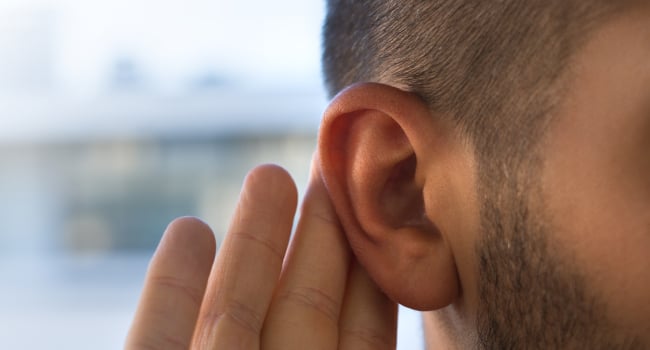
A study by researchers from the universities of Sheffield and York has shown that in people with early-onset profound hearing loss, the brain reallocates resources involved in processing visual information. As a result, peripheral vision, which allows people to detect movement and events outside the central part of the visual field, is better represented.
The researchers studied 32 adults: 16 participants with early-onset profound deafness and 16 hearing participants of approximately the same age. Using functional MRI, the scientists examined how different areas of the brain represent different parts of the visual field.
The study, published in the journal Proceedings of the National Academy of Sciences, found that a greater proportion of neural resources in deaf participants was devoted to the far periphery of the visual field. This was observed both in the primary visual cortex and in the lateral geniculate nucleus, a brain structure that transmits visual information from the retina to the cortex.
At the same time, the brain did not increase its overall capacity to process visual information. Instead, the resources were redistributed: peripheral vision received a relatively greater share of neural resources, while a smaller share was devoted to the central visual field.
According to Professor Charlotte Codina of the University of Sheffield, the findings demonstrate how strongly the brain can adapt to changes in the sensory environment. Such reorganization may help people with early-onset deafness detect movement or potential threats outside the center of their visual field more effectively.
The authors note that the study provides further insight into neuroplasticity — the brain’s ability to alter the organization and allocation of its resources in response to differences in sensory experience.
Follow NEWS.am Medicine on Facebook and Twitter

- Related News
- Vision Loss Can Cause Hallucinations: What Is Charles Bonnet Syndrome? The risk of developing the disease increases with age, particularly after 55...
- Scientists Discover How Aggressive Brain Tumors Use Nerve Cells to Grow As a result, GAA is released from the cancer cells into the surrounding tumor tissue...
- Science: Obesity Impairs Breast Fat Tissue’s Ability to Destroy Potentially Cancerous Cells The breast is largely composed of adipose tissue, and its main cells — adipocytes — differ depending on body weight...
- Scientists Discover How Immune Cells Enter the Retina During Inflammation The scientists studied the mechanism of transendothelial migration — the process by which leukocytes leave blood vessels and move into tissues in response to inflammation...
- European Heart Journal: Nighttime light exposure may alter heart structure The researchers compared people exposed at night to light levels above three lux with those who were in almost complete darkness.․․




- Most read
month
week
day
- PNAS: British Scientists Map Visual Brain Areas in Deaf People for the First Time 618
- Study: Steps reduce the risk of early death, but walking speed also matters 592
- NEJM: Atherosclerotic Plaques May Appear in the Arteries as Early as Age 18 556
- NBC News: U.S. surgeons successfully separate conjoined twin girls joined at the head 547
- Air Pollution May Increase the Risk of Suicidal Thoughts and Suicide 531
- Study: Light pollution during nighttime sleep negatively affects the human heart 528
- Daily Mail: Rare IRF8 Immunodeficiency May Increase Susceptibility to Cancer 525
- EHJ: Scientists Find That Sleeping in Complete Darkness May Benefit Heart Health 505
- Annals of Behavioral Medicine: One Partner’s Poor Sleep May Worsen the Other Partner’s Diet 487
- The Lancet: Wildfire smoke may be more harmful than pollution from urban traffic 484
- Cataract Surgery in Europe Has Become Safer: Complications Occur in Less Than 1% of Cases 472
- PM: Reading for Pleasure Linked to Better Mental Health and Lower Risk of Dementia 468
- Nutrition & Diabetes: Eight-Hour Eating Window Linked to Greater Weight Loss With Intermittent Fasting 465
- Why Do Some People Develop PTSD After a Brain Injury While Others Do Not? Scientists May Have Found a Possible Reason 451
- Frontiers in Physiology: Chocolate aroma helped increase exercise volume 450
- Find us on Facebook
- Poll