


- Latest news▼
-
15:47, September 26 Scientists develop device to obtain live cells from suspicious tissue for early cancer detection

-
13:34, September 26 Virtual forest walk and classical music accelerated blood pressure reduction in emergency patients

-
11:05, September 26 Armenian pediatric oncologist Gevorg Tamamyan has been nominated by Botswana for the position of WHO Director-General

-
10:28, September 26 Could Earth’s magnetic field affect the aging process?
-
08:26, September 26 AI from Spain improves dermatological diagnosis

-
23:24, September 25 Study: Loneliness and social isolation may cost up to six years of healthy life

-
21:25, September 25 Magnetic bacteria extend worms’ lifespan by more than 43%, study finds
-
19:03, September 25 Chronic pain after cesarean delivery can affect women for years, study finds

-
16:58, September 25 Breath test may help distinguish cancerous lung nodules from benign ones, study finds
-
14:42, September 25 Study links overcrowding in emergency departments to hundreds of deaths each week

-
12:39, September 25 Experimental RNA therapy may help prevent muscle loss during GLP-1 weight loss

-
10:36, September 25 Introduction of solid foods triggers early functional changes in the infant gut microbiome

-
08:30, September 25 Lund University receives $19.4 million NIH grant to develop Alzheimer’s blood test

-
22:21, September 24 When Visual Signals Conflict, the Brain Works to Reach a Consensus

-
20:19, September 24 Coffee Can Disrupt Deep Sleep Even Without Keeping You Awake

All materials
Virtual forest walk and classical music accelerated blood pressure reduction in emergency patients
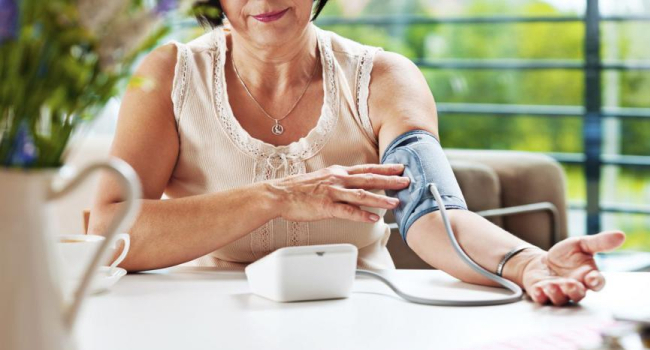
A virtual walk through a forest combined with classical music helped patients with severely elevated blood pressure lower it more quickly during the first 15 minutes of treatment. This was the finding of a randomized study presented at the European Congress of Emergency Medicine, according to the European Society for Emergency Medicine (EUSEM).
The study involved 130 adult patients who presented to an emergency department with hypertensive urgency — significantly elevated blood pressure without signs of acute organ damage. All of them received standard medical treatment.
Then, 65 patients in the intervention group put on VR headsets. They found themselves in a virtual natural landscape: a river flowed among tall trees, and a wooden suspension bridge stretched across the forest. At the same time, the patients listened to classical music through a smartphone, including works by Bach, Mozart, Debussy, Vivaldi, Tchaikovsky, Saint-Saëns, Haydn and Corelli. The other 65 participants, who made up the control group, received no additional intervention.
The researchers measured blood pressure at 15, 30, 60, 90 and 120 minutes. They assessed mean arterial pressure (MAP), a measure that reflects the average pressure of blood in the arteries throughout the cardiac cycle.
After 15 minutes, mean blood pressure had decreased in the control group.
At the same time, the VR session was accompanied by a reduction in anxiety. At the beginning of the study, however, participants in the intervention group were, on average, more anxious than those in the control group. During the observation period, the anxiety score associated with emotional reactivity decreased by about eight points in the VR group, compared with four points in the control group.
The authors suggest that the effect may be related to reduced anxiety. Strong anxiety activates the body’s stress response, which can raise blood pressure, while noise, bright lights and uncertainty in an emergency department can further increase stress.
However, the study cannot determine what exactly produced the effect — virtual reality, music or the combination of the two.
The authors emphasize that VR and music were used only as an adjunct to medication and did not replace it.
According to the researchers, the findings so far primarily suggest that this approach could be used as a simple and inexpensive way to help patients relax and slightly accelerate the reduction of blood pressure during the early stages of treatment.
Follow NEWS.am Medicine on Facebook and Twitter




- Most read
month
week
day
- Springer Nature: Scientists show that boys and girls perceive the world differently from the first hours of life 545
- Florida Records One of the Largest Dengue Outbreaks in Decades: One Person Has Died 539
- A&D: Residents of Two Amazonian Indigenous Communities Showed Unusually Low Rates of Dementia 482
- PLOS Medicine: More REM Sleep Is Associated With a Lower Risk of 83 Diseases 469
- GLP-1 Drugs Linked to Nutritional Deficiencies in Nearly 1 in 6 Children 464
- Lund University receives $19.4 million NIH grant to develop Alzheimer’s blood test 457
- Stopping GLP-1 drugs may quickly reduce their heart-protective benefits 451
- After 30 Years of Research, First Drug Developed for Rare Progressive Brain Disease 451
- JAMA: High Salivary Cortisol Levels Are Associated With Memory Decline 445
- F&F: Green oat extract may protect eyes from dryness caused by sleep deprivation 443
- Flu Vaccination Has Started in Armenia: Foreign Nationals Can Also Get Vaccinated Free of Charge 435
- NEG: 71% of People with Pulmonary Nodules Are Non-Smokers 434
- Rare Pregnancy Infections Linked to Higher Risk of Autism 430
- BMJ: Brisk Walking and Jogging Most Effective for Strengthening Bones 429
- Introduction of solid foods triggers early functional changes in the infant gut microbiome 416
- Find us on Facebook
- Poll