
 make preferable
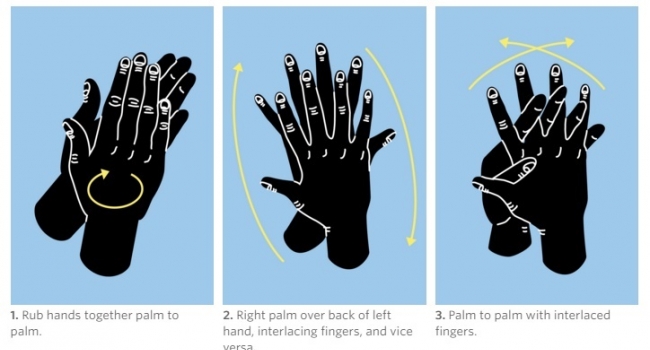
The world’s two leading public-health bodies list different instructions on their websites for getting your hands clean. A new study found that the six-step hand-hygiene technique recommended by the World Health Organization (WHO) killed greater numbers of germs than the more general, three-step instructions of the U.S. Centers for Disease Control and Prevention.
Still, the outcome of the throw-down isn’t clean-cut. The CDC says its hand-cleaning method isn’t different from that of the WHO, it is just less specific. “We’re on the same page here. We just do not get into that kind of detail in our guideline,” says Clifford McDonald, a CDC medical epidemiologist.
The study—published online last week in the journal Infection Control & Hospital Epidemiology—looked specifically at the use of alcohol-based hand rub, or sanitizer, by doctors and nurses in a hospital. The technique is similar to hand washing with soap and water. But hand sanitizer is often used in hospitals and other health-care settings to prevent the transmission of infections because it is faster.
The WHO method includes interlacing the fingers and rubbing palm to palm, and focusing on the backs of the fingers. It also involves rubbing the thumb creases and pressing the fingertips into the palms.
“It’s quite a complex maneuver, I describe it as a ballet dance,” says Jacqui Reilly, a professor of infection prevention at Glasgow Caledonian University in Scotland and lead author of the study.
In the randomized controlled trial of 120 doctors and nurses, the researchers found that many fewer bacteria remained on the hands of those who used the WHO method compared with others following the more general CDC instructions.
The result was a surprise. “Our theory at the start was, ‘Do we really need to make hand hygiene so complicated?” says Dr. Reilly. The answer is yes, they found out. “The six-step method in our study was demonstrated to be superior,” she says.
The researchers also measured hand-cleaning compliance rates and the amount of time each method took. The six-step method took on average 42.5 seconds to complete, versus 35 seconds for the more general, three-step instructions. Only 65% of the study participants who were instructed to use the six-step method did it properly, even though they were observed and had instructions in front of them. By contrast, compliance for those using the three-step method was 100%.
Still, more bacteria were killed using the six-step method, even when it wasn’t done properly, says Dr. Reilly. This may be because the three-step technique often missed bacteria that were on the back of the index and middle fingers of the right hand, she says. The researchers used an ultraviolet light box to measure how well the sanitizer was distributed across the hands.
Hand-cleaning in a hospital setting is a major public-health issue because of the potential to spread infections. Studies have found that only 40% to 50% of most hospital workers wash their hands when they are supposed to.
The WHO’s six-step method was created in 2009 for health-care settings, but more than 50 countries, and some U.S. states, have used it in national hand-hygiene campaigns, saysBenedetta Allegranzi, acting coordinator of the WHO’s infection, prevention, and control global unit in Geneva. “If you go to museums in Canada you find the posters in the toilet,” she says, as an example.
Dr. Allegranzi says the WHO technique aims to make sure the parts of the hand that potentially could infect a patient easily, such as the palms, fingers and fingertips, are thoroughly cleaned.
“There are spaces between the nails and skin which can harbor germs more easily,” she says. “The WHO technique is meant to cover all surfaces and all spaces.” Dr. Allegranzi says the organization hasn’t received major concerns about the number of steps and time it takes to follow the hand-cleaning method.






