
 make preferable
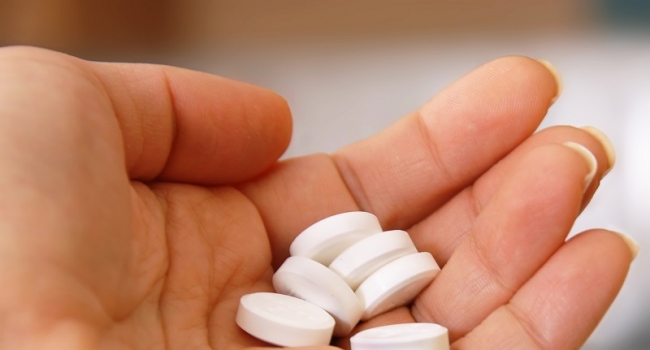
Taking aspirin every day can slash the risk of bowel cancer in obese people.
{"uid":1,"hostPeerName":"http://www.tv3.ie","initialGeometry":"{\"windowCoords_t\":0,\"windowCoords_r\":1366,\"windowCoords_b\":728,\"windowCoords_l\":0,\"frameCoords_t\":1642,\"frameCoords_r\":772.5,\"frameCoords_b\":1892,\"frameCoords_l\":522.5,\"styleZIndex\":\"auto\",\"allowedExpansion_t\":0,\"allowedExpansion_r\":0,\"allowedExpansion_b\":0,\"allowedExpansion_l\":0,\"xInView\":0,\"yInView\":0}","permissions":"{\"expandByOverlay\":false,\"expandByPush\":false,\"readCookie\":false,\"writeCookie\":false}","metadata":"{\"shared\":{\"sf_ver\":\"1-0-4\",\"ck_on\":1,\"flash_ver\":\"22.0.0\"}}","reportCreativeGeometry":false,"isDifferentSourceWindow":false}" scrolling="no" marginwidth="0" marginheight="0" width="250" height="250" data-is-safeframe="true" style="box-sizing: border-box;outline: none;border-bottom-width: 0px;border-left-width:0px;border-right-width:0px;border-top-width:0px; margin-bottom:0px;margin-left:0px;margin-right:0px;margin-top:0px;padding-bottom: 0px;padding-left:0px;padding-right:0px;padding-top:0px;vertical-align:bottom"> The results of a 10-year study found the pain medication has dramatic results on the cancer form in both men and women, with the findings published in the Journal of Clinical Oncology. Scientists from Britain's Newcastle and Leeds Universities looked at a group of 1,000 men and women with Lynch syndrome, an inherited disorder that increases the risk of many types of cancer. The group was split into two, with the first taking two aspirin everyday and the rest swallowing dummy medication. Over the course of the study 55 developed bowel cancer, with data showing the more overweight they were, the higher chance they had of getting cancer. It was found that those who were obese were almost three times as likely to have bowel cancer than those who are slimmer. Taking the aspirin reduced the risk though. Researchers concluded that the medication is likely to benefit those who were overweight but not obese. "Lots of people struggle with their weight and this suggests the extra cancer risk can be cancelled by taking an aspirin," said researcher John Burn, a professor of clinical genetics at Newcastle University. There are multiple cancers that pose an increased risk because of obesity and being overweight, including bowel. As the numbers of overweight people across the globe grows, so does the threat of cancer. While the aspirin finding is an important one, professor Burn stresses that people's aim should be to avoid becoming overweight in the first place. As well as increasing with weight, the chance of developing cancer also goes up with age. "If you are overweight and over 50, it's worth thinking about," the medical professional explained. "If you have a family history of cancer as well, you should certainly think about it." He adds that people shouldn't self-prescribe, and always talk to their doctor first.





