
 make preferable
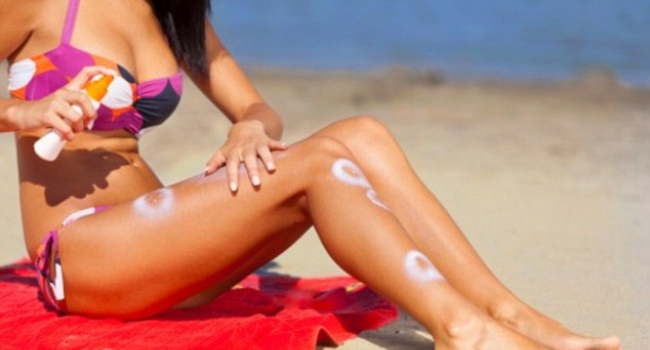
Sunscreen may not prevent skin cancer, a new study warns. It means it could be unethical to test the effectiveness of sunscreen on randomly-assigned people in clinical trials.
The findings should not change health guidelines and we should still wear sunscreen, the researchers at Colombia's Instituto de Evaluacion Technoloica said.
But scientists should be more cautious about how they survey the products.
Black people are more likely to die from the most deadly type of skin cancer, scientists claim.
Although white people have a higher chance of developing skin cancer, patients with skin of colour are less likely to survive.
Patients of African-American descent were more likely to be diagnosed with melanoma once it had spread - making it harder to treat, researchers found.
But experts said this didn't explain their findings, as they also had the worst survival rates for every stage of the disease.
Melanoma - the deadliest form of skin cancer - can appear anywhere on the body. It often spreads to other organs in the body, making it more deadly.
Study author Dr Jeremy Bordeaux, from the Case Western Reserve University, Cleveland, said: 'Everyone is at risk for skin cancer, regardless of race.
'Patients with skin of colour may believe they aren't at risk, but that is not the case and when they do get skin cancer, it may be especially deadly.'
'Lack of high quality experimental evidence should not be equated with evidence that such interventions are ineffective,' lead authors Dr Ingrid Arevalo-Rodriguez and Dr Guillermo Sanchez said.
'It is important that patients and consumers do not stop protecting their skin until better quality evidence emerges.'
Dr Laura Ferris, a dermatologist at the University of Pittsburgh who wasn't involved in the research review, pointed out that it's difficult to measure the effect of sun protection on the prevention of skin cancer, 'particularly because it is not ethical or practical to randomize the population.'
'One could not, for example, tell one group to seek shade, wear a hat, and use sunscreen and another to sit in the direct sun and abstain from use of sunscreen,' Ferris added.
'So lack of evidence does not mean that sun protection has no impact on the risk of skin cancer, just that the impact is difficult to measure.'
In a review published by the Cochrane Library, Arevalo-Rodriguez and Sanchez and colleagues set out to assess how much we already know about whether sunscreen and other protective measures, such as wearing hats or sunglasses or staying in the shade, prevent skin cancer.
They focused on what's known as basal cell and cutaneous squamous cell carcinomas, which make up the majority of skin cancer cases.
Their analysis didn't look at melanoma, a rare and much more deadly type of skin cancer.
The research team only wanted to look at trials that randomly assigned some people to use sunscreen or other protection - and they found just one study that met their criteria.
This study, done in Australia, monitored about 1,600 people for more than four years and didn't find a meaningful difference in the number of new cancer cases detected based on whether people used sunscreen every day or only occasionally.
That might not be long enough to follow patients to see if sunscreen prevents skin cancer because it can take several years after sun exposure to detect abnormalities on the skin.
What this does suggest is that more high-quality research is needed, the authors said.
In the meantime, 'Patients and consumers in general need to consult health professionals to obtain specific advice about the need of specific preventive measures, according with their age, skin color, occupation and presence of other risk factors for skin cancer, among other factors,' they added.
Even without more studies, there's already plenty of proof that exposure to ultraviolet rays from the sun causes skin cancer and melanoma, noted Dr David Leffell, a skin cancer researcher at Yale School of Medicine who wasn't involved in the research review.
'The scientific facts are inescapable—regular use of sun protection reduces skin cancer and cancer precursors,' Leffell said by email.
'The benefits of sun protection and the incontrovertible evidence of sunburn and chronic sun exposure as a cause of about 60 per cent of melanomas should inspire people to continue reasonable sun protection if they fit into the moderate to high risk groups, and even if they don't,' Leffell added.





