make preferable
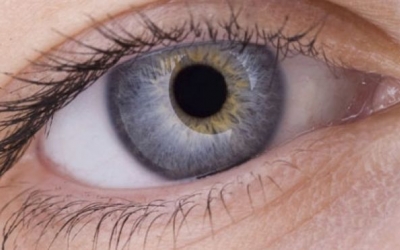
LASIK technology improvements over the last decade have shown better outcomes for the vision-correcting surgery.
“People say we’re delivering ‘high-definition’ vision today, compared to standard definition we were years ago,” Dr. Kerry Solomon, director of the Carolina Eyecare Research Institute in Charleston, SC, told FoxNews.com. “We’re more automated and more accurate with what we do.”
According to Solomon, a member of the executive committee of the American Society of Cataract and Refractive Surgery, most LASIK surgery practices have a 90 to 98 percent success rate of achieving 20/20 vision in patients — compared to just 65 percent when the procedure was first FDA-approved in the 1990s.
LASIK, laser-assisted in situ keratomileusis, is a surgical procedure that utilizes a laser to permanently change the shape of the cornea to correct vision. Nearsightedness and farsightedness are both caused by distortions in the cornea. During the procedure, a flap is created in the cornea so that a computer-controlled excimer laser can vaporize a portion of the stroma, which is located in the middle of the cornea. The flap is then closed again, correcting the curvature of the cornea, and improving vision.
In the mid-1990s, surgeons used a surgical blade to create a flap in the cornea. But now, the majority of ophthalmic surgeons use a femtosecond laser.
Side effects related to LASIK have also improved over the years.
“The improved accuracy and precision with the [femtosecond] laser has allowed us to create thinner flaps… which have been shown to be beneficial at reducing one side effect of LASIK— dry eye,” Solomon said.
Dry eye and night vision symptoms, which can include seeing starbursts, streamers and halos, are the most common side effects of LASIK surgery. In the past, decreased vision was a common complication, but is rare today, Solomon said.
LASIK patients should still visit an ophthalmologist or optometrist for annual exams.