make preferable
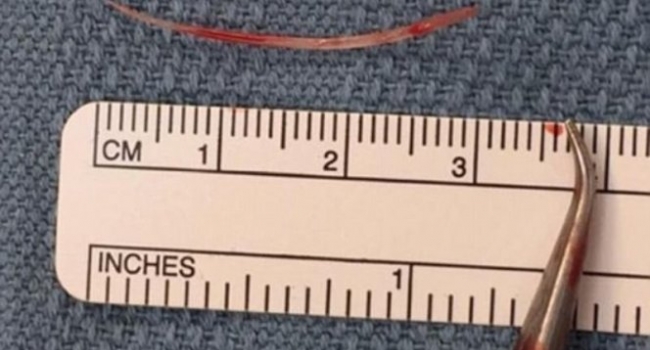
A woman is lucky to be alive after a three centimetre fish bone she accidentally swallowed pierced her throat and narrowly missed an artery.
The 71-year-old from North Carolina in US went to the emergency department after eight days of pain in her throat.
She told doctors she had been eating fish when she first realised her throat was hurting.
A physical exam found no swelling or sign for the pain and she was able to fully move her neck.
The woman showed no obvious signs of infection and X-ray showed no cause for the pain, but a CT scan revealed a curved object had pierced through her oesophagus and right side of her thyroid.
It was just millimetres from her carotid artery, according to the BMJ case report.
Doctors were unable to see the fish bone when they explored her throat and oesophagus, which they believe was down to the amount of tissue in the neck and the position of the bone.
They were forced to perform exploratory surgery to remove the three centimetre bone.
Following the surgery the woman's symptoms disappeared.
She was put on a three day course of antibiotics through an IV then given a prescription for oral antibiotics and discharged.
Apart from that she had to eat soft food until her throat had healed.
"Our patient had gone over one week with an ingested foreign body that migrated through the wall of her oesophagus to lodge in the soft tissues of the neck," her doctors wrote in the report.
"Furthermore, despite relatively precise CT localisation of the foreign body, the authors had difficulty finding the bone and only did so after skeletonising [peeling back the soft tissue] a vital nervous structure in the neck."
Swallowing fish bones is not an uncommon injury, but they don't always cause quite as much damage.
"The most common locations for fish bones to become lodged are the palatine tonsils, followed by base of tongue, vallecula and pyriform sinuses," the report noted.
"Many of these cases can be managed with direct or endoscopic visualisation with subsequent removal of foreign body.
"Oesophageal foreign bodies are relatively rare, and foreign bodies that migrate through the oesophageal wall and lodge in the soft tissues of the neck occur very infrequently."