
 make preferable
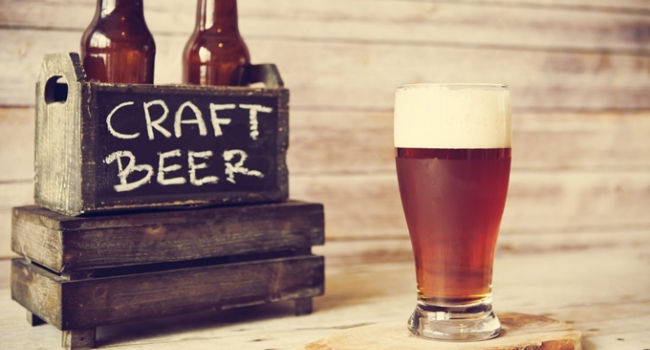
If you're a fan of craft beer with a strong, hoppy flavor, heed the science that says to store your beer in a cool place and drink it within three months or so, lest it lose that rich aroma. That's one of the key takeaways from a new study by German scientists published in the journal Brewing Science.
All beer contains hops, a key flavoring agent that also imparts useful antimicrobial properties with its rich aroma. (Without them, beer spoils quickly.) To make beer, brewers mash and steep grain in hot water, which converts all that starch into sugars. This is traditionally the stage where hops are added to the liquid extract (wort) and boiled to give the beer that hint of bitterness. That turns some of the resins (alpha acids) in the hops into iso-alpha acids, producing a bitter taste. Yeast is then added to trigger fermentation, turning the sugars into alcohol.
Add too many hops, however, and the beer will be so bitter as to be undrinkable. So in recent years, many craft brewers have started using dry-hopping as a way to put more hops in beer without getting excessive bitterness. Hops are added during or after the fermentation stage, after the wort has cooled. There is no isomerization of the alpha acids, so you get all that aromatic hoppy flavor without too much bitterness. Brewers can use as much as 20 times the usual amount of hops if they're dry-hopping. (Just beware of "hop creep," which can cause such bottled beers to explode.)
"However, the aroma of dry-hopped beers is not very stable, thus clearly limiting their shelf life," the authors write. German brewers typically employ late hopping, where one portion of hops is added at the start of the boil for bitterness, and another portion is added toward the end of the boil for aroma.
But German taste in beer is changing. "Twenty years ago, German beer drinkers wanted the traditional hops flavor they were used to," said co-author Martin Steinhaus of the Technical University of Munich in Germany, whose PhD thesis focused on hop aroma. Then beer consumption started to decline in Germany and brewers started looking for ways to incorporate other flavors to appeal to younger beer drinkers.
This is challenging because German brewers are subject to Purity Law, meaning they can't use anything in their beers except malt, hops, water, and yeast. Thus, "In order to create unique beers with a special character but without any additional ingredients, you need extensive knowledge," said co-author Klaas Reglitz. "For example, you need to know which odor active compounds are present in the different hop varieties, how high their content is, how they affect beer aroma, and how they change during the brewing process and storage."
Steinhaus and Reglitz have been collaborating with the hops industry to screen new varieties, particularly those from the US, to identify key differences. For instance, the hoppy flavor of those late-hopped beers is largely due to a compound called (3R)-linalool, which imparts citrus and floral notes. Other common aromatic compounds include myrcene (which smells like geraniums) and rose-scented geraniol. By far the most potent odorant in hops goes by the complicated moniker 4-mercapto-4-methylpentan-2-one (4MMP for short); it's what gives certain craft beers that distinctive black currant berry aroma.
4MMP is so potent that just a few nanograms per liter can significantly affect beer aroma. An earlier study by Steinhaus and Reglitz showed that American-grown hops contain especially large quantities of 4MMP (such as the Citra, Eureka, Simcoe, and Apollo hop varieties). For this latest study, the scientists were interested in measuring how levels of 4MMP changed over time during beer storage. They developed an especially sensitive technique for doing so. "The compound is highly susceptible to oxidation, so we needed a very gentle workshop procedure," said Steinhaus.
They used a standard Pilsner beer as the base beer for the study, brewed with hops added at the beginning of the boil, "so it would not transport any hop aroma compounds into the final beer, because they would have evaporated during the boiling process," said Steinhaus. They then compared levels of 4MMP in that baseline beer to filtered and unfiltered dry-hopped craft beers stored over the course of six months, at both 5°C and 20°C.
Source: arstechnica.com





