make preferable
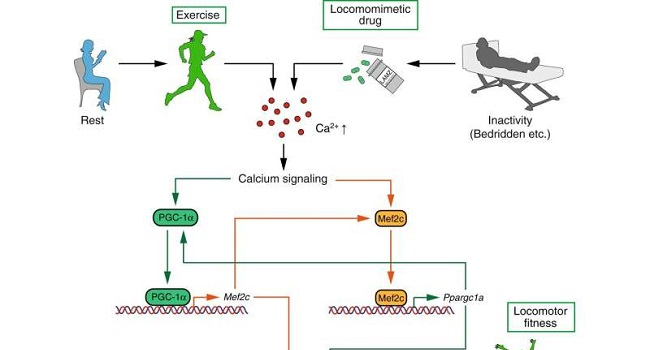
People who are unable to engage in physical activity experience weakened muscles and bones, a condition known as musculoskeletal weakness. Researchers in Japan recently discovered a new drug that may help treat musculoskeletal weakness by causing an effect similar to exercise. Lack of physical activity can lead to weakened muscles (known as sarcopenia) and bones (known as osteoporosis). Exercise corrects these deficiencies by increasing muscle strength and promoting bone formation while inhibiting bone resorption. However, physical therapy cannot be used in all clinical cases. Drug therapy may help treat sarcopenia and osteoporosis, especially if patients have cerebrovascular disease, dementia, or are already bedridden. In a new study, the results of which were published in the journal Bone Research, scientists at Tokyo Medical and Dental University developed a new drug screening system to detect a compound that mimics the changes in muscle and bone that occur as a result of exercise. Using the screening system, the researchers identified an aminoindazole derivative, lokamidazole (LAMZ). LAMZ was able to stimulate the growth of muscle cells and bone-forming cells (osteoblasts) while inhibiting the growth of bone-destroying cells (osteoclasts). Overall, the results of the study indicate that LAMZ represents a potential therapeutic method for the treatment of musculoskeletal weakness by simulating exercise.