make preferable
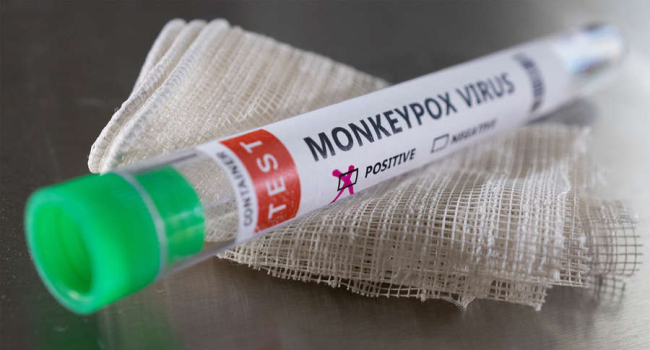
Scientists in India have adapted the CRISPR/Cas12 genomic editor to create a rapid test for monkeypox virus that can detect infection with nearly 100% accuracy within a few tens of minutes of biomaterial collection. The first experiments are described in a preprint on medRxiv.
A year ago, biologists from the United States adapted the CRISPR/Cas12 genomic editor to search for traces of different strains of coronavirus in patient saliva samples. Their Indian colleagues at the Homi Baba Atomic Research Center in Trombay, led by Devashish Rata, used this variation of the DNA editor to create a rapid test for traces of MPXV virus particles that cause monkey pox in biosamples.
For their work, the researchers studied and compared among themselves the structure of polA, a key gene in smallpox viruses that is responsible for preparing new copies of the DNA of these pathogens. As a result, the researchers were able to identify a small region in this gene that is unique to MPXV and has a different structure in the genome of other members of the genus Orthopoxvirus.
The researchers then modified the RNA and protein components of the CRISPR/Cas12 genomic editor in such a way that they began to bind to this portion of the polA gene and produce luminous molecules. Biologists tested the work of this system on solutions containing a mixture of MPXV particles as well as several other smallpox viruses.
These experiments showed that the modified version of CRISPR/Cas12 very quickly fixed traces of the virus in the samples, even when they contained several dozen complete copies or fragments of the MPXV genome. This also occurred when particles of avian smallpox viruses and other members of the Orthopoxvirus genus were added to the solution, making this system particularly promising for detecting monkeypox carriers in regions where several varieties of these pathogens are distributed.