make preferable
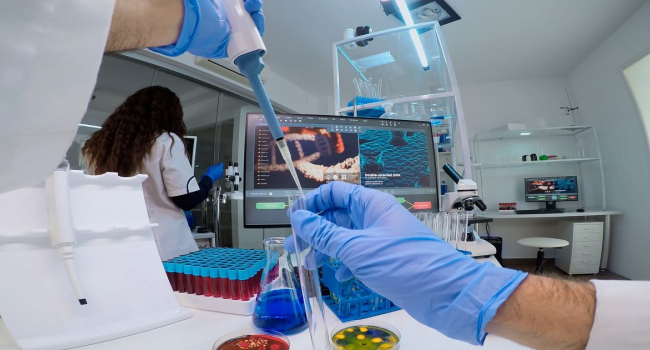
The discovery of antiviral compounds, which in the future could become the basis for the development of new drugs against herpes, dengue, and human influenza A and B viruses, is the goal of a new scientific project currently being carried out by scientists at the Laboratory of Antiviral Drug Discovery of the Institute of Molecular Biology of Armenia.
The head of this lab, leading researcher Hovakim Zakaryan told NEWS.am Medicine that the project called "Discovery of new antiviral compounds by combining in silico and in vitro methods" is implemented within the framework of the "Support for strengthening scientific groups or laboratories (departments)" of the Higher Education and Science Committee" the grant program. The funding of this 5-year project is 175 million drams.
A part of this grant, as Zakaryan noted, will be directed to the repair and re-equipment of the new lab with an area of 190 square meters, so that conditions meeting all standards are created there for working with RNA and DNA viruses.
Why is this relevant?
Seasonal flu outbreaks occur several times a year. About 1 billion people get the flu every year; of these, 3-5 million suffer a severe case of this illness. Moreover, every year between 290,000 and 650,000 people die from respiratory diseases caused by the influenza virus.
To date, 4 types of seasonal influenza viruses (A, B, C and D) are known, but according to the World Health Organization, type A viruses are the most common cause of epidemics.
The herpes simplex virus is also very common all over the world, including in Armenia; in most cases it manifests as a rash on the patient's mucous membrane. However, this virus can be a serious problem for people with immunodeficiency. There are already effective drugs against this virus, but Armenian scientists hope to find cellular "targets" that, by suppressing, will be able to influence the virus itself.
As for the dengue virus, it is currently absent in Armenia. The virus is transmitted through the bites of mosquitoes of the genus Aedes, which are mainly found in South and Southeast Asia, Africa, Oceania, and the Caribbean. However, as a result of our planet's climate change, these mosquitoes began to "conquer" more and more new habitats. Recently, cases of this infection have been recorded in some European countries, and this virus could "come" to Armenia as well.
Search for antiviral compounds
As Hovakim Zakaryan said, the aforesaid scientific work will consist of two phases. During the first one, it is planned to find chemical compounds that can affect the parts of the viral protein responsible for the functional activity of this virus. They will search for such substances in a huge database of chemical compounds, using both methods developed by Armenian specialists and already known.
First, the materials in the database are checked automatically. The identified substances that interact with the desired part of the viral protein are then put into more complex simulations called “molecular dynamics modeling.” As a result, from a database containing, say, a million substances, one can choose, for example, about 100 that will interact with the target part of the viral protein.
The compounds discovered in the second phase are already being studied and tested in the lab on appropriate cell models and viruses.
"I believe that as a result of five years of work, we can obtain such results that will be interesting both from the point of view of publication in scientific journals and their further practical study," Zakaryan noted.
Antiviral compounds are not yet medical drugs
The antiviral compounds that Armenian specialists hope to find during this research are not yet medicines; so far, they are only compounds that interact with some parts of the viral protein.
These substances certainly have the potential to become medical drugs, but they have a long way to go for that. As Zakaryan noted, the development of new medicines is a long and complex process consisting of many phases. Finding chemical compounds with the desired activity is only the first of these steps. In order for these substances to serve as a basis for new medical drugs, they will have to be studied for their toxicological and metabolic properties, to check their absorption, solubility, etc. Only substances that successfully pass all of these studies, as well as animal testing, become potential “candidates” for clinical trials.