
 make preferable
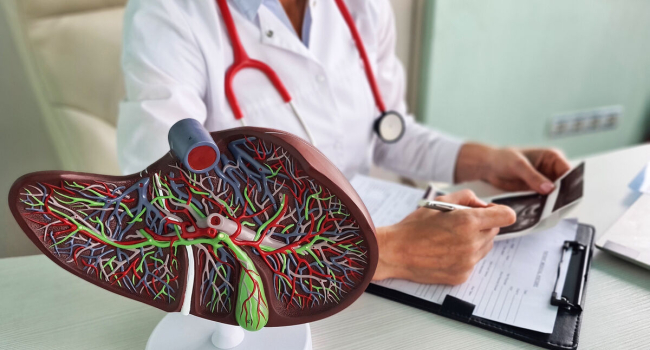
Researchers at University College London may have found a cure for hyperammonemia, a disease in which ammonia builds up in the liver and damages its cells. The findings of the study were published in the scientific journal Science Advances.
Hyperammonemia is a dangerous diagnosis when ammonia does not leave the body due to impaired liver function—and this can lead to damage to the brain, liver, and other organs.
Of the 100 million people in the world with cirrhosis (scarring of the liver), about three million are hospitalized with an episode of confusion or coma that is associated with elevated ammonia levels in blood and brain tissues, with 10-15% of these expected to die within three months of the episode.
Until now, there was no effective treatment for hyperammonemia.
As experiments on mice have shown, ammonia increases the levels of proteins RIPK1 and RIPK3, which damage mitochondria (the energy centers of cells). The substance increased activity in the TLR4 signaling pathway, which is associated with inflammation and cell death. In addition, ammonia causes liver hardening, worsening the disease.
The aforesaid research team has created a drug called YAQ-005, which blocks the TLR4 pathway, preventing damage to mitochondria. Researchers believe that this drug may also be effective for children with urea-cycle disorders and other genetic diseases that lead to increased levels of ammonia by causing mitochondrial dysfunction (hepatic mitochondriopathies).
A phase II clinical trial for YAQ-005 is due to begin recruiting patients with liver failure in mid-2025, which will provide the first proof of concept for this treatment in human patients.
If the drug is proven effective, it would be a breakthrough in the treatment of liver diseases associated with hyperammonemia.





