
 make preferable
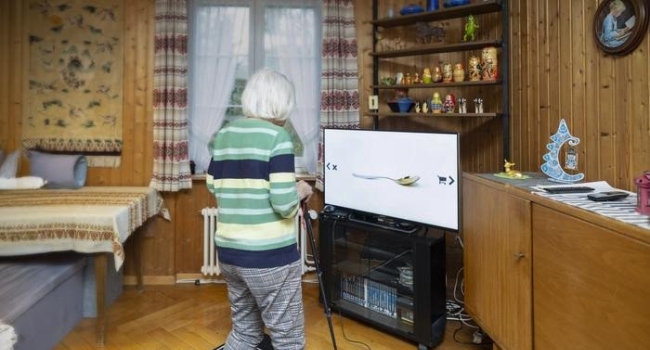
Scientists from Switzerland have shown that special fitness games combining physical activity and cognitive tasks can slow down the development of dementia in its early stages. The study was published in the journal Alzheimer's. About 40 people with an average age of 73 took part in the experiments. For 12 weeks, they trained at home for 25 minutes five times a week, performing exercises on a special panel with a screen. The games required them to move and solve tasks related to memory, attention, and spatial perception at the same time. After training, the participants performed breathing exercises to stimulate the vagus nerve and further activate the cognitive centers of the brain.
The results were impressive. Participants showed a noticeable improvement in memory and cognitive functions, which was also reflected in their daily lives: it became easier for them to cope with shopping, communication, and stressful situations. In the control group, where people continued their usual therapy, on the contrary, their condition worsened — which is consistent with the typical course of the disease.
It was particularly important that changes were also observed at the brain level. Magnetic resonance imaging showed an increase in the volume of the hippocampus and thalamus—areas responsible for memory—as well as improvements in the anterior cingulate and prefrontal cortex. In the control group, on the contrary, the volume of these structures decreased. Scientists note that a decrease in the hippocampus is considered one of the early signs of dementia, so an increase in its volume after just three months of training is convincing evidence of brain plasticity even in older people.
“Our results give us confidence in the future,” said Professor Eling de Bruin, project leader. “However, to prove that personalized gaming training can not only slow down but also prevent the development of dementia, more extensive and longer-term studies are needed.”





