make preferable
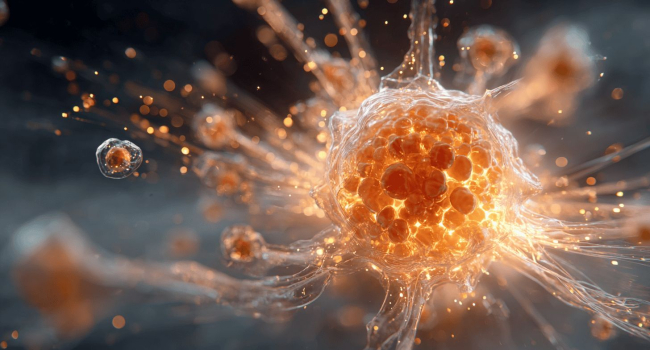
The EPS3.9 exopolysaccharide isolated from the marine bacterium Spongiibacter nanhainus is able to cause cancer cells to self-destruct, scientists from the Chinese Academy of Sciences have concluded. Their respective research findings were published in The FASEB Journal.
The EPS3.9 molecule consists of mannose and glucose. Laboratory experiments have shown that the exopolysaccharide can trigger the process of pyroptosis in tumor cells, and this is an inflammatory form of programmed death. This mechanism differs from classical apoptosis, as it is more aggressive, accompanied by the breakdown of the cell membrane and the release of signals that attract the immune system.
Scientists have found that EPS3.9 directly affects the lipid molecules of the cell membrane. This triggers a chain reaction, and as a result, the cell becomes inflamed and destroyed from the inside. A similar effect was recorded on human cell cultures in a leukemia modeling. In laboratory mice with liver cancer, EPS3.9 not only slowed down the growth of the tumor, but also intensified the immune response against it.
According to Dr. Chaomin Sun of the Chinese Academy of Sciences, this discovery highlights the importance of exploring marine microbial resources as a source of new drugs. The study opens up prospects for the creation of drugs based on the intensification of pyroptosis, and this could become an alternative to traditional chemotherapy. Such an approach is distinguished by greater selectivity and may be less toxic to healthy tissues.
In addition, the intensification of the immune system multiplies the possibilities of combining EPS3.9 with existing methods of immunotherapy.
The scientists emphasize, however, that the results obtained in animals do not always fully coincide with the response of the human body. Large-scale clinical trials will be needed to confirm the effectiveness and safety of EPS3.9 in humans.