
 make preferable
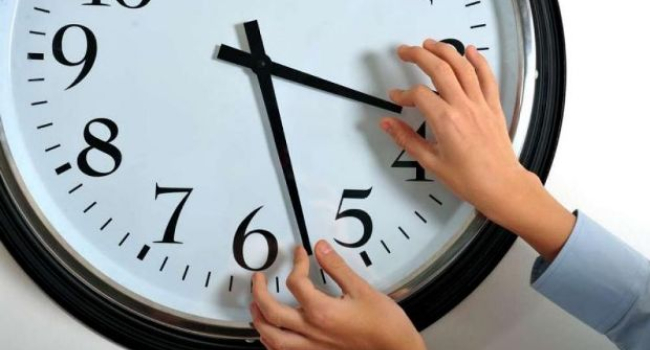
Every year when the clocks are turned back in October, many people welcome the prospect of an “extra hour” of sleep. But how much does this time shift actually affect our bodies, our rest, and our mood?
According to experts, the autumn switch is far gentler than the spring one — but not entirely harmless. The change disrupts our circadian rhythm, the 24-hour natural mechanism that regulates sleep, concentration, hormone production and emotional well-being.
Time changes affect our internal body clock. “Every cell in the body has a circadian clock, but there is also a ‘master clock’: a group of neurons in the brain that automatically tracks light — sunrise, sunset and darkness — based on signals coming from the eyes,” Timo Partonen, Associate Professor of Psychiatry at the University of Helsinki, told Euronews Health.
“How well this clock functions determines how well we sleep and how we feel. That’s why it matters so much,” he added.
This practice — moving clocks forward by one hour in spring and back in autumn — is used to extend evening daylight. Most of Europe, North America, and parts of Africa and Asia still follow this system.
This year, the clocks will go back by one hour on Sunday, October 26.
Despite the extra hour of sleep, some people experience discomfort and inconvenience during this sudden transition.
“Overall, despite complaints about darker evenings, the autumn change is usually perceived as far less disruptive,” Malcolm von Schantz, a chronobiologist at Northumbria University, told Euronews Health.
“Those who dislike it mainly complain that it suddenly gets dark just as they finish work. But there are two points here. First, this simply reflects where we live — there isn’t enough daylight at this time of year for it to be bright both in the morning and the evening. That’s geography, not the clock change,” he explained.
“Second — and this is less intuitive — biologically and physiologically, morning light is far more important to us,” he added.
Partonen agreed, noting that “the autumn switch is easier to adapt to because it gives us an additional hour. The master clock can adjust more readily to the new schedule.” However, he warned that sleep quality may initially decline compared to summer months.
“There is also a risk that people won’t actually use that extra hour for sleep — they may simply go to bed later and continue accumulating sleep debt. The time change could be an opportunity to catch up on rest, but most people don’t use it that way,” he said.
The spring time change, which takes away an hour of sleep, has been linked to higher rates of traffic accidents, insomnia and heart attacks (one study cited by the American Heart Association found a 24% increase in heart attacks on the day after the shift to daylight saving time).
But the October switch also has consequences.
A 2025 study by Liverpool John Moores University and the University of Oxford found that women were more likely than men to report increased anxiety, confusion and stress in the following days. Disruption to children’s bedtime routines, such as later sleep onset and difficulty waking up, also added stress for families.
Broader public health research suggests that repeated clock changes may have more serious long-term risks.
Recent findings from researchers at the Stanford School of Medicine showed that switching the clocks twice a year may contribute to an increase in strokes and obesity. The authors compared three scenarios — permanent standard time, permanent daylight saving time, and the current biannual switch — and concluded that seasonal clock changes are the worst option.
Based on modelling of light exposure, circadian rhythm and health outcomes in the U.S. population, they estimated that permanent standard time could prevent around 300,000 strokes per year and reduce obesity risk for 2.6 million people. Permanent daylight saving time would achieve roughly two-thirds of these benefits.
Maintaining a stable sleep schedule is one of the most important — and often overlooked — elements of long-term health.
“We know it matters, and that the body can cope with some disruption. But from epidemiological data, we also know that for long-term health it’s better to minimise fluctuations,” von Schantz said.
He described the weekend habit of “catching up on sleep” — also known as social jetlag — as biologically harmful.
“Many of us wake up early during the working week and then sleep in at weekends — essentially shifting our schedule as if we were flying to a different time zone on Friday and back again on Monday. This has the same long-term negative effects as repeated jetlag,” he said.
A study published in the Journal of Epidemiology & Community Health found that people with irregular sleep–wake cycles have a 26% higher risk of major cardiovascular disease — including heart attacks and strokes — even if they sleep the recommended 7–9 hours per night.
Many scientists and sleep organizations, including the British Sleep Society (which issued an official statement last year), advocate abolishing the twice-yearly clock change in favour of permanent standard time.
The European Union proposed ending seasonal clock changes back in 2018, and although the European Parliament supported the proposal in principle, member states have yet to reach a common decision.
Experts agree that using the extra hour for actual rest — rather than staying up later — can soften the transition.
“Go to bed earlier,” advises Dr Partonen.
“If the change happens in the night from Saturday to Sunday, go to bed at your usual time or slightly earlier on Saturday. That way you really gain an extra hour of sleep and reduce sleep debt.”





