
 make preferable
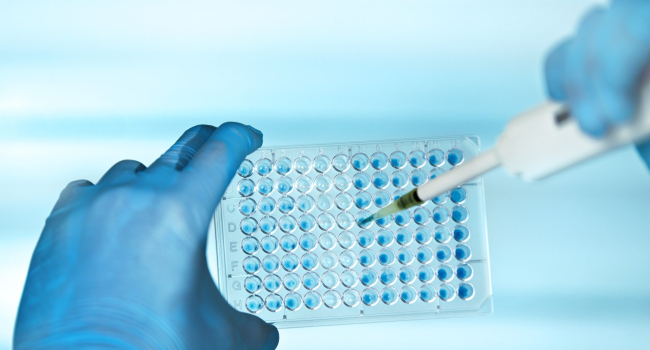
Chemists at Togliatti State University (TSU) have developed a new method for synthesizing pyrazoles and pyrazolines. These compounds are key components of many modern medicines used, for example, to treat cancer or AIDS. The main feature of the approach is the ability to “control” the synthesis process by changing the proportions of reagents, allowing researchers to obtain different types of compounds with high selectivity.
Scientists from TSU’s Research Laboratory No. 13 named after S.P. Korshunov, “Organic Synthesis and Analysis,” worked with complex organic molecules containing several active centers for chemical transformations. The second essential component was hydrazine — a highly reactive nitrogen-containing reagent. The researchers found that simply by adjusting the proportions of the starting materials, they could precisely control which useful chemical compounds were produced.
“If the components are taken in a 1:1 ratio, the reaction follows the first pathway, resulting in the formation of so-called pyrazolines — cyclic molecules that are in extremely high demand in pharmacology. The yield of the desired product reaches 92%,” explains TSU professor Alexander Golovanov. “But if you add significantly more hydrazine, the reaction switches to the second pathway, yielding another group of valuable compounds — pyrazoles (79–84% yield).”
Previously, pyrazoles were obtained using the classical method — mixing organic compounds with hydrazine. However, that approach was far from perfect: instead of one desired substance, it often produced a mixture of similar products that were very difficult to separate. Many reactions had to be carried out at high temperatures, for long periods, or with aggressive chemicals. But the main drawback was the method’s lack of flexibility. In particular, it was poorly suited for creating complex molecules with specific properties because it did not allow scientists to easily attach biologically important fragments to precise positions within the molecule.
The new approach developed at TSU overcomes these limitations. The chemists not only observed the outcome but also thoroughly studied the reaction mechanism using modern analytical techniques, including nuclear magnetic resonance spectroscopy and X-ray structural analysis. They experimentally proved that pyrazoles and pyrazolines form in parallel rather than converting into one another, which makes the method particularly clean and efficient.
“The most valuable result is that we were able to obtain pure pyrazolines in their original form,” says Evgeny Zatynatsky. “Previously, their synthesis was almost impossible. These molecules are very ‘capricious’: they have a highly active site — a nitrogen atom — that easily reacts even with air and can ruin the compound. To study them, chemists had to ‘protect’ this site temporarily. Under the right conditions, this active site of the pyrazoline remains available for attaching other structural fragments, which is crucial for creating new compounds and, consequently, for developing new, more effective medicines.”





