make preferable
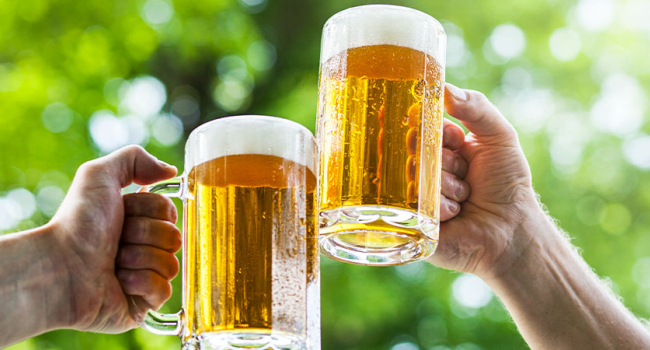
Virologist Chris Buck from the National Cancer Institute in Bethesda, USA, has announced the development of the first vaccine in the form of beer, ScienceNews reports.
According to Buck, his invention protects against several subtypes of BK polyomavirus. This widespread DNA virus infects most people in childhood. It usually causes no symptoms but remains latent in the kidneys and, when immunity is weakened, can reactivate and lead to nephropathy (kidney damage) or hemorrhagic cystitis. This is especially dangerous for kidney transplant recipients, as the virus can trigger organ rejection.
For the beer vaccine, Buck used Saccharomyces cerevisiae yeast, which is commonly used to make bread, beer, wine, chocolate, and even coffee, Afisha Daily reports. Using this yeast, he produced virus-like particles that are incapable of causing infection.
The scientist then brewed beer with this yeast and began experimenting on himself. He drank one pint per day for five days, followed by two additional five-day “booster” courses at seven-week intervals. To measure antibody levels, he regularly took finger-prick blood samples from himself.
According to Buck, his antibody levels against several BK polyomavirus subtypes reached what is considered a protective level for post-transplant patients. He reported no side effects other than intoxication.
Buck published the data from his self-experiment on the Zenodo platform and on a Substack blog. The work did not undergo scientific peer review. Ethics committees at the National Institutes of Health did not approve the self-experiment, citing risks and the absence of standard clinical trials.
Some scientists criticized Buck’s approach, emphasizing that conclusions about safety and efficacy cannot be drawn from a single person’s experience and that vaccines for vulnerable patients must undergo full clinical testing. Other researchers consider the idea of an oral vaccine promising but question the chosen path for its promotion.
Buck himself says that in the long term he hopes to obtain official FDA approval, but in parallel he is exploring the possibility of distributing the yeast-based vaccine as a food product or dietary supplement, where testing requirements are significantly less stringent.
“This is the most important work of my entire career. It is so important that I am willing to risk my career for it. My contract with the institute states that my job is to create and disseminate scientific knowledge. That’s exactly what I’m doing: creating knowledge, spreading it, and trying to sell it to the public,” the scientist noted.