
 make preferable
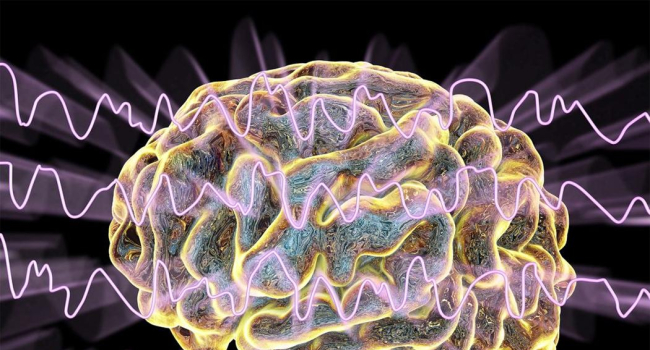
Scientists at the Karolinska Institute have uncovered how rhythmic brain activity—so-called alpha oscillations—helps humans perceive their own body and distinguish it from the surrounding environment. The study was published in Nature Communications (NatCom).
That an arm or a leg is perceived as part of one’s own body seems self-evident. In reality, however, this sense arises from complex brain processes that constantly integrate visual, tactile, and other sensory signals. To understand how this feeling is formed, the researchers conducted a series of behavioral experiments, electroencephalography (EEG), non-invasive brain stimulation, and computational modeling. A total of 106 volunteers took part in the study.
The scientists focused on the so-called sense of body ownership—the ability to perceive a body part as “one’s own.” As the study showed, a key role in this process is played by the frequency of alpha rhythms in the parietal cortex, a brain region responsible for processing bodily signals. This frequency determines how precisely a person can distinguish signals related to their own body from external stimuli.
“We identified a fundamental neural mechanism that shapes our continuous sense of embodiment in our own body,” explained lead author Mariano D’Angelo, a researcher at the Department of Neuroscience at the Karolinska Institute. According to him, the findings may be important for understanding psychiatric conditions such as schizophrenia, in which the sense of self is disrupted.
The experiment employed the classic rubber hand illusion. When touches to a participant’s hidden real hand and a visible rubber hand are synchronized, many people experience the sensation that the artificial hand belongs to their body. When a delay is introduced between visual and tactile signals, this sense of ownership weakens.
The researchers found that individuals with higher alpha-rhythm frequencies are more sensitive to such temporal mismatches. They detect even small delays between seen and felt touch, resulting in a more precise sense of body ownership. With slower alpha rhythms, the temporal “binding window” widens: the brain tends to perceive asynchronous signals as occurring simultaneously, blurring the boundary between the body and the external world.
To test whether alpha rhythms are the cause of these effects, the researchers altered their frequency using weak electrical brain stimulation. This directly affected the accuracy of body ownership perception and the ability to discriminate simultaneity between visual and tactile stimuli. Computational modeling confirmed that alpha rhythms regulate the temporal precision of sensory integration and thus contribute to the formation of the sense of one’s own body.
“Our results show how the brain solves the challenge of integrating bodily signals into a unified sense of self,” said Henrik Ehrsson, Professor of Neuroscience at the Karolinska Institute and senior author of the study. According to him, this knowledge could be applied to the development of more advanced prosthetics and more realistic virtual environments, in which the sense of one’s own body plays a crucial role.





