
 make preferable
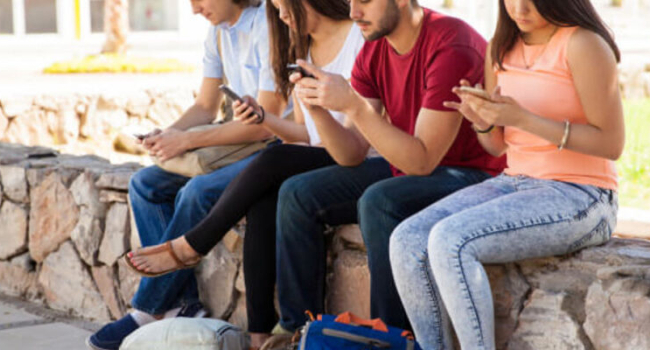
The link between social media, video games, and declining mental health may be overstated, while potential benefits are often overlooked, according to a new study.
A new study from the University of Manchester found no evidence that more intensive use of social media or more frequent video gaming increases symptoms of anxiety or depression over the following year, Euronews reports.
The researchers said these findings challenge the widespread belief that time spent with these technologies is inherently harmful and highlight the need for a more nuanced approach that takes context and individual differences in use into account.
“We know that families are concerned, but our findings do not support the idea that simply spending time on social media or playing games leads to mental health problems—it is far more complex,” said the study’s lead author, Tzitsi Cheng.
The study, published in the Journal of Public Health, analyzed data from 25,000 students aged 11 to 14 over three academic years, tracking their social media habits, gaming frequency, and symptoms such as anxiety and low mood.
The research team also examined whether the type of social media use—active (such as communication) or passive (“doomscrolling”)—made a difference, but found that overall the pattern was the same. Usage habits alone did not appear to lead to mental health difficulties.
Possible negative effects of social media are often overstated, the study says, while potential benefits—such as social connections, sharing experiences, and self-expression—have been studied far less.
The University of Manchester team also reviewed previous research on the topic, which has often claimed a direct link between social media use, video gaming, and mental health problems.
The researchers noted that while many recent studies focus on how social media and gaming may contribute to anxiety and other mental health conditions, they often overlook the possibility that the relationship could work in the opposite direction.
According to the researchers, adolescents with symptoms of anxiety or depression may turn to social media for comfort or mood regulation, and play games as a way to distract themselves from emotional stress.
“Our findings suggest that young people’s choices around social media and gaming may be influenced by how they feel, rather than the other way around,” said study co-author Neil Humphrey.
He added that instead of blaming the technologies themselves, attention should be focused on what young people do online, who they interact with, and how supported they feel in their everyday lives.
The study has limitations: it relies on self-reported data and uses a 12-month interval between measurements, which may have missed important short-term effects.
The researchers note that adolescents’ engagement with social media and gaming, as well as their emotional states, can change noticeably from day to day—and sometimes from hour to hour.
Children’s and young people’s mental health has been deteriorating over time, according to the latest estimates from the World Health Organization’s European Regional Office.
More than 30 million—around one in seven—children and adolescents aged 0 to 19 are living with a mental disorder in the WHO European Region.
The agency warns that the impact is so great that mental and substance use disorders are the leading cause of the burden of disease among people aged 0 to 29.
Among adolescents, prevalence is even higher: more than one in five has a mental disorder, and over the past 15 years this figure has increased by roughly one third.





