
 make preferable
Smallpox — also known as variola — is a highly contagious viral infection caused by two viruses: Variola major and Variola minor. For a long time, it remained one of the most dangerous diseases in Europe, killing about one in three infected people and often leaving survivors blind or severely scarred.
Before the invention of vaccination, the only relatively effective preventive method was the risky procedure of variolation — the deliberate infection of a healthy person using material taken from smallpox sores, Naked Science reports. Although the procedure sometimes led to severe illness or death, the risk was significantly lower than dying from smallpox itself.
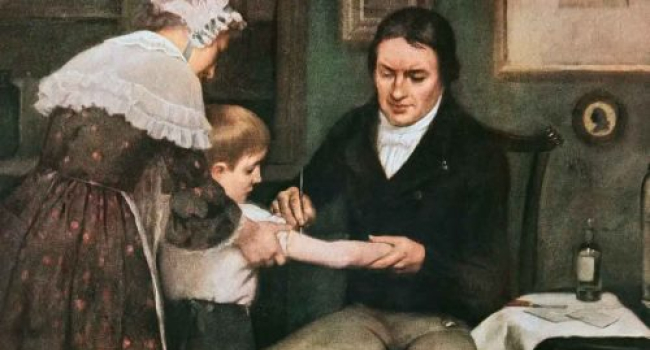
A turning point came in 1796, when English physician Edward Jenner conducted his famous experiment. He inoculated eight-year-old James Phipps with cowpox — a virus that does not cause severe disease in humans — and later attempted to infect the boy with smallpox. The attempt failed, demonstrating that the immune system could be safely “trained” to resist a dangerous pathogen.
Thus, the world’s first vaccine was born (from the Latin vacca, meaning “cow”), and Jenner’s method became the key to defeating smallpox.
Rapid adoption in Denmark
In the 19th century, smallpox ravaged many European cities and regions, and Copenhagen, the capital of Denmark, was no exception. Between 1758 and 1808, the disease killed more than 12,000 people in the city.
News of Jenner’s discovery quickly reached Danish physicians and sparked what leading Danish doctor Heinrich Callisen described as “eager anticipation.” The first vaccine batches were ordered directly from Jenner in England, and the first vaccinations were administered to the children of a Danish judge.
Vaccinated children did not become infected even after close contact with sick relatives. These observations convinced authorities of the effectiveness of the new method. In 1801, King Christian VII ordered the creation of a vaccination commission responsible for organizing immunization campaigns and recording every vaccination and infection case.
Evidence from historical archives
An international research team led by Andreas Eilersen of Roskilde University analyzed commission archives to assess how vaccination affected smallpox incidence. By 1810, about 90 percent of children in Copenhagen had been vaccinated, making Denmark the European country with the highest vaccination rate per capita at the time. Thanks to the rapid rollout, smallpox disappeared from Copenhagen just seven years after vaccination began.
Why the campaign succeeded
According to researchers, the rapid success resulted from strong public solidarity and carefully designed policies.
First, vaccines were offered free of charge to those unable to pay, removing a major economic barrier.
Second, the campaign involved not only physicians but also priests and schoolteachers, who promoted vaccination and sometimes administered shots themselves. Annual reports praised clergy members who traveled across the country educating communities about vaccination; one pastor reportedly vaccinated 1,981 children in a single year.
Authorities, the medical community, and the church acted in coordination, helping to build trust among all social groups, including the poor.
A “semi-mandatory” approach
When smallpox nearly disappeared, officials feared that public complacency might reduce vaccination rates. To prevent this, Denmark introduced a rule requiring proof of smallpox vaccination for participation in certain civil and social activities — including confirmation ceremonies, school enrollment, and marriage.
Vaccination was therefore not strictly compulsory, but without certification individuals could not fully participate in key stages of social life.
Although some resistance emerged — which officials attributed to “ignorance and prejudice” — the vast majority of citizens supported the program.
Long-term impact
Researchers note that the Danish experience established a lasting tradition of public trust. Denmark continues to rank among the leading countries in citizen confidence in public institutions, according to Transparency International’s Corruption Perceptions Index.
This historical continuity may help explain today’s high childhood vaccination rates in Denmark. Nearly 96 percent of Danish children receive vaccines against diphtheria, tetanus, and pertussis. By comparison, vaccination coverage in the United States — which ranks much lower in public trust in government institutions — is about 80 percent.





