
 make preferable
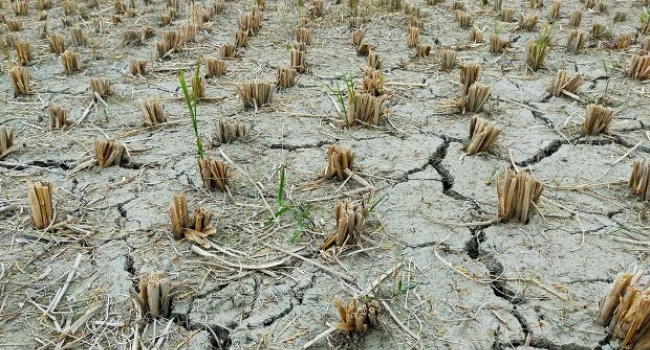
Drought increases the concentration of antibiotic-resistant microorganisms in soil, which could have serious implications for public health, according to a new study.
Researchers from the California Institute of Technology (Caltech, USA) set out to answer one question: can changes in the natural environments where antibiotics originate contribute to the development of resistance?
Their conclusion: regional aridity is closely linked to the prevalence of antibiotic resistance in clinical settings across more than 100 countries.
Antimicrobial resistance (AMR) is a growing threat that causes more than 35,000 deaths each year in the European Union alone, Euronews reports.
It occurs when bacteria, viruses, fungi, and parasites stop responding to antimicrobial drugs. Although this is a natural process driven by genetic changes in pathogens over time, it is dramatically accelerated by human activity—primarily the misuse and overuse of antimicrobial agents.
“Droughts have effects similar to the overuse of antibiotics in clinical settings: both intensify the selection of antibiotic-resistant strains,” said Dianne Newman, professor of biology and geobiology at Caltech.
According to her, the “striking correlation” identified in the study encourages the development of more precise and faster diagnostics in clinics, as well as new therapeutic approaches.
“Antibiotics were first discovered in the 1940s through experiments with soil microorganisms: it was found that natural substances produced by one soil organism could inhibit the growth of another,” the authors note.
Since then, many of these natural compounds have been modified and turned into medicines used today. However, soil remains one of the largest sources of new antibiotic producers—an environment so rich in microbes that an estimated 99 percent of its inhabitants still cannot be cultured in the laboratory.
According to the researchers, although many antibiotics originate from soil microorganisms, the way environmental changes in soil ecosystems may contribute to resistance remains poorly understood.
Led by Xiaoyu Shan, a Caltech postdoctoral researcher and the study’s lead author, the team developed a computational program to analyze open datasets of microbial sequences from soil samples to identify genes responsible for producing various antibiotics.
Using clinical surveillance data from 116 countries and land-use databases from the United States, China, and Europe—covering croplands, pastures, forests, and wetlands—the scientists found that the average rate of antibiotic resistance in hospitals is strongly correlated with the local aridity index.
The study showed that during drought, a key mechanism driving increased resistance is a concentration effect: as soil dries out, naturally occurring antibiotics become more concentrated in the remaining moisture.
However, drought also affects antibiotics in more subtle ways. Studies have shown that the physical stress bacteria experience under dry conditions can alter how effective antibiotics are against them.
Prolonged dry periods can also change the rate at which certain antibiotics break down in soil, depending on the compound: at low moisture levels, this process may either slow down or accelerate.
“We are constantly in contact with soil—whether during outdoor recreation or simply by inhaling dust,” Shan says.
“What matters is that bacteria can transfer genes to one another, and antibiotic resistance genes are known to spread very actively. Given the trillions of bacteria in the environment, this occurs on a massive scale.”





