
 make preferable
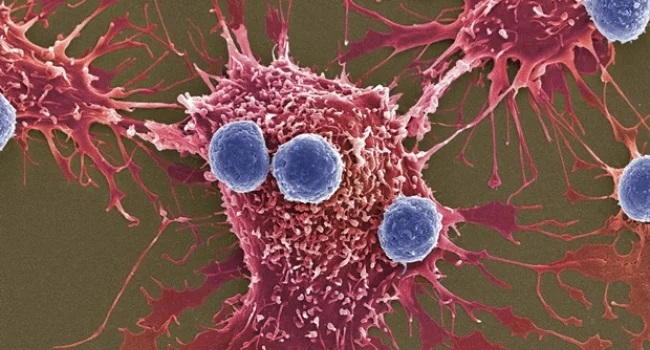
Researchers have reported promising results from an international clinical trial of the experimental cancer drug amivantamab, which led to the complete disappearance of tumors in a number of patients with advanced head and neck cancer.
The findings were presented at the annual meeting of the American Society of Clinical Oncology, the world's largest oncology conference, held in Chicago, according to The Guardian.
The trial enrolled 102 patients from 11 countries. All participants had head and neck cancer that had either spread or recurred after treatment. In addition, their disease had stopped responding to standard therapies, including chemotherapy and immunotherapy.
According to the researchers, tumors shrank or disappeared entirely in 43 patients following treatment with amivantamab. Twenty-eight patients experienced significant tumor reduction, while doctors found no detectable signs of cancer in 15 patients.
Professor Kevin Harrington described the results as unprecedented.
“These are extraordinarily strong responses in patients whose disease has become resistant to both chemotherapy and immunotherapy. Treatment options for this group are extremely limited, making these findings particularly remarkable.”
Amivantamab, developed by Johnson & Johnson, attacks cancer through three separate mechanisms. It blocks EGFR, a protein that promotes tumor growth, inhibits the MET signaling pathway that cancer cells use to evade treatment, and activates the immune system to target tumors.
One of the trial participants was 56-year-old Carl Walsh from Birmingham. After conventional treatments failed, he was enrolled in the OrigAMI-4 study. According to Walsh, his condition improved significantly after only a few treatment cycles.
Before joining the trial, he experienced severe pain, difficulty speaking and eating, and substantial weight loss. Within months of starting therapy, however, swelling had decreased dramatically, pain levels had fallen, and his ability to speak and eat normally had fully returned.
A key advantage of the new treatment is its method of administration. Unlike many modern cancer therapies that require lengthy intravenous infusions, amivantamab is delivered as a small subcutaneous injection once every three weeks. This makes treatment considerably more convenient for both patients and healthcare providers.
Researchers emphasized that the study focused on a particularly challenging patient population—individuals with head and neck cancers not associated with human papillomavirus (HPV). These cancers are typically more difficult to treat and are associated with poorer outcomes.
Despite the advanced nature of the disease and the failure of previous therapies, the median overall survival after treatment initiation was 12.5 months, a result that experts consider encouraging for this patient group.
Professor Kristian Helin, Chief Executive of the Institute of Cancer Research, said the findings demonstrate the potential of modern cancer research and could represent an important advance for patients who have very few therapeutic options remaining.





