make preferable
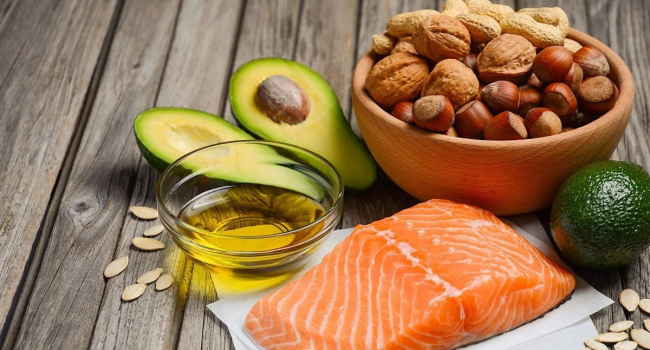
A ketogenic diet high in long-chain saturated fatty acids may increase inflammatory responses in the body. Researchers at the University of Cincinnati Cancer Center reached this conclusion in a study published in the journal Science Advances.
The keto diet involves a high intake of fat and a sharp restriction of carbohydrates. This puts the body into a state of ketosis, in which it relies primarily on fats and ketone bodies rather than glucose for energy. Several previous studies suggested that such a diet might have anti-inflammatory effects, while others found increased inflammation and potential adverse effects. The new study helps explain why the findings may differ.
A team led by Cancer Center Director David Gius examined the effects of ketogenic diets containing different types of fatty acids in mice and also studied individual fatty acids in tissue culture models.
“We found that long-chain saturated fatty acids appear to promote an inflammatory immune response, whereas unsaturated and medium-chain fatty acids are more often associated with anti-inflammatory properties,” Gius said.
According to the researchers, increased inflammation is linked to stress signals in mitochondria—the energy-producing structures within cells—and the activation of immune cells.
The authors emphasize that ketogenic diets can affect the body differently depending on the sources of fat. When assessing their potential benefits, it is therefore important to consider not only the total amounts of fat and carbohydrates, but also the specific composition of the diet.
The study may also have implications for cancer treatment. According to Gius, the keto diet can alter the tumor microenvironment—the conditions and cellular interactions surrounding a tumor—and potentially affect the effectiveness of immunotherapy. A clinical trial investigating this relationship is already underway at UT Health San Antonio, and another is expected to begin soon at the University of Cincinnati Cancer Center.
However, findings from experiments in animals and tissue models do not, on their own, prove that the same effect necessarily occurs in humans. Further clinical studies are needed to assess how different types of fat affect inflammation and treatment outcomes.