make preferable
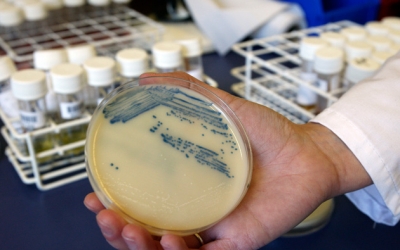
Scientists have developed a technique that harnesses environmental bacteria to find new antimicrobial weapons that can fight resistant pathogens. Their approach uses a mix of moistened soil, liquid agar (bacterial culture) and diluted bacterial samples to isolate microbes for study while giving them the natural conditions they need to grow. At least in theory, medical researchers no longer have to limit their antibiotic development to bacteria that survive in lab conditions. If it grows in dirt, it's a candidate.
As Engadget.com reports, the team behind the new method has already produced a very promising antibiotic, teixobactin. It not only kills certain kinds of harmful bacteria (namely those with cellular walls, like anthrax and tuberculosis), but makes it difficult for those bugs to evolve resistance. It'll be a while before teixobactin is a practical treatment, and it won't be useful in many other circumstances. But that's almost beside the point -- thanks to the new research technique, it's no longer far fetched to think that humans can stay one step ahead of sickness-inducing organisms.
The new drug based on this antibiotis has been tested on animals only, and now the scientists are going to start testing it on people. Perhaps it'll be on the market in 5-6 years.