
 make preferable
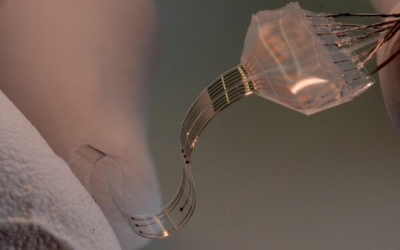
An elastic implant that moves with the spinal cord can restore the ability to walk in paralysed rats, say scientists. A team at Ecole Polytechnique Federale de Lausanne (EPFL) has developed flexible implants that work for months.
As BBC reports, implants are an exciting field of research in spinal cord injury, but rigid designs damage surrounding tissue and ultimately fail. The new implant was described by experts as a "groundbreaking achievement of technology".
The spinal cord is like a motorway with electrical signals rushing up and down it instead of cars. Injury to the spinal cord leads to paralysis when the electrical signals are stuck in a jam and can no longer get from the brain to the legs.
The same group of researchers showed that chemically and electrically stimulating the spinal cord after injury meant rats could "sprint over ground, climb stairs and even pass obstacles". But that required wired electrodes going directly to the spinal cord and was not a long-term option.
Implants are the next step, but if they are inflexible they will rub, causing inflammation, and will not work properly. The latest innovation, described in the journal Science, is an implant that moves with the body and provides both chemical and electrical stimulation.
When it was tested on paralysed rats, they moved again.
The implant is built from elastic silicone and the wiring is made from "microcracked" gold. Normal wiring would not stretch, but tiny cuts in the surface make it flexible.
The implant has worked for two months in the animals, which the researchers say makes it one of the longest-lasting implants for spinal cord injury.





