
 make preferable
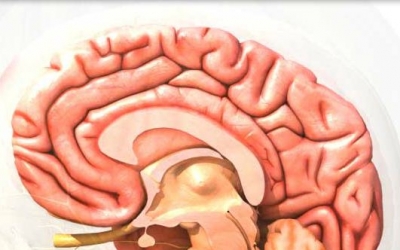
Japanese researchers say they have used human embryonic stem cells to build a three-dimension structure similar to the part of the brain called the cerebellum.
In higher animal brains, the cerebellum is responsible for coordinating motor functions and processing sensory information.
The team, led by Keiko Muguruma, at the RIKEN Center for Developmental Biology, announced the breakthrough in a paper published in the journal Cell, titled “Self-Organization of Polarized Cerebellar Tissue in 3D Culture of Human Pluripotent Stem Cells.”
According to Muguruma, the cerebellum structure they built in the laboratory survived intact for only for a short time.
“The cultured cell aggregates (called spheroids) stop to develop at certain time point and start to degenerate. There may be some missing things for complete development.”
But despite the fact that the brain built in the laboratory was transient and disintegrated soon after it was assembled, researchers in the field are unanimous that the achievement represents a significant step in the ongoing research efforts to construct an “artificial brain.”
Discovery reports that several teams of researchers around the world are currently working to construct an “artificial brain,” variously from biological tissue, electronic circuits, and computer programs. They hope to be able to construct a system that can perform much of the tasks humans are capable of performing with ease.
One of the foremost ongoing projects in this field is the European Union’s Human Brain Project, involving about 183 top researchers from more than 20 countries. The goal of the $1.2 billion project is to map the human brain as a prerequisite to building systems that are able to simulate brain function.
Researchers involved in the project worldwide hope that insight gained into the way the brain functions would help medical researchers to better understand the mechanisms of brain diseases and thus enhance their ability to develop effective therapies.
Ongoing efforts, albeit on a smaller scale, involve a small start-up in La Jolla, San Diego, California, called Brain Corporation. The company is developing a computer program that will allow robotic systems to be trained to perform routine domestic tasks.





