make preferable
As soon as the word depression is mentioned, we tend to think of a mental problem that may need treatment with antidepressant drugs, with all their risk of side-effects such as weight gain and loss of libido.
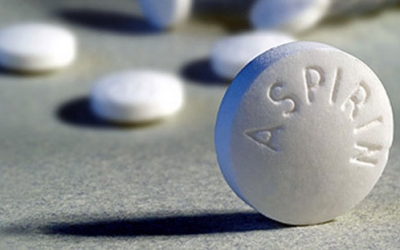
But what if it actually has a physical cause that could be treated with anti-inflammatory drugs such as aspirin and ibuprofen, or even antibiotics?
This is the fascinating possibility being explored by scientists at Cambridge University. Their research suggests that, in a significant number of cases, depression could be caused by long-term inflammation in the body.
The idea has been gathering credibility over the past few years among researchers worldwide. Indeed, the association between low mood and bodily inflammation caused by infections should be familiar to anyone who has ever had a cold and felt miserable, listless and tired.
Evolutionary psychology suggests that this may once have aided survival, by keeping us safe in our caves because we felt too low to go out when illness was making us both vulnerable to attack and at risk of spreading infection to our tribal fellows.
Now, a growing body of research has linked depression with inflammation.
In 2013, for example, investigators at Aarhus University, in Denmark, examined the health records of nearly 3.6 million people and found that those who had inflammation caused by autoimmune conditions, such as arthritis or Crohn’s disease (inflammation of the lining of the digestive system) were 45 per cent more likely to suffer from a depressive condition.
Furthermore, those who had ever been in hospital for a serious inflammatory infection, such as sepsis or hepatitis, were 62 per cent more likely than normal to suffer from a depressive disorder, according to the study published in the journal JAMA Psychiatry.
Earlier that year, another team of Danish researchers published a study in the same journal which found that raised levels of C-reactive protein — a substance the body produces in response to inflammation — were associated with an ‘increased risk for psychological distress and depression in the general population’.
Results such as these presented scientists with a crucial question: do people get depressed simply because an inflammatory illness is making their lives miserable, or is there a hidden physical process that makes inflammation cause depression?
The latter may be more likely to be true, according to an Australian study reported in the journal BMC Medicine in 2013. This found that giving healthy people drugs that cause inflammation can cause them to suffer all the typical symptoms of depression, such as low mood and lack of motivation.
Indeed, a quarter of patients who take interferon — a medication used to treat the viral liver infection hepatitis C that, as a side-effect, causes inflammation — develop major depression. Now this link is being investigated in much greater depth by Cambridge University scientists.
They have been following up on 4,500 children born in the Bristol area in the 1990s. They took blood samples when the children were aged nine to see if they showed evidence of raised levels of inflammation — testing for interleukin-6, a protein that the body releases in response to infections.
The investigators then followed up the children nine years later, when they were 18, to see if they had suffered from episodes of depression.
The results, which were published in the journal JAMA Psychiatry last August, showed that the nine-year-olds with high levels of inflammation in their bodies were nearly twice as likely as those with low inflammation levels to become depressed as teenagers.