
 make preferable
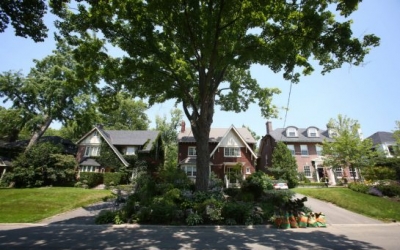
Urbanites who live in areas with more trees tend to be healthier than those who live in neighborhoods with sparse greenery, a new study of more than 30,000 Toronto residents found.
It's just the latest in a growing body of research to demonstrate that immersion in a natural environment can do wonders for your health.
For the new research, scientists compared tree density data with self-reported measures of health and found that those who live with more trees on their block self-reported their health to be better than those who lived near fewer trees. Residents reported lower levels of heart disease, type 2 diabetes and other “cardio-metabolic” conditions, even after controlling for age, income and education level.
The data are limited because self-reported health data can be an unreliable measure, and they merely show an association, not a cause-and-effect relationship. But the findings still suggest trees may provide hard health benefits, researchers said.
“We find that having 10 more trees in a city block, on average, improves health perception in ways comparable to an increase in annual personal income of $10,000 and moving to a neighborhood with $10,000 higher median income or being 7 years younger,” the authors of the paper wrote. “We also find that having 11 more trees in a city block, on average, decreases cardio-metabolic conditions in ways comparable to an increase in annual personal income of $20,000 and moving to a neighborhood with $20,000 higher median income or being 1.4 years younger.”
It's possible that the benefits comes from an improvement in air quality, a known environmental health hazard. But researchers also believe the stress-busting mental health benefits of trees — and green space more generally — matter. Green space helps promote physical activity, helping city residents maintain heart health and stave off obesity and its related health conditions, other studies have found.
These findings together suggest it's high time to plant more trees, the team said.
“I’d feel pretty confident to say to a municipality, 'increase the number of trees by 10'” per block, Marc Berman, a co-author of the study and also a psychologist at the University of Chicago, told The Washington Post.
The paper, “Neighborhood greenspace and health in a large urban center,” was published in the open-access journal Scientific Reports on July 9.





