make preferable
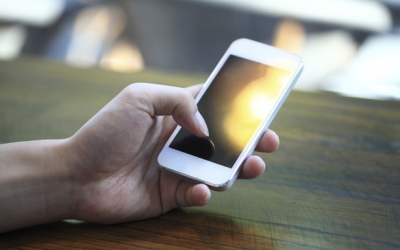
Mobile phones, tablets and laptops could trigger skin cancer by reflecting the sun's harmful UV rays, scientists have warned.
The findings of a new study have prompted researchers to advise people wear sun cream, sunglasses and even to cover their faces and necks if using their phones outside.
While tests were on mannequins rather than people, experts said the research raises an important practical point.
Co-author of the study, Mary Logue of the University of New Mexico, said: 'These devices are generally used for communication or entertainment, so it can be easy to overlook their reflective properties unless you happen to catch the glare off a screen.'
The researchers were compelled to investigate the issue after noting the similarities between the devices and old-fashioned tanning reflectors, Dr Logue told Reuters Health.
Her team set up a mannequin head wearing a UVA/B light metre and faced it towards a standard musician's sheet music stand.
They then placed various mobile devices on the stand.
In two trials, the researchers recorded UV readings for an hour of exposure, from 11am to noon.
They used a magazine, an iPhone5, various iPad models, two Macbook laptops and a Kindle e-reader.
In the first experiment all the devices were positioned 16.5 inches from the UV sensor.
For the second, they were secured 12.25 inches away.
Researchers angled the devices and the UV sensor to mimic an adult looking down at the device.
The study team measured UVA/B dose exposure from light reflected by the devices in joules per square centimetre, over one hour and compared that to the UV readings with an empty sheet stand.
In the first experiment, when the devices were further away from the mannequin, an open magazine increased UV dosage exposure by 46 per cent, compared with the music stand alone.
An iPad2 increased exposure by around 85 per cent and an 11-inch Macbook increased UV exposure by 75 per cent.
Researchers note it was only in the second trial, where devices were 'held' closer to the mannequin's 'face' that the iPhone5 was used, and was found to increase exposure by 36 per cent.
The study is reported in the Journal of the American Academy of Dermatology.