
 make preferable
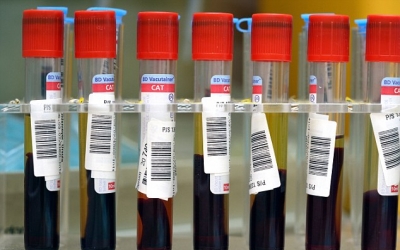
A blood test that calculates how quickly a person is ageing has been unveiled by British scientists.
The test works out a patient’s ‘biological age’ compared to their actual age – and could be used to reveal if they are at risk of dementia years in advance.
This is because those who are older biologically than they are in years are more likely to go on to develop Alzheimer’s disease, the most common form of dementia, the scientists said.
The test gives a person an ‘ageing score’ based on genetic markers found in their blood.
And scientists hope it could transform the way doctors think about age when making medical decisions, since the research revealed that biological age can vary widely in those of the same actual age.
When 700 apparently healthy 70-year-old volunteers were tested, their biological ages differed by more than 20 years – from younger than 60 to older than 80.
Professor James Timmons, of King’s College London, who led the research said: ‘We use birth year, or chronological age, to judge everything from insurance premiums to whether you get a medical procedure or not.
‘Most people accept that all 60-year-olds are not the same, but there has been no reliable test for underlying biological age.
‘Our discovery provides the first robust molecular signature of biological age in humans and should be able to transform the way that “age” is used to make medical decisions.’
The team said that the test could be invaluable for finding kidney donors, for example.
Doctors often use age to assess whether someone is suitable to donate, but using biological age would provide a far more accurate assessment of how likely their kidneys are to be healthy later in life.
Professor Timmons said the blood test should be available to other researchers next year, as an invaluable tool for gauging how different factors can affect the ageing process.
It would also be simple to make the test available for GPs and hospital doctors, he said.
But that is unlikely to happen for some time because NHS regulators first have to discuss the ethical impact of disclosing this information.
The researchers, whose work is published today in the journal Genome Biology, looked at the make-up of RNA – a genetic messenger that works with the DNA in our cells – in different body tissues.





