
 make preferable
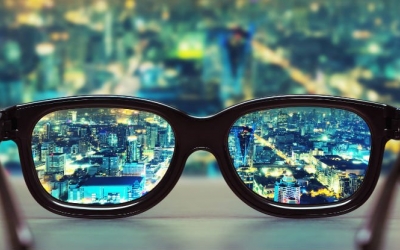
If current trends continue, half the world’s population (almost 5 billion) will be short-sighted in just over three decades, with one-fifth of those expected to have a significantly increased risk of blindness, a new study reports.
That’s a seven-fold increase in short-sightedness (or myopia) from 2000 to 2050, and despite the condition becoming so rapidly prevalent, scientists still can’t agree on what’s causing it. It would be easy to link our obsession with computer and phone screens to the so-called myopia epidemic, but if only things were that simple.
Between the 1970s to the early 2000s, cases of myopia almost doubled in the US, and in certain parts of Asia, the rise has been even more dramatic, with a recent survey finding that as many as 96 percent of teenagers in South Korea are short-sighted. In Singapore, China, and Japan the rate amount teens is around 80-90 percent.
Now a new report by an international team of researchers has looked at the rise in myopia cases over the past few decades to come up with predictions for the future.
Looking at data from 145 studies covering 2.1 million participants, they found that in 2000, some 1,406 million people were diagnosed with myopia (22.9 percent of the world population) and 163 million people had high myopia, which comes with an increased risk of blindness and cataracts.
"We predict by 2050 there will be 4,758 million people with myopia (49.8 percent of the world population) and 938 million people with high myopia," they conclude in the journal Ophthalmology.
So what’s going on here?
Just looking at how recently this has become a problem, it’s looking pretty likely that the sudden rise in myopia cases is linked to lifestyle and behaviour changes that have happened over the past few decades. The researchers put it down to"environmental factors (nurture), principally lifestyle changes resulting from a combination of decreased time outdoors and increased near work activities, among other factors".
We’re spending way more time indoors than any other period in human history, and very few of us could live without some serious daily screen time, either for work, school, or pleasure. But what scientists are struggling to figure out is, what biological mechanisms are at play to make such drastic, physical changes in the structures of our eyes? How do we turn this correlation into causation?
The best evidence we have right now isn’t increased screen time - it’s the lack of outdoors time that screens have made progressively worse.





