
 make preferable
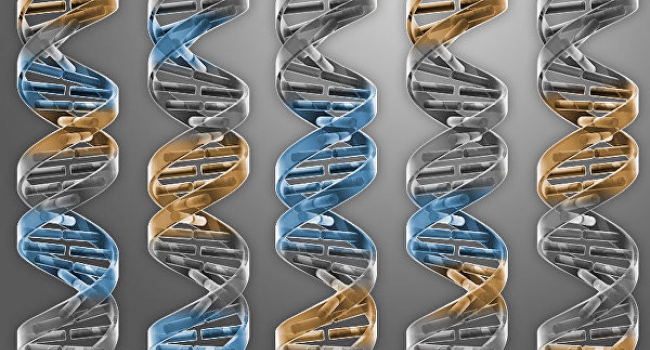
Geneticists have established the minimum needed for life. They have designed and created a synthetic cell which can survive and replicate with just 473 genes. Humans and fruit flies have more than 20,000 genes each.
The finding is a landmark in biological understanding. It could illuminate the mysterious story of life’s evolution in the primal oceans more than three billion years ago. It could provide the basis for a new generation of made-to-order organisms designed specifically to produce new antibiotics, new fuels and new drugs. And it is the climax of decades of theory and experiment.
The new organism, officially known as JCVI Syn3.0 is the smallest, simplest self-replicating cell known. It doubles in its laboratory dish every three hours. And it comes with a discovery that its begetter, Dr Craig Venter of the J Craig Venter Institute of La Jolla, California, described as “very humbling”. The makers still do not know what one third of the genes do.
There have now been more than two decades of genetic analysis, based on the sequencing of the DNA of thousands of microbial organisms, worms, insects, plants, birds, fish, mammals and people. There have been six years of experiment since laboratory life was first synthesised from DNA. But researchers admit that they do not understand fully, or in some cases know at all, the biological functions of 149 of the genes that keep their latest creation alive.
“We have discovered some essential facts of biology by doing this,” Venter said. “We know about two thirds of essential biology. We are missing a third, which is a very important lesson.”
He and his colleagues report in the journal Science that although the ability to “speed read” the DNA code had been stepped up a billionfold in the last 25 years, no single cell could be explained in terms of all of its functions. Venter was one of the pioneers of DNA research, and the leader of one of two competing scientific teams that had managed to sequence the human genome by June 2000. He and his colleagues had already set out in 1999 to build on their understanding of the simplest, and one of the first, organisms to be sequenced: a tiny, slow-growing bacterium called Mycoplasmum genitalium, with only 525 genes. They started to pull it apart, a gene at a time, to see whether it could survive.





