


- Latest news▼
-
22:46, September 3 At-Home Urine Test Could Detect Most Bladder Cancer Cases, Study Finds

-
20:38, September 3 Alcohol-Related Cancer Deaths Double in the U.S. as the Number of Such Deaths Rises Over 33 Years
-
18:29, September 3 An Unexpected Paradox: Both Very Low and Very High Testosterone Levels May Be Equally Dangerous for the Heart

-
16:11, September 3 The Independent: Aging Is the Main Risk Factor for Cancer

-
14:13, September 3 CC: Age-Related Changes in Memory May Begin as Early as 50

-
08:34, September 3 Scientists Find Who May Benefit More from Coffee in Terms of Parkinson’s Disease Risk

-
23:37, September 2 LDE: Popular Diabetes Drugs Linked to Risk of a Dangerous Complication in Certain Patients

-
19:45, September 2 European Journal of Nutrition: Some Additives in Ultra-Processed Foods May Be Linked to Depression Risk

-
17:29, September 2 Neuron: Human Brain Immune Cells Mature Hundreds of Times More Slowly Than Those in Mice

-
15:21, September 2 Frontiers in Nutrition: Sucralose and Stevia Altered the Gut Microbiome for Two Generations in Mice

-
13:13, September 2 Frontiers: Frequent Consumption of Sugary Drinks Linked to a 23% Higher Risk of ADHD in Children

-
11:12, September 2 Food & Function: Nuts May Accelerate Blood Vessel Recovery After Stroke

-
08:39, September 2 Scientists Discover Hidden Sign of Crohn’s Disease and Ulcerative Colitis Before a Flare-Up

-
22:41, September 1 Not Just APOE4: Scientists Identify 44 Genes That May Alter Alzheimer’s Risk

-
20:39, September 1 The Word “Diet” May Put Men Off: Study Suggests Easier Ways for Them to Lose Weight

All materials
Generation of Bimaternal and Bipaternal Mice from Hypomethylated Haploid ESCs with Imprinting Region Deletions
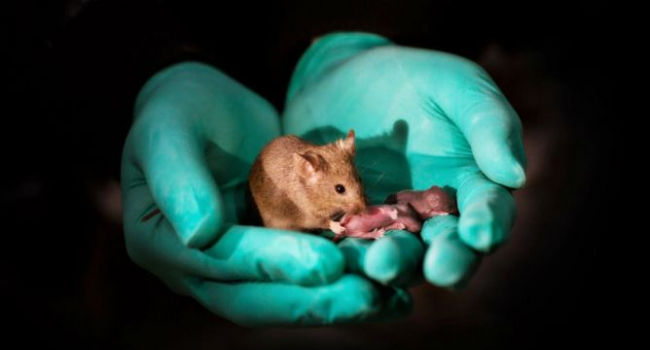
Unisexual reproduction is widespread among lower vertebrates, but not in mammals. Deletion of the H19 imprinted region in immature oocytes produced bimaternal mice with defective growth; however, bipaternal reproduction has not been previously achieved in mammals. We found that cultured parthenogenetic and androgenetic haploid embryonic stem cells (haESCs) display DNA hypomethylation resembling that of primordial germ cells.
Through MII oocyte injection or sperm coinjection with hypomethylated haploid ESCs carrying specific imprinted region deletions, we obtained live bimaternal and bipaternal mice. Deletion of 3 imprinted regions in parthenogenetic haploid ESCs restored normal growth of fertile bimaternal mice, whereas deletion of 7 imprinted regions in androgenetic haploid ESCs enabled production of live bipaternal mice that died shortly after birth. Phenotypic analyses of organ and body size of these mice support the genetic conflict theory of genomic imprinting. Taken together, our results highlight the factors necessary for crossing same-sex reproduction barriers in mammals.
First we performed reduced representation bisulfite sequencing (RRBS) for a global methylation analysis of androgenetic haploid ESCs (ahESCs, ∼passage 20 and 40) and phESCs (∼passage 20 and 40). The haploid ESCs exhibited global hypomethylation compared with oocyte, sperm, and tail tip fibroblasts (TTFs). At the chromosomal level, the methylation patterns of haploid ESCs were similar to those of embryonic day 10.5 (E10.5) primordial germ cells (PGCs), which had started global demethylation. Next we measured the average methylation levels at various genomic elements, including promoters, long interspersed nuclear elements (LINEs), short interspersed nuclear elements (SINEs), long terminal repeats (LTRs), enhancers, and imprinted regions.
The methylation levels of promoters, LINEs, SINEs, LTRs, and enhancers of haploid ESCs were similar to those of E10.5 PGCs. In particular, the imprinted regions that were demethylated in PGCs exhibited a low methylation level in haploid ESCs, similar to E13.5 PGCs. On the contrary, the intracisternal A-particle element (IAP), a demethylation-resistant component in PGCs (Lane et al., 2003), was maintained in haploid ESCs. Additionally, PGC-specific promotors showed similar hypomethylation patterns between haploid ESCs and PGCs.
Notably, the RRBS results also revealed that global hypomethylation and loss of imprint occurred earlier in phESCs (approximately passage 20) than in ahESCs (approximately passage 40). Bisulfite sequencing results also confirmed loss of imprints in early-passage phESCs (passage 20) but not in ahESCs (passage 24) (Figure 1E). Additional bisulfite sequencing analyses suggested different loss-of-imprint dynamics in phESCs and ahESCs. To interrogate the differences, we performed principal-component analysis (PCA) with all related samples.
The result showed that both the early- and late-passage phESCs as well as the late-passage ahESCs were clustered with hypomethylated PGCs, whereas the early-passage ahESCs were clustered with sperm and TTFs. The loss of DNA methylation occurred more rapidly in phESCs than in ahESCs, suggesting unknown differences in sperm and oocyte inherited genomes under naive ESC culture.
The hypomethylated ahESCs and phESCs presented a dome-shaped morphology, expressed typical pluripotency markers, and formed teratomas containing all three germ layers following subcutaneous injection into mice with severe combined immunodeficiency (SCID) . The hypomethylated haploid ESCs could generate germline-transmitted chimeric mice after injection into blastocysts, suggesting unimpaired pluripotency . Collectively, we found that phESCs and ahESCs exhibited PGC-like demethylation processes with different dynamics.
Production of Normal Bimaternal Mice with Hypomethylated phESCs
Previously, using homologous recombination, we introduced two deleted regions in phESCs and produced bimaternal mice (referred to as 2KO-bimaternal mice) by injection into MII oocytes . The cells were used after prolonged in vitro cultivation (∼40 passages) and were expected to display the PGC-like hypomethylation status.
We reported retardation of growth in juvenile 2KO-bimaternal mice (Li et al., 2016). The adult 2KO-bimaternal mice exhibited a slower velocity and shorter moving distance in the open field test. To understand these behavioral abnormalities, we compared the brain transcriptome of 2KO-bimaternal mice with the control and found 3 differentially imprinted genes: Th, Xlr3b, and Rasgrf1. The Th mutation caused hypoactivity (Zhou and Palmiter, 1995), whereas changes in Xlr3b expression affected cognition (Davies et al., 2005). Rasgrf1 expression affected olfactory learning and memory (Drake et al., 2011). Thus, all three genes had the potential to cause behavioral abnormalities when dysregulated. Impressively, the 2KO-bimaternal mice also exhibited longer lifespans than the control mice. To understand the increased longevity, we tested metabolism-related factors in 2KO-bimaternal mice. A negative regulator of human lifespan, Igf1, was found to be decreased in bimaternal mice. Additionally, the cholesterol level of these mice was found to be lower in serum biochemical tests. The above abnormalities in 2KO-bimaternal mice suggest the presence of postnatal developmental barriers in bimaternal reproduction.
Among the 3 differential genes in 2KO-bimaternal mice, Rasgrf1 was consistent between neonates and adults. We have also reported hypomethylation of the Rasgrf1 imprinted region in wild-type phESC-derived bimaternal embryos, which could develop up to E13.5 (Li et al., 2016). Accordingly, the Rasgrf1 imprinted region was hypomethylated in 2KO-bimaternal mice, early-passage phESCs, and late-passage ahESCs . Thus, we generated 3KO-phESCs by deleting the H19, IG, and Rasgrf1 imprinted regions by CRISPR-Cas9 in phESCs (approximately passage 24) and successfully derived bimaternal pups by MII oocyte injection . Notably, the 3KO-phESCs produced 29 (∼14%) live mice (referred to as 3KO-bimaternal mice) from 210 transferred embryos with an efficiency similar to that of round sperm. The body (1.36 ± 0.78 g, n = 10) and placenta weights (0.11 ± 0.0056 g, n = 14) were normal, and the Rasgrf1 expression level was recovered in these mice . Unexpectedly, global transcriptome analysis showed that all detected imprinted genes were regularly expressed. Consistent with this observation, the behaviors and growth curve of these mice were normalized . Additionally, all serum biochemical parameters and Igf1 expression were also normal in the 3KO-bimaternal mice.
Follow NEWS.am Medicine on Facebook and Twitter





- Most read
month
week
day
- Immunity: COVID-19 May Trigger a Mechanism Similar to the Development of Autoimmune Diseases 669
- Patient with Metastatic Pancreatic Cancer Remains Disease-Free for More Than Three Years After Experimental Treatment 663
- Scientists Identify Diet That Reduces Liver Fat and Prediabetes Risk More Effectively Than Others 621
- European Dietitian Recommends Eating Whole-Grain Bread Several Times a Day 555
- Global Number of People Living with Type 1 Diabetes Could Rise by 29% by 2049 553
- AI Assesses the Risk of Hypertension and Other Systemic Diseases From Eye Fundus Images 542
- Extreme Temperatures May Raise the Risk of Hospitalization for Heart Failure 469
- Scientists Identify Dozens of Overlooked Health Risks During Heatwaves 464
- Adolescent Alcohol Use Disrupts Brain Cell Connections and Alters Adult Behavior 457
- SciSign: Cancer-Associated Protein BRAF Identified as a Potential Driver of Chronic Pain 440
- Missing Summer Already? Simple Ways to Beat the Back-to-Work Blues 433
- AI Trained to Detect Four Lung Diseases Through Exhaled Breath 428
- Not Just APOE4: Scientists Identify 44 Genes That May Alter Alzheimer’s Risk 425
- NanoH: Scientists Develop a 15-Minute Blood Test to Monitor Circadian Rhythms 403
- European Journal of Nutrition: Some Additives in Ultra-Processed Foods May Be Linked to Depression Risk 391
- Find us on Facebook
- Poll