


- Latest news▼
-
12:47, October 7 Nature: Why Does the Immune System Stop Killing Dangerous “Zombie Cells”?

-
10:50, October 7 Nature: Why Does the Immune System Stop Killing Dangerous “Zombie Cells”?

-
08:44, October 7 Study: The Way a Person Speaks May Reveal Early Signs of Brain Aging

-
23:53, October 6 Study: One in Eight Cancer Cases Worldwide Is Linked to Preventable Infections

-
21:39, October 6 Sugar Exposure During the First 1,000 Days of Life Increases the Risk of Anxiety in Adulthood

-
19:56, October 6 Nature: AI Effectively Motivates Patients to Get Vaccinated

-
17:41, October 6 Cell: Vitamin D May Reduce Intestinal Inflammation

-
15:24, October 6 Scientists Find a Way to Rejuvenate Old Cells — Without Rewriting DNA

-
13:12, October 6 More Than 1,600 New Breast Cancer Cases Are Diagnosed in Armenia Every Year

-
08:39, October 6 NatCom: Losing belly fat slowed brain aging and protected memory

-
23:58, October 5 Dreaming: The more difficult the day, the more fear and anxiety appear in dreams

-
22:09, October 5 The 2026 Nobel Prize in Physiology or Medicine Recognized a Sequence of Discoveries

-
18:46, October 5 CanRes: The rate at which mutations accumulate in cells may determine cancer risk

-
14:06, October 5 Nobel Prize in Physiology or Medicine Awarded for Optogenetics

-
12:42, October 5 PNAS: The right hemisphere of the brain ages faster than the left

All materials
Patient with Metastatic Pancreatic Cancer Remains Disease-Free for More Than Three Years After Experimental Treatment
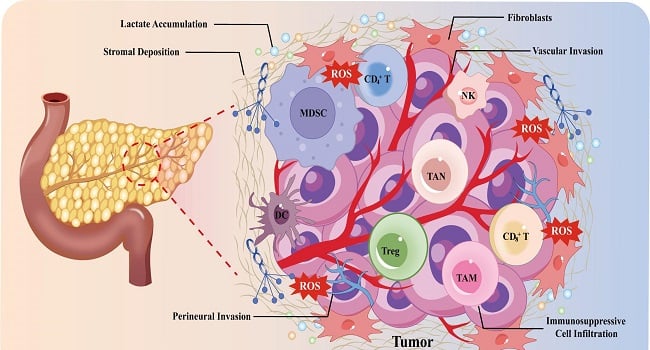
Researchers from Columbia University and Brown University have reported encouraging results from an early clinical study of a new treatment approach for metastatic pancreatic cancer. The findings were published in the journal Nature Communications.
The study involved 11 patients with newly diagnosed metastatic pancreatic cancer who had not previously received treatment. They were given a four-drug combination consisting of motixafortide, which blocks the CXCR4 receptor; the immunotherapy drug cemiplimab; and the chemotherapy agents gemcitabine and nab-paclitaxel.
One patient achieved a particularly remarkable response. The tumor responded so well to treatment that doctors were able to perform surgery. Examination of the removed tissue found no viable cancer cells, indicating a complete pathological response.
The patient has remained free of detectable disease for more than three years since starting treatment and for more than two years since surgery, without receiving any additional therapy. Such a response is considered extremely rare in metastatic pancreatic cancer.
Among all participants, median progression-free survival was 9.7 months, while median overall survival was 10.1 months. By comparison, with standard treatment using gemcitabine and nab-paclitaxel, these figures are typically around three to four months and six months, respectively.
The researchers believe the key to the results lies in targeting not only the tumor itself but also its surrounding microenvironment. Pancreatic cancer is surrounded by tissues and immune cells that create a strongly immunosuppressive environment, effectively protecting the tumor from attack by the immune system.
The scientists focused on the CXCR4/CXCL12 signaling pathway, which plays a role in creating this protective environment. First, motixafortide blocks CXCR4 and alters the tumor microenvironment. Immunotherapy and chemotherapy are then administered to attack the cancer. Animal experiments showed that the sequence in which the drugs are given is critical to the effectiveness of the approach.
The new strategy targets several mechanisms that help protect pancreatic tumors simultaneously.
The study also provided insights into why even initially effective treatment can eventually stop working.
Using single-cell analysis of blood and tumor tissue samples, the researchers found that the therapy does indeed alter the immune environment surrounding the tumor. Over time, however, T cells that attack cancer cells can enter a functionally exhausted state and lose their ability to sustain an effective immune response.
The researchers stress that the findings are preliminary and are based on a very small group of patients. Larger clinical trials will be needed to determine whether this treatment strategy can provide consistent benefits for people with metastatic pancreatic cancer.
Follow NEWS.am Medicine on Facebook and Twitter

- Related News
- Lund University receives $19.4 million NIH grant to develop Alzheimer’s blood test Lund University said the grant is the largest research award it has so far received through a competitive process from a US funding organization...
- NBC News: U.S. surgeons successfully separate conjoined twin girls joined at the head Doctors cannot yet say exactly how the surgery will affect their development in the long term...
- TCTV: New Drug Doubles Survival in Lung Cancer Pembrolizumab had remained the standard first-line treatment for NSCLC for nearly a decade in patients whose tumors express the relevant biomarker...
- At-Home Urine Test Could Detect Most Bladder Cancer Cases, Study Finds The study also found that the test identified all 17 cases of muscle-invasive bladder cancer and 35 of 36 high-grade tumours...
- When Parents Live to 100: How Their Children Differ From Others A total of 2,329 offspring of centenarians and 2,703 people in a control group were included in the analysis. The first group had at least one parent who had reached the age of 100.․․
- Video




- Event calendar
- Archive
- Most read
month
week
day
- The 2026 Nobel Prize in Physiology or Medicine Recognized a Sequence of Discoveries 971
- Study: Suicidal Ideation Among US Teens Began Rising Sharply After Nearly Two Decades of Decline 745
- WHO: Global Life Expectancy Has Almost Returned to Pre-Pandemic Levels 632
- Scientists Discover New Mechanism Linking Biological Clocks, Cold, and Fat Metabolism 626
- Ophthalmology: Tooth Discovered Growing in Upper Orbit of 16-Year-Old Indian Teenager 569
- Food & Function: Daily Consumption of 40 Grams of Walnuts Linked to Improved Overall Mood 560
- CanRes: The rate at which mutations accumulate in cells may determine cancer risk 517
- More Than 1,600 New Breast Cancer Cases Are Diagnosed in Armenia Every Year 513
- Sugar Exposure During the First 1,000 Days of Life Increases the Risk of Anxiety in Adulthood 508
- Dreaming: The more difficult the day, the more fear and anxiety appear in dreams 500
- Radiology: Low Spine Bone Density Linked to Cognitive Decline 500
- Food & Function: Peanuts Increase Brain Insulin Sensitivity in Older Adults 497
- Nobel Prize in Physiology or Medicine Awarded for Optogenetics 495
- Study: The Way a Person Speaks May Reveal Early Signs of Brain Aging 491
- Biological Psychiatry: Semaglutide Significantly Reduces Heavy Drinking Days 475
- Find us on Facebook
- Poll