


- Latest news▼
-
10:50, October 7 Nature: Why Does the Immune System Stop Killing Dangerous “Zombie Cells”?

-
08:44, October 7 Study: The Way a Person Speaks May Reveal Early Signs of Brain Aging

-
23:53, October 6 Study: One in Eight Cancer Cases Worldwide Is Linked to Preventable Infections

-
21:39, October 6 Sugar Exposure During the First 1,000 Days of Life Increases the Risk of Anxiety in Adulthood

-
19:56, October 6 Nature: AI Effectively Motivates Patients to Get Vaccinated
-
17:41, October 6 Cell: Vitamin D May Reduce Intestinal Inflammation

-
15:24, October 6 Scientists Find a Way to Rejuvenate Old Cells — Without Rewriting DNA

-
13:12, October 6 More Than 1,600 New Breast Cancer Cases Are Diagnosed in Armenia Every Year

-
08:39, October 6 NatCom: Losing belly fat slowed brain aging and protected memory

-
23:58, October 5 Dreaming: The more difficult the day, the more fear and anxiety appear in dreams

-
22:09, October 5 The 2026 Nobel Prize in Physiology or Medicine Recognized a Sequence of Discoveries

-
18:46, October 5 CanRes: The rate at which mutations accumulate in cells may determine cancer risk

-
14:06, October 5 Nobel Prize in Physiology or Medicine Awarded for Optogenetics

-
12:42, October 5 PNAS: The right hemisphere of the brain ages faster than the left

-
10:41, October 5 NYP: US surgeons amputated a healthy leg of a woman with cancer

All materials
Nature: Why Does the Immune System Stop Killing Dangerous “Zombie Cells”?
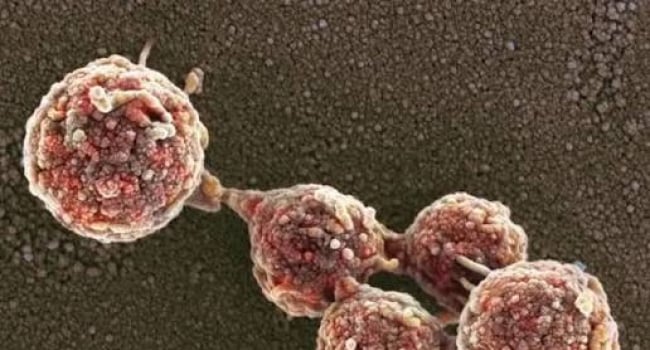
Scientists at the Albert Einstein College of Medicine in the United States have discovered why “zombie cells” — living cells that have stopped functioning normally and contribute to chronic inflammation — accumulate in the body with age. The main cause appears to be the decline of a cellular recycling process known as chaperone-mediated autophagy (CMA), which prevents the immune system from clearing tissues effectively. The study was published in the journal Nature Aging.
CMA uses specialized molecules called “chaperones” to remove damaged proteins. The activity of this mechanism declines with age. In experiments on mice, biologists led by Professor Ana Maria Cuervo found that impaired CMA in older animals affects not only the “zombie cells” themselves but also macrophages — immune cells responsible for eliminating them. Because cellular recycling is disrupted, toxic substances accumulate inside the zombie cells, leak out, affect neighboring healthy cells and make macrophages “blind” to the threat.
To address the problem, the researchers used a previously developed compound called CA77.1, which stimulates the cellular recycling mechanism. Five months of daily treatment in older rodents was enough to significantly reduce the accumulation of defective cells in organs, as well as signs of inflammation and fibrosis. The treatment restored the macrophages’ ability to engulf damaged material to levels seen in young animals. The researchers also successfully tested the compound in a model of idiopathic pulmonary fibrosis, a fatal disease that causes scarring of the lungs.
“Our study shows for the first time how the interaction between two hallmarks of aging allows ‘zombie cells’ to evade the immune system. Instead of trying to kill them, we may be able to restore their connection with the immune system so that the body can clear them naturally,” Dr. Cuervo said.
Until now, scientists seeking to combat senescent cells have been developing senolytics — drugs designed to selectively destroy them. However, testing such drugs on young cells in the laboratory does not necessarily reflect how they work in an aging organism. Defective cells are not always harmful: during wound healing, they release substances that attract other cells involved in tissue repair. In youth, the immune system quickly removes them once their job is done, but with age, this mechanism begins to fail, contributing to the development of neurodegenerative and vascular diseases. The new discovery raises hopes for a safer therapy that could help the body eliminate cellular debris on its own.
Follow NEWS.am Medicine on Facebook and Twitter





- Most read
month
week
day
- Thailand’s Health Ministry Warns of Leptospirosis in Flood-Affected Areas 740
- The Lancet Oncology: Infections Account for One in Eight Cancer Diagnoses Worldwide 689
- Study: Suicidal Ideation Among US Teens Began Rising Sharply After Nearly Two Decades of Decline 684
- ACS: Menthol Additive Significantly Prolongs and Intensifies the Effects of Nicotine 648
- Neuron: Lymph Node Removal Associated With a 25% Rate of Cognitive Impairment 648
- Xinhua: Fatty Diet Leads to the Formation of 248 Gallstones in Man 646
- Scientists Discover New Mechanism Linking Biological Clocks, Cold, and Fat Metabolism 571
- ABC News: 40% of the World’s Population Was Exposed to Dangerous Ozone Levels This Year 568
- Anti-Cancer Associations of China, Egypt and Kazakhstan Support Gevorg Tamamyan’s Candidacy 568
- PLOS Medicine: Brain Age Gap Was Largest in Dementia 564
- WHO: Global Life Expectancy Has Almost Returned to Pre-Pandemic Levels 560
- Ophthalmology: Tooth Discovered Growing in Upper Orbit of 16-Year-Old Indian Teenager 531
- The 2026 Nobel Prize in Physiology or Medicine Recognized a Sequence of Discoveries 529
- Biomolecules: Mulberries May Improve Gut Health and Metabolism 527
- CDN: Fruit Juice Does Not Lower Heart Disease Risk Like Whole Fruits 519
- Find us on Facebook
- Poll