


- Latest news▼
-
19:24, October 1 ABC News: 40% of the World’s Population Was Exposed to Dangerous Ozone Levels This Year

-
17:18, October 1 CDN: Fruit Juice Does Not Lower Heart Disease Risk Like Whole Fruits

-
15:16, October 1 PLOS Medicine: Brain Age Gap Was Largest in Dementia
-
13:14, October 1 Biomolecules: Mulberries May Improve Gut Health and Metabolism

-
11:00, October 1 Anti-Cancer Associations of China, Egypt and Kazakhstan Support Gevorg Tamamyan’s Candidacy

-
08:46, October 1 Food Is Always on Their Mind: Scientists Find Who Is More Likely to Experience “Food Noise”

-
20:25, September 30 Neuron: Lymph Node Removal Associated With a 25% Rate of Cognitive Impairment
-
18:24, September 30 The Lancet Oncology: Infections Account for One in Eight Cancer Diagnoses Worldwide

-
16:30, September 30 Xinhua: Fatty Diet Leads to the Formation of 248 Gallstones in Man

-
14:21, September 30 ACS: Menthol Additive Significantly Prolongs and Intensifies the Effects of Nicotine

-
12:23, September 30 MM: Excess Dietary Salt Raises the Risk of Fatty Liver Disease in Lean People

-
08:26, September 30 Scientists Discover a ‘Pause’ in Metastasis Development When Cancer Cells Are Especially Vulnerable
-
22:54, September 29 A Drop of Blood and 10 Minutes: Scientists Develop Rapid Test for Stroke Medications

-
20:37, September 29 AI Learns to Detect Damaged Areas of the Heart from Electrical Signals Recorded at the Body Surface

-
18:30, September 29 Pomegranate compound may improve heart function by up to 80% in study

All materials
PLOS Medicine: Brain Age Gap Was Largest in Dementia
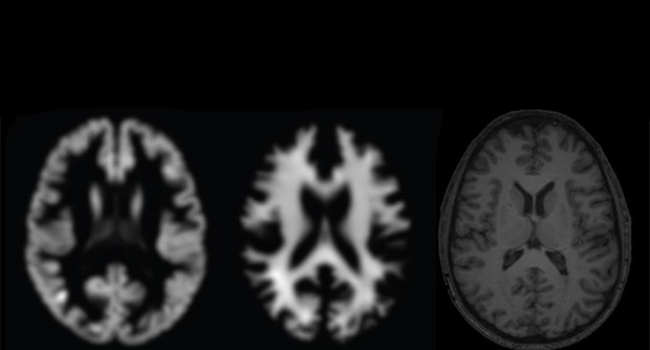
Scientists have identified which neurological and psychiatric disorders are associated with the greatest acceleration of brain aging. The largest gap between estimated “brain age” and chronological age was seen in neurodegenerative diseases, particularly Alzheimer’s disease. The study was published in the journal PLOS Medicine.
Researchers in China trained a model to estimate the “biological age” of the brain from MRI scans and then compared nearly 45,900 healthy people with 2,698 patients with various disorders. The measure was the difference between a person’s actual age and the age estimated by the neural network based on the condition of their brain.
The greatest brain aging was observed in people with Alzheimer’s disease and mild cognitive impairment. Markedly accelerated aging was also seen in people with substance use disorders and a number of psychiatric conditions. By contrast, no significant overall differences from the norm were found in people with ADHD or autism spectrum disorders.
Interestingly, different conditions affected different parts of the brain. Psychiatric disorders primarily involved the frontal and temporal lobes, substance use disorders affected networks associated with attention and self-control, while dementia was associated with changes in the frontal and occipital regions of the cortex. This suggests that “accelerated brain aging” is not a single process but rather a collection of different patterns. In the future, this approach could help identify groups at risk earlier and provide more precise assessments of how particular diseases affect the brain, although the findings currently represent statistical patterns rather than a ready-to-use diagnostic tool.
The concept of a brain’s “biological age,” which can differ from its chronological age, has been gaining increasing attention in recent years. Using an MRI scan, a neural network can estimate how “aged” the brain appears. If it looks older than a person’s actual age, this may indicate an underlying risk of disease. The new study suggests that different diseases leave different “signatures” in the brain, potentially helping distinguish them at earlier stages.
Follow NEWS.am Medicine on Facebook and Twitter



- Most read
month
week
day
- Experimental RNA therapy may help prevent muscle loss during GLP-1 weight loss 996
- Armenian pediatric oncologist Gevorg Tamamyan has been nominated by Botswana for the position of WHO Director-General 861
- Scientists develop device to obtain live cells from suspicious tissue for early cancer detection 802
- Study links overcrowding in emergency departments to hundreds of deaths each week 800
- Breath test may help distinguish cancerous lung nodules from benign ones, study finds 786
- Introduction of solid foods triggers early functional changes in the infant gut microbiome 766
- Magnetic bacteria extend worms’ lifespan by more than 43%, study finds 764
- Chronic pain after cesarean delivery can affect women for years, study finds 734
- Lund University receives $19.4 million NIH grant to develop Alzheimer’s blood test 677
- Virtual forest walk and classical music accelerated blood pressure reduction in emergency patients 668
- Could Earth’s magnetic field affect the aging process? 660
- Study: Loneliness and social isolation may cost up to six years of healthy life 654
- AI from Spain improves dermatological diagnosis 608
- When Visual Signals Conflict, the Brain Works to Reach a Consensus 516
- Coffee Can Disrupt Deep Sleep Even Without Keeping You Awake 484
- Find us on Facebook
- Poll