


- Latest news▼
-
18:24, September 30 The Lancet Oncology: Infections Account for One in Eight Cancer Diagnoses Worldwide

-
16:30, September 30 Xinhua: Fatty Diet Leads to the Formation of 248 Gallstones in Man

-
14:21, September 30 ACS: Menthol Additive Significantly Prolongs and Intensifies the Effects of Nicotine

-
12:23, September 30 MM: Excess Dietary Salt Raises the Risk of Fatty Liver Disease in Lean People

-
08:26, September 30 Scientists Discover a ‘Pause’ in Metastasis Development When Cancer Cells Are Especially Vulnerable

-
22:54, September 29 A Drop of Blood and 10 Minutes: Scientists Develop Rapid Test for Stroke Medications

-
20:37, September 29 AI Learns to Detect Damaged Areas of the Heart from Electrical Signals Recorded at the Body Surface

-
18:30, September 29 Pomegranate compound may improve heart function by up to 80% in study

-
16:42, September 29 From Caffeine to Polyphenols: Scientists Trace What Happens to Coffee in the Gut

-
12:00, September 29 The Netherlands finds euthanasia of child under two years old lawful

-
23:17, September 28 A&D: Stable employment in midlife linked to slower age-related memory decline

-
21:22, September 28 More than 1,500 cases of West Nile virus infection recorded in Europe

-
19:32, September 28 İHA: Turkish patient has tube inserted into left ear instead of right during surgery

-
15:10, September 28 Cell: Effects of Alzheimer’s risk gene APOE4 on the brain may be reversible

-
13:13, September 28 Translational Psychiatry: “Fluctuating” brain signals linked to excess weight

All materials
ACS: Menthol Additive Significantly Prolongs and Intensifies the Effects of Nicotine
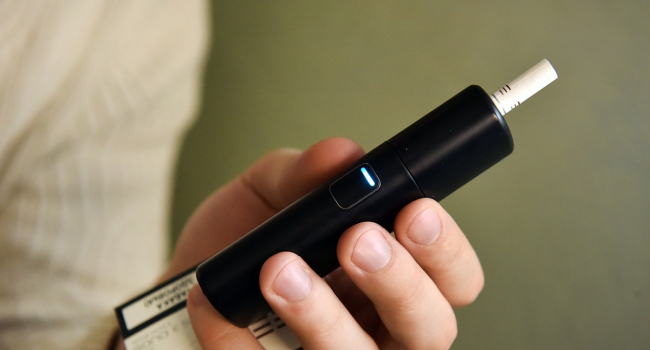
South Korean scientists have found that menthol flavoring in electronic cigarettes does more than give the aerosol a refreshing taste — it also significantly enhances nicotine’s effects on the body. The findings, which point to a previously hidden risk associated with the popular additive, were published in the scientific journal ACS Chemical Neuroscience.
In the experiment, 81 male rats were placed in a transparent chamber into which aerosol was delivered through a special device. The researchers compared exposure to vapor containing the pure alkaloid with exposure to a mixture containing menthol. The animals received puffs at five-minute intervals, after which the scientists measured levels of the toxin and its breakdown products in the blood. The researchers also monitored the animals’ body temperature, as a drop in temperature is a known physiological response to exposure to a psychoactive substance that affects thermoregulation.
The combination with menthol significantly altered metabolism. With nicotine alone, the animals’ body temperature began returning to normal more quickly, whereas in the group exposed to the menthol mixture, a noticeable decrease persisted even 120 minutes after inhalation. In addition, the animals had higher levels of metabolites in their blood, and the effects of the substance were more pronounced. This suggests that the mint additive acts as an enhancer, prolonging the time the toxin remains in the bloodstream.
“The most important point is that menthol cannot be considered simply a passive flavoring additive,” said lead study author Seong-Shun Yoon. According to him, the findings in rodents convincingly demonstrate that the flavoring changes both the intensity and duration of physiological effects and internal signals that the brain receives from the psychoactive compound.
In the near future, the laboratory plans to determine exactly how menthol alters the transmission of nerve signals in the brain and to investigate whether males and females respond differently to the substance.
The use of flavored liquids has long been a subject of debate among medical professionals. Many countries, including EU member states and the United States, already have restrictions on the sale of cigarettes with additives because they mask the bitterness of smoking and attract young people. The new findings suggest that menthol may pose a dual risk by directly affecting how the body processes the harmful alkaloid.
Follow NEWS.am Medicine on Facebook and Twitter





- Most read
month
week
day
- Experimental RNA therapy may help prevent muscle loss during GLP-1 weight loss 946
- Armenian pediatric oncologist Gevorg Tamamyan has been nominated by Botswana for the position of WHO Director-General 813
- Study links overcrowding in emergency departments to hundreds of deaths each week 769
- Scientists develop device to obtain live cells from suspicious tissue for early cancer detection 765
- Breath test may help distinguish cancerous lung nodules from benign ones, study finds 753
- Introduction of solid foods triggers early functional changes in the infant gut microbiome 744
- Magnetic bacteria extend worms’ lifespan by more than 43%, study finds 741
- Chronic pain after cesarean delivery can affect women for years, study finds 710
- GLP-1 Drugs Linked to Nutritional Deficiencies in Nearly 1 in 6 Children 647
- Lund University receives $19.4 million NIH grant to develop Alzheimer’s blood test 642
- Virtual forest walk and classical music accelerated blood pressure reduction in emergency patients 638
- Could Earth’s magnetic field affect the aging process? 638
- Study: Loneliness and social isolation may cost up to six years of healthy life 620
- AI from Spain improves dermatological diagnosis 564
- NEG: 71% of People with Pulmonary Nodules Are Non-Smokers 519
- Find us on Facebook
- Poll