


- Latest news▼
-
23:22, September 7 How Can a Fly’s Brain Help Us Understand Human Behavior?
-
21:18, September 7 How the Pursuit of Perfect Sleep Can Keep You Awake

-
08:37, September 7 Weight-Loss Drug May Affect Aging: Scientists Discover an Unexpected Effect of Semaglutide

-
20:53, September 5 npj Science of Food: A Spoonful of Vegetable Oil Before a Carb-Rich Meal May Blunt Blood Sugar Spikes

-
13:26, September 5 In the U.S., Prescriptions for Obesity Drugs for Children Under 12 Increased 310-Fold in Seven Years

-
23:20, September 4 TCTV: New Drug Doubles Survival in Lung Cancer

-
11:10, September 4 SB: The Rule of Drinking Eight Glasses of Water a Day Has No Scientific Basis

-
08:46, September 4 JID: Popular Weight-Loss Drugs May Increase the Risk of Male Pattern Hair Loss by 7%

-
22:46, September 3 At-Home Urine Test Could Detect Most Bladder Cancer Cases, Study Finds

-
20:38, September 3 Alcohol-Related Cancer Deaths Double in the U.S. as the Number of Such Deaths Rises Over 33 Years

-
18:29, September 3 An Unexpected Paradox: Both Very Low and Very High Testosterone Levels May Be Equally Dangerous for the Heart

-
16:11, September 3 The Independent: Aging Is the Main Risk Factor for Cancer

-
14:13, September 3 CC: Age-Related Changes in Memory May Begin as Early as 50

-
08:34, September 3 Scientists Find Who May Benefit More from Coffee in Terms of Parkinson’s Disease Risk

-
23:37, September 2 LDE: Popular Diabetes Drugs Linked to Risk of a Dangerous Complication in Certain Patients

All materials
Taste perception depends on diet, study clams

The taste of food largely determines our experience, Eurek Alert reported referring to the study.
“Researchers at the University of Sydney have discovered the basic science of how sweet taste perception is fine-tuned in response to different diets,” the source noted.
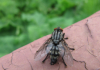
Experts carried out a sensor analysis on the proboscis of the fruit fly and on its front legs, which showed that a protein-restricted diet that allows the body to live much longer also increases the intensity of sucrose perception.
“The response was also really specific. For example, when we fed flies food that had no sweetness, the animals' sweet taste perception was enhanced, but only for glucose, not for fructose. We have no idea why they specifically focus just on one kind of sugar when they perceive them both as sweet,” said Professor Wang, who led the study.
But the abundance of sugar in the diet, on the contrary, suppresses the perception of sweet taste, making sugar subjectively less sweet. In this case, the sense of taste is controlled by dopamine.
By the way, that study found artificial sweeteners activate a neuronal starvation pathway, and end up promoting increased food intake, especially when combined with a low-carb diet.
Follow NEWS.am Medicine on Facebook and Twitter





- Most read
month
week
day
- An Unexpected Paradox: Both Very Low and Very High Testosterone Levels May Be Equally Dangerous for the Heart 949
- Alcohol-Related Cancer Deaths Double in the U.S. as the Number of Such Deaths Rises Over 33 Years 871
- The Independent: Aging Is the Main Risk Factor for Cancer 851
- CC: Age-Related Changes in Memory May Begin as Early as 50 846
- LDE: Popular Diabetes Drugs Linked to Risk of a Dangerous Complication in Certain Patients 845
- At-Home Urine Test Could Detect Most Bladder Cancer Cases, Study Finds 831
- Scientists Find Who May Benefit More from Coffee in Terms of Parkinson’s Disease Risk 715
- SB: The Rule of Drinking Eight Glasses of Water a Day Has No Scientific Basis 46
- TCTV: New Drug Doubles Survival in Lung Cancer 43
- JID: Popular Weight-Loss Drugs May Increase the Risk of Male Pattern Hair Loss by 7% 33
- npj Science of Food: A Spoonful of Vegetable Oil Before a Carb-Rich Meal May Blunt Blood Sugar Spikes 29
- Weight-Loss Drug May Affect Aging: Scientists Discover an Unexpected Effect of Semaglutide 28
- How the Pursuit of Perfect Sleep Can Keep You Awake 28
- In the U.S., Prescriptions for Obesity Drugs for Children Under 12 Increased 310-Fold in Seven Years 27
- How Can a Fly’s Brain Help Us Understand Human Behavior? 24
- Find us on Facebook
- Poll