


- Latest news▼
-
21:36, October 24 From Cancer to Alzheimer's Disease: Scientists Call for a Major International Human Microbiome Research Initiative

-
18:14, October 24 How Ultra-Processed Foods Affect Children's Brains: Study Links Brain Activity to Weight Gain

-
15:39, October 24 Scientists Create Immune Cell Atlas That Could Help Assess Cancer Risk and Premature Death

-
13:42, October 24 New mRNA Vaccine Reduces Risk of Melanoma Recurrence After Surgery by 42%

-
08:37, October 24 Mice Help Scientists Uncover the Cause of a Rare Disease
-
22:53, October 23 Scientists Use ChatGPT-Like Technology to Assess Stroke Risk From Human DNA

-
20:56, October 23 Nubar Afeyan’s Company Tests Skin Cancer Vaccine: Risk of Recurrence Falls by 42%

-
18:49, October 23 bioRxiv: Cholesterol May Interfere with the Brain’s Ability to Clear Toxic Proteins

-
16:56, October 23 PLOS One: A Short Strength-Training Routine Improved Balance and Strength in Adults Over 65

-
14:50, October 23 A Simple 15-Minute Procedure Helped Patients with Carpal Tunnel Syndrome Avoid Surgery

-
12:53, October 23 Scientists Rejuvenate Cells by More Than 60 Years for the First Time

-
10:47, October 23 WHO Comments on First Documented Human Death Linked to Shamonda Virus

-
08:24, October 23 A Single Tooth Can Reveal Six Types of Information About a Person, Including Their Health

-
20:34, October 22 Medical Xpress: Hypnosis and Psychotherapy May Help Relieve Chronic Abdominal Pain in Children

-
18:51, October 22 Nature: Cold Triggers Muscles to Produce Protective Metabolite BH2

All materials
How the Pursuit of Perfect Sleep Can Keep You Awake
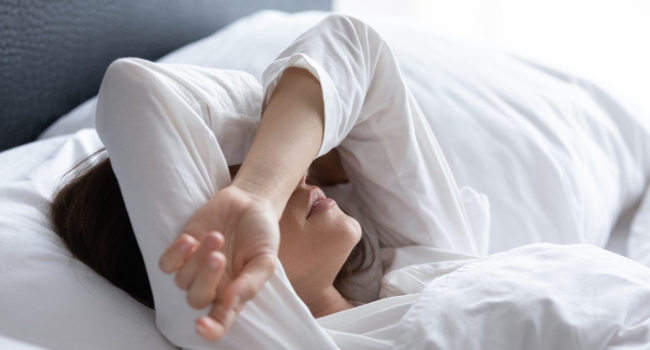
Sleep-quality scores, magnesium supplements, white-noise recordings — what was once a simple process has turned into a maze of recommendations and technologies. The pursuit of optimizing sleep by every possible means has become known as “sleepmaxxing.” But taking these efforts too far can lead to orthosomnia, a term specialists use to describe an obsessive preoccupation with achieving perfect sleep.
Orthosomnia is not officially recognized as a separate disorder in the United Kingdom. However, doctors told the BBC that they are increasingly seeing signs of it in patients. Some people come to appointments with data from fitness trackers and other sleep-monitoring devices, convinced — often incorrectly — that they have a sleep disorder. According to doctors, becoming overly focused on these metrics and trying to sleep “perfectly” can ultimately make sleep worse.
How and why has sleep become such a complicated task? And if sleepmaxxing does not help, what is the elusive secret to a good night’s sleep?
The first commercial fitness tracker with sleep-monitoring capabilities was the Fitbit Classic, released in 2009.
Since then, sleep tracking has become available on many other wearable devices, including gadgets from Garmin, Whoop, and Apple, as well as smart rings such as Oura, Ultrahuman, and RingConn.
The capabilities of these devices vary, but they generally provide users with a report on the previous night, breaking sleep down into different stages: wakefulness, light sleep, deep sleep, and rapid eye movement (REM) sleep. Many devices also give users a so-called “sleep score.”
However, the very concept of such a score is “completely made up,” according to Dr. Alanna Hare, a sleep medicine specialist at Royal Brompton Hospital in London.
“There is no universally recognized measure called a ‘sleep score’ in sleep science,” she says. “It was simply invented by device manufacturers.”
Hare says she has noticed that tracker data can cause anxiety among her patients.
“I’m seeing more people coming to me with data from various trackers and lots of questions about sleep that are probably contributing to their sleep problems in the first place,” she says.
According to Hare, even when medical tests show that there is no reason for concern, this does not always help patients overcome their anxiety.
“It’s good that sleep is now receiving more attention as an important component of health,” she adds. “But sleep is very difficult to optimize to perfection.”
A class-action lawsuit filed against Oura in San Francisco last month alleges that the company’s rings cannot accurately determine sleep quality and sleep stages. According to the plaintiffs, the devices instead rely on AI-generated estimates whose accuracy is comparable to “flipping a coin.”
Oura responded by saying that it is “confident in the scientific validity of its research and claims about the accuracy” of its devices.
“We strive to clearly explain which metrics Oura actually measures, which ones it estimates, and how users should interpret this information,” the company added.
Research also suggests that sleep trackers can affect a person’s well-being and performance during the day, even when the data they provide are inaccurate. In one Oxford University study, participants were given trackers that provided them with a sleep-quality score every morning.
However, these scores were generated randomly and had nothing to do with how well the participants had actually slept.
That is exactly what Jess Hill noticed after buying a Garmin watch several years ago.
“I started treating the watch almost like a Bible that determined whether I had slept well or not,” said the 32-year-old human resources professional from London.
“I would think, ‘I slept terribly, so today is going to be really difficult,’ when in fact I had probably slept perfectly well. And if the watch said I had slept really well, I convinced myself that I had to be at my best — and even if I felt tired, I would force myself to keep working,” Jess says.
Her “obsession,” as she describes it, with achieving a high sleep score lasted three years. The situation changed only at the beginning of this year, when Jess began noticing that the watch’s readings did not correspond to how she had actually slept.
“Recently, I didn’t sleep for four hours during the night, and the watch gave me something like, ‘Wow, great sleep!’ I was literally awake from 1 a.m. to 5 a.m.,” she says.
Sleep expert and author of How to Sleep Well, Dr. Neil Stanley, believes that turning sleep into a kind of game based on metrics and targets only creates additional problems.
“When you track sleep, you get a specific number, and that means you have a target,” he says. “As a result, you get caught in a vicious cycle and start worrying about the quality or duration of your sleep based on those numbers.”
Stanley says that about 40 years ago he conducted research into actigraphy, a method of monitoring sleep using devices worn on the wrist.
Modern commercial trackers have become somewhat more sophisticated, but their basic principle remains largely the same: they analyze a person’s movements. Therefore, many of the same limitations remain, he says.
“If you want to measure sleep, you need to measure brain activity,” Stanley adds. “If you are not recording brain activity, you are not measuring sleep itself.”
Hare recommends:
-
Keep the bedroom cool, dark, and quiet — but without becoming obsessive about it. “It doesn’t mean the room has to be pitch black, exactly 16°C, and completely silent,” she says. “It’s enough for it to be relatively cool, dark, and quiet.”
-
Spend more time in bright light in the morning. This helps regulate circadian rhythms, the body’s internal biological clock.
-
Get some light physical exercise and follow “a healthy Mediterranean-style diet with a wide variety of plant-based foods.”
Follow NEWS.am Medicine on Facebook and Twitter

- Related News
- When Diet and Exercise Aren’t Enough: Who Can Benefit from Weight-Loss Medications? If dietary changes and increased physical activity fail to produce at least 5% weight loss, patients can discuss medication options with their doctor...
- Tea May Benefit Heart Health — but Drinking It Scalding Hot Could Be Risky The study also found that moderate-strength tea was associated with a lower risk...
- A Simple Way to Blunt Blood Sugar Spikes After Meals In the experiments, mice were divided into groups after an overnight fast...
- Study: Healthy Diet During Pregnancy Reduces the Risk of Colic and Eczema in Children A higher MDS indicated a healthier diet rich in fruits, vegetables, whole grains, legumes, and healthy fats, with moderate amounts of dairy products and lean protein...
- F&F: Japanese Apricot May Help Fight Helicobacter pylori In experiments on mice, the extract reduced inflammation and promoted the restoration of the stomach lining...
- Video



- Event calendar
- Archive
- Most read
month
week
day
- Tea May Benefit Heart Health — but Drinking It Scalding Hot Could Be Risky 386
- Why Some People Avoid Alzheimer’s Despite Carrying a High-Risk Gene 348
- LSD does more than disrupt brain rhythms: It speeds them up and increases signal complexity 329
- Nine-year study links changing loneliness patterns to increased heart disease risk 321
- PLOS: Yogurt and Canned Beans May Help Reduce the Risk of Colorectal Cancer 295
- Scientists Rejuvenate Cells by More Than 60 Years for the First Time 293
- bioRxiv: Cholesterol May Interfere with the Brain’s Ability to Clear Toxic Proteins 273
- Nubar Afeyan’s Company Tests Skin Cancer Vaccine: Risk of Recurrence Falls by 42% 270
- Scientists Use ChatGPT-Like Technology to Assess Stroke Risk From Human DNA 263
- PLOS One: A Short Strength-Training Routine Improved Balance and Strength in Adults Over 65 256
- AJOG: Birth Weight Is Linked to Later Performance in Math and Reading 242
- SciRep: Walking More Than 8,000 Steps a Day Is Linked to Better Attention 233
- Noise-Canceling Headphones Reduced the Risk of Nausea After Gynecological Surgery by 32% 233
- WHO Comments on First Documented Human Death Linked to Shamonda Virus 223
- Scientists Unveil Scanner That Captures Whole-Body Images in Just 60 Seconds 219
- Find us on Facebook
- Poll