


- Latest news▼
-
23:22, September 7 How Can a Fly’s Brain Help Us Understand Human Behavior?

-
21:18, September 7 How the Pursuit of Perfect Sleep Can Keep You Awake

-
08:37, September 7 Weight-Loss Drug May Affect Aging: Scientists Discover an Unexpected Effect of Semaglutide

-
20:53, September 5 npj Science of Food: A Spoonful of Vegetable Oil Before a Carb-Rich Meal May Blunt Blood Sugar Spikes

-
13:26, September 5 In the U.S., Prescriptions for Obesity Drugs for Children Under 12 Increased 310-Fold in Seven Years

-
23:20, September 4 TCTV: New Drug Doubles Survival in Lung Cancer

-
11:10, September 4 SB: The Rule of Drinking Eight Glasses of Water a Day Has No Scientific Basis

-
08:46, September 4 JID: Popular Weight-Loss Drugs May Increase the Risk of Male Pattern Hair Loss by 7%

-
22:46, September 3 At-Home Urine Test Could Detect Most Bladder Cancer Cases, Study Finds

-
20:38, September 3 Alcohol-Related Cancer Deaths Double in the U.S. as the Number of Such Deaths Rises Over 33 Years

-
18:29, September 3 An Unexpected Paradox: Both Very Low and Very High Testosterone Levels May Be Equally Dangerous for the Heart

-
16:11, September 3 The Independent: Aging Is the Main Risk Factor for Cancer

-
14:13, September 3 CC: Age-Related Changes in Memory May Begin as Early as 50

-
08:34, September 3 Scientists Find Who May Benefit More from Coffee in Terms of Parkinson’s Disease Risk

-
23:37, September 2 LDE: Popular Diabetes Drugs Linked to Risk of a Dangerous Complication in Certain Patients
All materials
Scientists Identify a Possible Brain “Switch” That Controls Habit Formation
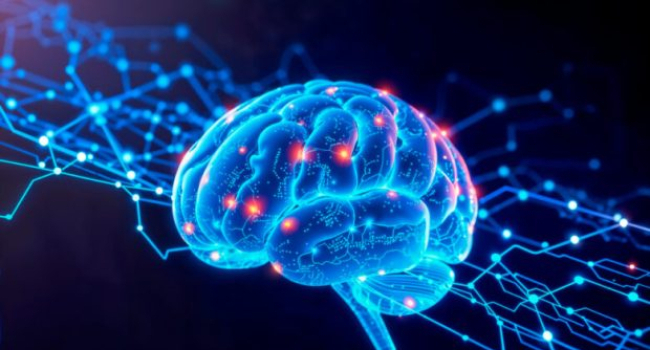
Researchers from Johns Hopkins University have found evidence that habits may not develop gradually, as scientists have believed for more than a century. Instead, behavior may shift abruptly, switching from a conscious, goal-directed state to an automatic one. The study was published in the journal Nature Communications.
For decades, the dominant theory suggested that habits emerge through the slow accumulation of repeated actions: the more often a person performs a behavior, the less consciously aware they become of it over time.
The new findings, however, suggest that the process may be far more sudden and nonlinear.
To investigate this possibility, the researchers developed an experimental model that allowed them to track animal behavior in real time.
Unlike traditional approaches, which typically compare behavior only at the beginning and end of learning, the new method enabled scientists to observe the transition between “goal-directed action” and “habitual behavior” as it occurred.
In the experiment, mice were given access to water they found less appealing but could obtain a preferred type of water by responding to a specific sound cue. Because the animals were not strongly thirsty, their behavior remained flexible—they sometimes responded to the signal and sometimes ignored it.
At a certain point, however, a dramatic shift occurred. The mice began responding consistently to the cue regardless of whether they specifically wanted the preferred water. The change resembled an instantaneous “strategy switch.”
Measurements of brain activity suggested that a particular neural mechanism may become engaged at this moment, driving the transition from deliberate action to automatic behavior.
According to the researchers, the findings point to the existence of a kind of neural “controller” that moves behavior into habit mode.
Interestingly, the reverse transition also appeared possible. When conditions changed, some animals reverted to more deliberate, goal-oriented behavior even after displaying stable habits for an extended period. This challenges the long-standing view that habits are largely irreversible once established.
The authors note that the findings could have important implications for understanding and modifying persistent behavioral patterns, ranging from everyday bad habits to addiction-related behaviors.
If such a neural “switch” truly exists, it may eventually be possible to modulate it and help shift behavior from an automatic state back into conscious control.
Follow NEWS.am Medicine on Facebook and Twitter





- Most read
month
week
day
- An Unexpected Paradox: Both Very Low and Very High Testosterone Levels May Be Equally Dangerous for the Heart 960
- Alcohol-Related Cancer Deaths Double in the U.S. as the Number of Such Deaths Rises Over 33 Years 881
- The Independent: Aging Is the Main Risk Factor for Cancer 862
- CC: Age-Related Changes in Memory May Begin as Early as 50 848
- At-Home Urine Test Could Detect Most Bladder Cancer Cases, Study Finds 841
- Scientists Find Who May Benefit More from Coffee in Terms of Parkinson’s Disease Risk 715
- SB: The Rule of Drinking Eight Glasses of Water a Day Has No Scientific Basis 87
- JID: Popular Weight-Loss Drugs May Increase the Risk of Male Pattern Hair Loss by 7% 85
- npj Science of Food: A Spoonful of Vegetable Oil Before a Carb-Rich Meal May Blunt Blood Sugar Spikes 81
- Weight-Loss Drug May Affect Aging: Scientists Discover an Unexpected Effect of Semaglutide 81
- In the U.S., Prescriptions for Obesity Drugs for Children Under 12 Increased 310-Fold in Seven Years 80
- TCTV: New Drug Doubles Survival in Lung Cancer 80
- How the Pursuit of Perfect Sleep Can Keep You Awake 79
- How Can a Fly’s Brain Help Us Understand Human Behavior? 72
- Find us on Facebook
- Poll