


- Latest news▼
-
23:22, September 7 How Can a Fly’s Brain Help Us Understand Human Behavior?

-
21:18, September 7 How the Pursuit of Perfect Sleep Can Keep You Awake

-
08:37, September 7 Weight-Loss Drug May Affect Aging: Scientists Discover an Unexpected Effect of Semaglutide

-
20:53, September 5 npj Science of Food: A Spoonful of Vegetable Oil Before a Carb-Rich Meal May Blunt Blood Sugar Spikes

-
13:26, September 5 In the U.S., Prescriptions for Obesity Drugs for Children Under 12 Increased 310-Fold in Seven Years

-
23:20, September 4 TCTV: New Drug Doubles Survival in Lung Cancer
-
11:10, September 4 SB: The Rule of Drinking Eight Glasses of Water a Day Has No Scientific Basis

-
08:46, September 4 JID: Popular Weight-Loss Drugs May Increase the Risk of Male Pattern Hair Loss by 7%

-
22:46, September 3 At-Home Urine Test Could Detect Most Bladder Cancer Cases, Study Finds

-
20:38, September 3 Alcohol-Related Cancer Deaths Double in the U.S. as the Number of Such Deaths Rises Over 33 Years

-
18:29, September 3 An Unexpected Paradox: Both Very Low and Very High Testosterone Levels May Be Equally Dangerous for the Heart
-
16:11, September 3 The Independent: Aging Is the Main Risk Factor for Cancer

-
14:13, September 3 CC: Age-Related Changes in Memory May Begin as Early as 50

-
08:34, September 3 Scientists Find Who May Benefit More from Coffee in Terms of Parkinson’s Disease Risk

-
23:37, September 2 LDE: Popular Diabetes Drugs Linked to Risk of a Dangerous Complication in Certain Patients

All materials
Grapefruit Compound May Help Reduce Inflammation in Fatty Liver Disease
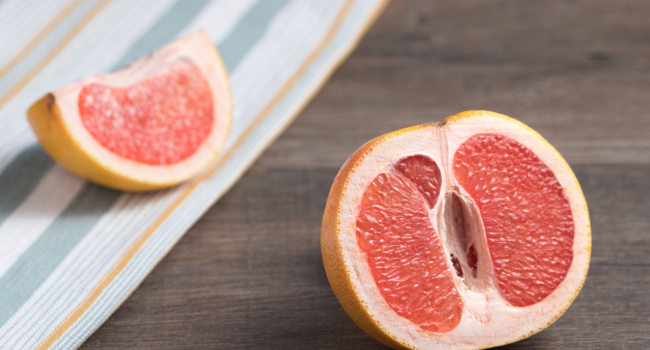
A plant-derived compound found in grapefruits and bitter oranges may help alleviate non-alcoholic fatty liver disease (NAFLD) by improving lipid metabolism, according to new research.
A research team investigated the therapeutic potential of neohesperidin, a natural citrus flavonoid, in treating NAFLD. Their promising findings were published in the journal Phytotherapy Research.
Non-alcoholic fatty liver disease is a common condition that can have serious long-term health consequences, according to Planet Today. Previous research has shown that fatty liver disease significantly increases the risk of premature death, underscoring the urgent need for more effective treatments.
As the global prevalence of NAFLD continues to rise, identifying new therapeutic strategies has become a major focus of scientific research.
For example, another research team in China recently reported in the journal PharmaNutrition that a combination of traditional Chinese medicine and milk thistle extract may also provide meaningful benefits for people with fatty liver disease.
In the current study, researchers evaluated the effects of neohesperidin using both cultured liver cells and mice that developed fatty liver disease after being fed a high-fat diet.
The results showed that neohesperidin significantly reduced lipid accumulation in both cell cultures and the livers of the mice.
According to the researchers, neohesperidin directly bound to the PHE248 amino acid residue of ECHS1, a key enzyme involved in the β-oxidation of fatty acids, and prevented its degradation. This stabilized the enzyme, enhanced the breakdown of fats, and improved lipid metabolism.
The compound's overall therapeutic effect also depended on regulating the PPARα signaling pathway, which plays a central role in fat metabolism and liver function.
Overall, the findings suggest that neohesperidin could become a promising therapeutic option for treating non-alcoholic fatty liver disease, while ECHS1 represents a potential new therapeutic target.
"This opens a new strategy for combating non-alcoholic fatty liver disease by restoring lipid homeostasis through specifically regulating protein stability," the researchers concluded.
Follow NEWS.am Medicine on Facebook and Twitter





- Most read
month
week
day
- An Unexpected Paradox: Both Very Low and Very High Testosterone Levels May Be Equally Dangerous for the Heart 986
- Alcohol-Related Cancer Deaths Double in the U.S. as the Number of Such Deaths Rises Over 33 Years 902
- The Independent: Aging Is the Main Risk Factor for Cancer 886
- At-Home Urine Test Could Detect Most Bladder Cancer Cases, Study Finds 862
- CC: Age-Related Changes in Memory May Begin as Early as 50 852
- Scientists Find Who May Benefit More from Coffee in Terms of Parkinson’s Disease Risk 717
- npj Science of Food: A Spoonful of Vegetable Oil Before a Carb-Rich Meal May Blunt Blood Sugar Spikes 142
- JID: Popular Weight-Loss Drugs May Increase the Risk of Male Pattern Hair Loss by 7% 142
- TCTV: New Drug Doubles Survival in Lung Cancer 141
- SB: The Rule of Drinking Eight Glasses of Water a Day Has No Scientific Basis 139
- Weight-Loss Drug May Affect Aging: Scientists Discover an Unexpected Effect of Semaglutide 137
- How the Pursuit of Perfect Sleep Can Keep You Awake 137
- In the U.S., Prescriptions for Obesity Drugs for Children Under 12 Increased 310-Fold in Seven Years 136
- How Can a Fly’s Brain Help Us Understand Human Behavior? 130
- Find us on Facebook
- Poll