


- Latest news▼
-
23:22, September 7 How Can a Fly’s Brain Help Us Understand Human Behavior?

-
21:18, September 7 How the Pursuit of Perfect Sleep Can Keep You Awake

-
08:37, September 7 Weight-Loss Drug May Affect Aging: Scientists Discover an Unexpected Effect of Semaglutide

-
20:53, September 5 npj Science of Food: A Spoonful of Vegetable Oil Before a Carb-Rich Meal May Blunt Blood Sugar Spikes

-
13:26, September 5 In the U.S., Prescriptions for Obesity Drugs for Children Under 12 Increased 310-Fold in Seven Years

-
23:20, September 4 TCTV: New Drug Doubles Survival in Lung Cancer

-
11:10, September 4 SB: The Rule of Drinking Eight Glasses of Water a Day Has No Scientific Basis

-
08:46, September 4 JID: Popular Weight-Loss Drugs May Increase the Risk of Male Pattern Hair Loss by 7%

-
22:46, September 3 At-Home Urine Test Could Detect Most Bladder Cancer Cases, Study Finds

-
20:38, September 3 Alcohol-Related Cancer Deaths Double in the U.S. as the Number of Such Deaths Rises Over 33 Years

-
18:29, September 3 An Unexpected Paradox: Both Very Low and Very High Testosterone Levels May Be Equally Dangerous for the Heart

-
16:11, September 3 The Independent: Aging Is the Main Risk Factor for Cancer

-
14:13, September 3 CC: Age-Related Changes in Memory May Begin as Early as 50

-
08:34, September 3 Scientists Find Who May Benefit More from Coffee in Terms of Parkinson’s Disease Risk

-
23:37, September 2 LDE: Popular Diabetes Drugs Linked to Risk of a Dangerous Complication in Certain Patients

All materials
Rapidly Spreading Genetic Mutations Threaten the Effectiveness of Malaria Treatment
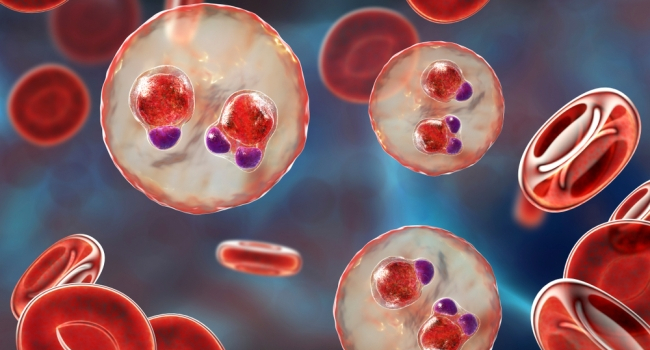
Newly identified genetic changes in malaria parasites are spreading rapidly in Uganda and may be reducing the effectiveness of several widely used antimalarial drugs, according to research led by scientists at Brown University.
The findings, published in Nature Medicine, provide new clues to the growing problem of drug-resistant malaria and identify a potential molecular marker that could help health authorities monitor the emergence and spread of resistant parasites.
New Genetic Changes Linked to Drug Resistance
Researchers analyzed the complete genomes of malaria parasites collected from the blood of hundreds of infected people in Uganda. They identified a group of genetic variants associated with reduced susceptibility to some of the most commonly used antimalarial medicines.
The study focused on Plasmodium falciparum, the parasite responsible for the most severe form of malaria.
In Uganda, the main treatment for uncomplicated malaria for roughly two decades has been artemether-lumefantrine (AL), an artemisinin-based combination therapy widely used across sub-Saharan Africa.
The researchers identified a region of the parasite's genome containing 69 genes. Further analysis revealed a combination of three mutations and two deletions that was associated with reduced susceptibility to artemisinin and lumefantrine — the two components of AL — as well as to mefloquine.
The mutations most strongly linked to this change were found in a gene encoding PX1, a phosphoinositide-binding protein. The gene is located near another gene that has previously been associated with moderate resistance to artemisinin.
According to the researchers, this is the first time a specific genetic change has been linked to reduced susceptibility to multiple drugs used in malaria combination therapy.
A Potential Marker for Monitoring Resistance
Scientists have been tracking malaria drug resistance for years, but surveillance programs have largely focused on genetic markers that were already known to be associated with resistance.
The newly identified PX1-related mutations could provide an additional tool for monitoring how resistance develops and spreads.
Researchers say the finding is particularly important because the mutations appear to be spreading rapidly in Uganda. However, it is not yet clear how widely they have spread beyond the country's borders.
The study also does not establish whether the genetic changes directly lead to worse treatment outcomes in patients. The parasites were studied in laboratory experiments after being collected from infected people, so further clinical research is needed to determine how these mutations affect the success of antimalarial therapy.
Growing Concern Over Treatment Failure
Drug resistance develops when parasites are repeatedly exposed to medicines, allowing variants that can survive treatment to become more common.
The emergence of reduced susceptibility to both artemisinin and lumefantrine is particularly concerning because these drugs form the backbone of malaria treatment in many African countries.
The researchers say the findings highlight the importance of incorporating the newly identified mutations into genetic surveillance programs. Monitoring their geographic spread could help health authorities detect changes in drug susceptibility before treatment failures become more widespread.
The study also points to the need for better prediction models that can help estimate when existing antimalarial therapies may lose their effectiveness.
According to the researchers, the findings reinforce two urgent priorities: closely monitoring the evolution of drug-resistant malaria and accelerating the development of new treatments.
Because malaria remains a major cause of illness and death, particularly in sub-Saharan Africa, the continued spread of resistant parasites could make controlling the disease increasingly difficult.
Follow NEWS.am Medicine on Facebook and Twitter





- Most read
month
week
day
- An Unexpected Paradox: Both Very Low and Very High Testosterone Levels May Be Equally Dangerous for the Heart 971
- Alcohol-Related Cancer Deaths Double in the U.S. as the Number of Such Deaths Rises Over 33 Years 891
- The Independent: Aging Is the Main Risk Factor for Cancer 872
- At-Home Urine Test Could Detect Most Bladder Cancer Cases, Study Finds 851
- CC: Age-Related Changes in Memory May Begin as Early as 50 850
- Scientists Find Who May Benefit More from Coffee in Terms of Parkinson’s Disease Risk 716
- SB: The Rule of Drinking Eight Glasses of Water a Day Has No Scientific Basis 113
- JID: Popular Weight-Loss Drugs May Increase the Risk of Male Pattern Hair Loss by 7% 111
- Weight-Loss Drug May Affect Aging: Scientists Discover an Unexpected Effect of Semaglutide 109
- npj Science of Food: A Spoonful of Vegetable Oil Before a Carb-Rich Meal May Blunt Blood Sugar Spikes 108
- How the Pursuit of Perfect Sleep Can Keep You Awake 108
- TCTV: New Drug Doubles Survival in Lung Cancer 108
- In the U.S., Prescriptions for Obesity Drugs for Children Under 12 Increased 310-Fold in Seven Years 107
- How Can a Fly’s Brain Help Us Understand Human Behavior? 98
- Find us on Facebook
- Poll