


- Latest news▼
-
12:47, October 7 Nature: Why Does the Immune System Stop Killing Dangerous “Zombie Cells”?

-
10:50, October 7 Nature: Why Does the Immune System Stop Killing Dangerous “Zombie Cells”?

-
08:44, October 7 Study: The Way a Person Speaks May Reveal Early Signs of Brain Aging

-
23:53, October 6 Study: One in Eight Cancer Cases Worldwide Is Linked to Preventable Infections

-
21:39, October 6 Sugar Exposure During the First 1,000 Days of Life Increases the Risk of Anxiety in Adulthood

-
19:56, October 6 Nature: AI Effectively Motivates Patients to Get Vaccinated
-
17:41, October 6 Cell: Vitamin D May Reduce Intestinal Inflammation

-
15:24, October 6 Scientists Find a Way to Rejuvenate Old Cells — Without Rewriting DNA

-
13:12, October 6 More Than 1,600 New Breast Cancer Cases Are Diagnosed in Armenia Every Year

-
08:39, October 6 NatCom: Losing belly fat slowed brain aging and protected memory

-
23:58, October 5 Dreaming: The more difficult the day, the more fear and anxiety appear in dreams

-
22:09, October 5 The 2026 Nobel Prize in Physiology or Medicine Recognized a Sequence of Discoveries

-
18:46, October 5 CanRes: The rate at which mutations accumulate in cells may determine cancer risk

-
14:06, October 5 Nobel Prize in Physiology or Medicine Awarded for Optogenetics

-
12:42, October 5 PNAS: The right hemisphere of the brain ages faster than the left

All materials
The Lancet: Robots place knee implants more precisely, but do not speed up recovery
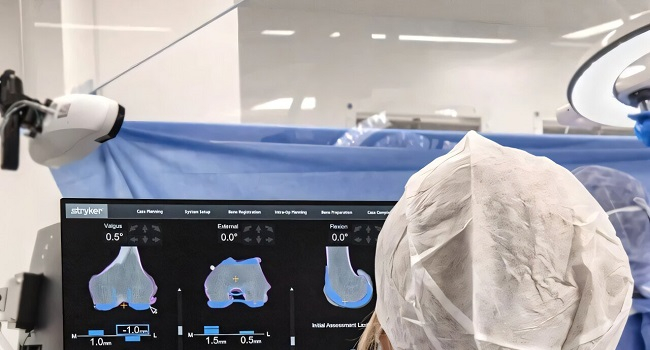
A robotic system helps surgeons position knee implants with significantly greater precision, but this does not provide patients with noticeable benefits during the first year after surgery compared with traditional surgery. This is the conclusion reached by the authors of the world’s largest randomized trial of robotic-assisted knee replacement. The study was published in the scientific journal The Lancet.
The RACER-Knee trial included 339 patients from 10 hospitals in the UK, with surgeries performed by 33 surgeons. Researchers compared conventional total knee replacement with procedures performed using the Stryker Mako robotic system.
Robotic systems are increasingly being used for knee replacement surgery. In the UK, they account for about 6% of knee replacement procedures, compared with 16% in the US and 42% in Australia. Their purpose is to help surgeons position implants with maximum precision and tailor the procedure to each patient’s individual anatomy.
However, one year after surgery, researchers found no significant difference between the two groups. Patients in both groups walked equally well, reported comparable levels of pain and had similar perceptions of their artificial joints in everyday life.
The main measure of effectiveness was the so-called Forgotten Joint Score, a scale that assesses how much a person notices the presence of an artificial joint during normal daily activities. After 12 months, the results were virtually identical in both groups.
There were also no significant differences in other measures, including pain during the first three months and at one year after surgery, pain while in hospital, or the need for revision surgery.
At the same time, robotic surgery was indeed more precise. The system allows surgeons to adjust the angle and depth of bone cuts with a high degree of accuracy, potentially enabling them to position the implant according to the individual patient’s anatomy.
The safety of robotic procedures was also comparable to that of conventional surgery, with researchers finding no increased risk of serious complications.
The drawbacks were higher costs and longer operating times. On average, robotic knee replacement took 10.5 minutes longer and cost approximately $1,300 more.
However, the researchers do not view the findings as a verdict against robotic surgery. They suggest that the high precision offered by robotic systems could prove particularly valuable if doctors become better at determining the optimal implant position for each individual patient.
Follow NEWS.am Medicine on Facebook and Twitter

- Video



- Event calendar
- Archive
- Most read
month
week
day
- The 2026 Nobel Prize in Physiology or Medicine Recognized a Sequence of Discoveries 1410
- Study: Suicidal Ideation Among US Teens Began Rising Sharply After Nearly Two Decades of Decline 807
- More Than 1,600 New Breast Cancer Cases Are Diagnosed in Armenia Every Year 694
- Scientists Discover New Mechanism Linking Biological Clocks, Cold, and Fat Metabolism 681
- Sugar Exposure During the First 1,000 Days of Life Increases the Risk of Anxiety in Adulthood 678
- Study: The Way a Person Speaks May Reveal Early Signs of Brain Aging 664
- Dreaming: The more difficult the day, the more fear and anxiety appear in dreams 662
- NatCom: Losing belly fat slowed brain aging and protected memory 612
- Study: One in Eight Cancer Cases Worldwide Is Linked to Preventable Infections 603
- Food & Function: Daily Consumption of 40 Grams of Walnuts Linked to Improved Overall Mood 602
- Cell: Vitamin D May Reduce Intestinal Inflammation 592
- Nature: AI Effectively Motivates Patients to Get Vaccinated 576
- CanRes: The rate at which mutations accumulate in cells may determine cancer risk 567
- Nobel Prize in Physiology or Medicine Awarded for Optogenetics 558
- AJRCCM: Household exposure to vaping may increase the risk of asthma exacerbations in children 494
- Find us on Facebook
- Poll