


- Latest news▼
-
20:40, November 6 Dietitians Name a Heart-Healthy Alternative to Red Meat

-
18:47, November 6 JAHA: Avocados and Mangoes Improved a Measure of Blood Vessel Function

-
16:39, November 6 AJA: Tight Underwear Linked to Impaired Sperm Motility and Morphology

-
14:44, November 6 Nature Communications: Vibration Changed Protein Markers in 29 Volunteers
-
12:32, November 6 Frontiers: Crossed Brain Connections May Be an Evolutionary Legacy of Ancient Vision
-
10:37, November 6 WHO: One in Four Adolescents Worldwide Does Not Engage in Physical Activity Even One Hour a Week

-
08:41, November 6 Why Do Different Mutations Lead to Autism? Scientists Identify a Common Mechanism

-
22:48, November 5 Science Advances: Brain Activity May Predict Alzheimer's Disease Years Before Symptoms Appear

-
20:31, November 5 Shockwave Therapy for Pain: Researchers Evaluate Treatments for Frozen Shoulder

-
16:53, November 5 Natural Compound Triptolide Makes Cancer Cells More Vulnerable to Treatment
-
14:44, November 5 Ultra-Processed Foods Linked to Reward-System Response in Children

-
12:29, November 5 It's Not Just Sleep Duration: Bedtime May Also Affect Body Weight

-
10:42, November 5 The Number of People with Anorexia and Bulimia Could Reach 21.8 Million by 2050

-
08:36, November 5 Scientists Create Molecular Map of Breast Cancer, Uncovering Previously Unknown Tumor Subtypes

-
22:34, November 4 One Pill Instead of Two Medications: New Approach Improves Diabetes Control

All materials
Frontiers: Crossed Brain Connections May Be an Evolutionary Legacy of Ancient Vision
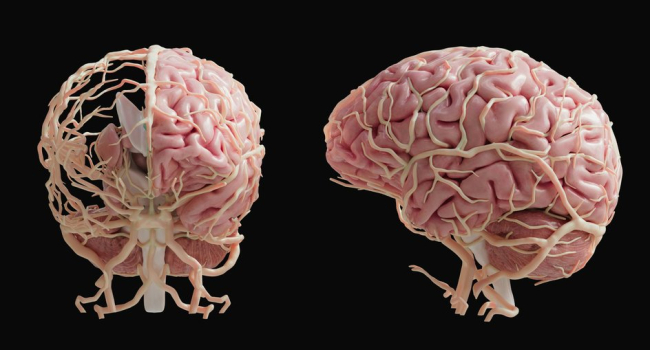
The fact that the right hemisphere of the brain is primarily connected to the left side of the body, while the left hemisphere is connected to the right side, may be explained by the evolutionary history of visual systems. This hypothesis was proposed by neuroscientists Martin Wessendorf and Daniel Wang of the University of Minnesota. Their study was published in the journal Frontiers in Neuroanatomy.
The starting point for their hypothesis was vision. Information from the right visual field is transmitted to the opposite side of the brain, while information from the left visual field is sent to the right hemisphere. This organization of visual pathways has been described in different vertebrates and is associated with an ancient visual center in the midbrain known as the optic tectum. In mammals, this structure is represented by the superior colliculi.
According to the researchers' hypothesis, the visual system's crossed organization provided the foundation around which evolution built new sensory and motor pathways. In the ancestors of mammals, many of these pathways already crossed the midline of the nervous system.
When the neocortex emerged, it was easier for it to integrate into the existing system while preserving the same pattern of connections. Completely reorganizing the ancient pathways would have required additional changes to the neural "wiring."
Crossed control may therefore have become established through the reuse of an existing neural architecture. The study offers an evolutionary explanation but does not establish the exact sequence of events in the brains of animals that lived hundreds of millions of years ago.
Follow NEWS.am Medicine on Facebook and Twitter

- Video




- Event calendar
- Archive
- Most read
month
week
day
- ABC News: Weight-Loss Drug Tested in the US Delivers More Than Twice the Results of Ozempic 725
- Cancer Causes & Control: Nearly Half of Americans with a History of Cancer Continue to Drink Alcohol 708
- Scientists Discover a Way to Reverse Heart Tissue Scarring Associated with Atrial Fibrillation 613
- Japan Performs World's First Stem Cell Transplant in a Patient with Parkinson's Disease 569
- Wildfire Smoke Exposure During Pregnancy Increases Autism Risk in Children 555
- Comfort Food: Scientists Find a Link Between Emotional Expectations and Eating Habits 547
- Blood Test May Reveal Prostate Cancer Risk Decades Before Diagnosis 529
- LRH Americas: Diet and Exercise Program Achieves Diabetes Remission in 54% of Patients 498
- What Happens After Using Psychedelics Outside Clinical Settings? Researchers Analyze 25,000 Support Calls 488
- IJP: Music Reduces Cortisol Levels More Than Twice as Much as Pink Noise 481
- Vegans Found to Have Less Diverse Gut Microbiomes Than Omnivores 477
- Nature: 1,260 Genetic Variants Have the Greatest Influence on Human Personality 426
- Nature Medicine: Cervical Cancer Deaths Projected to Rise by 39.3% by 2050 390
- University of Basel: Cold Showers Reduce the Number of Sick Days 389
- One Pill Instead of Two Medications: New Approach Improves Diabetes Control 383
- Find us on Facebook
- Poll