


- Latest news▼
-
23:22, September 7 How Can a Fly’s Brain Help Us Understand Human Behavior?
-
21:18, September 7 How the Pursuit of Perfect Sleep Can Keep You Awake

-
08:37, September 7 Weight-Loss Drug May Affect Aging: Scientists Discover an Unexpected Effect of Semaglutide
-
20:53, September 5 npj Science of Food: A Spoonful of Vegetable Oil Before a Carb-Rich Meal May Blunt Blood Sugar Spikes

-
13:26, September 5 In the U.S., Prescriptions for Obesity Drugs for Children Under 12 Increased 310-Fold in Seven Years

-
23:20, September 4 TCTV: New Drug Doubles Survival in Lung Cancer
-
11:10, September 4 SB: The Rule of Drinking Eight Glasses of Water a Day Has No Scientific Basis

-
08:46, September 4 JID: Popular Weight-Loss Drugs May Increase the Risk of Male Pattern Hair Loss by 7%

-
22:46, September 3 At-Home Urine Test Could Detect Most Bladder Cancer Cases, Study Finds

-
20:38, September 3 Alcohol-Related Cancer Deaths Double in the U.S. as the Number of Such Deaths Rises Over 33 Years

-
18:29, September 3 An Unexpected Paradox: Both Very Low and Very High Testosterone Levels May Be Equally Dangerous for the Heart

-
16:11, September 3 The Independent: Aging Is the Main Risk Factor for Cancer

-
14:13, September 3 CC: Age-Related Changes in Memory May Begin as Early as 50

-
08:34, September 3 Scientists Find Who May Benefit More from Coffee in Terms of Parkinson’s Disease Risk

-
23:37, September 2 LDE: Popular Diabetes Drugs Linked to Risk of a Dangerous Complication in Certain Patients

All materials
COVID-19 may enhance the breathing response after awakening during sleep
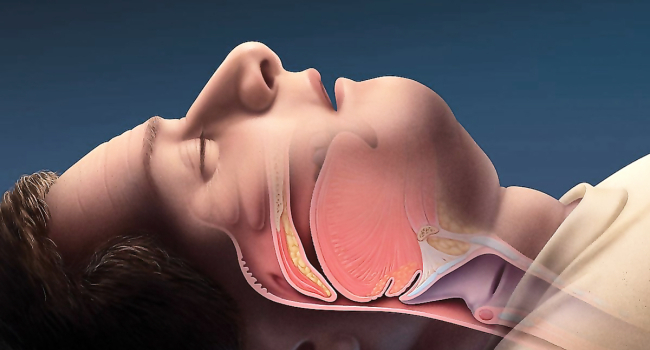
Having had COVID-19 does not appear to cause significant changes in the main physiological mechanisms underlying obstructive sleep apnea. However, researchers identified one notable difference: after brief awakenings, people who had previously had COVID-19 showed a stronger increase in breathing.
The study was conducted by researchers at Koç University in Turkey in collaboration with colleagues from the United States. The findings were published in the scientific journal Journal of Clinical Medicine.
Obstructive sleep apnea occurs when the upper airways repeatedly narrow or become completely blocked during sleep, interrupting breathing and reducing sleep quality.
Several physiological mechanisms influence the severity of the condition, including the tendency of the airways to collapse, the respiratory system’s ability to respond to changes in oxygen and carbon dioxide levels, the brain’s readiness to awaken when breathing is disrupted, and the ability of the upper airway muscles to keep the airways open.
The researchers set out to determine whether a previous coronavirus infection could alter these mechanisms. They compared 60 people with a history of COVID-19 with 60 participants in a control group. The groups were matched for age, sex, body mass index and the presence of sleep apnea.
Participants underwent overnight polysomnography, during which various sleep and breathing parameters were recorded.
For most measures, the researchers found no differences between the groups. A history of COVID-19 was not associated with changes in upper airway collapsibility, the stability of respiratory control, the arousal threshold or the ability of the airway muscles to compensate for narrowing.
However, one difference did emerge. After brief awakenings, participants who had previously had COVID-19 showed a more pronounced ventilatory response — their breathing increased more strongly than that of participants without a history of infection.
It is not yet clear how clinically important this difference may be. In theory, an enhanced breathing response could affect the way sleep apnea develops or influence the effectiveness of certain treatments, but this will need to be investigated in future studies.
Follow NEWS.am Medicine on Facebook and Twitter





- Most read
month
week
day
- Alcohol-Related Cancer Deaths Double in the U.S. as the Number of Such Deaths Rises Over 33 Years 942
- At-Home Urine Test Could Detect Most Bladder Cancer Cases, Study Finds 903
- JID: Popular Weight-Loss Drugs May Increase the Risk of Male Pattern Hair Loss by 7% 216
- npj Science of Food: A Spoonful of Vegetable Oil Before a Carb-Rich Meal May Blunt Blood Sugar Spikes 216
- How the Pursuit of Perfect Sleep Can Keep You Awake 211
- In the U.S., Prescriptions for Obesity Drugs for Children Under 12 Increased 310-Fold in Seven Years 209
- SB: The Rule of Drinking Eight Glasses of Water a Day Has No Scientific Basis 207
- TCTV: New Drug Doubles Survival in Lung Cancer 198
- Weight-Loss Drug May Affect Aging: Scientists Discover an Unexpected Effect of Semaglutide 196
- How Can a Fly’s Brain Help Us Understand Human Behavior? 183
- Find us on Facebook
- Poll