


- Latest news▼
-
10:55, October 22 LSD does more than disrupt brain rhythms: It speeds them up and increases signal complexity

-
23:27, October 21 Nine-year study links changing loneliness patterns to increased heart disease risk

-
15:23, October 21 Tea May Benefit Heart Health — but Drinking It Scalding Hot Could Be Risky

-
13:25, October 21 Why Some People Avoid Alzheimer’s Despite Carrying a High-Risk Gene

-
10:47, October 20 SciRep: Walking More Than 8,000 Steps a Day Is Linked to Better Attention

-
08:32, October 20 Nature: AI Links Brown Fat to Heart, Vascular, and Mental Health

-
18:51, October 19 Oxytocin May Make Childhood Memories More Negative in People with Relationship Anxiety

-
16:48, October 19 Polyphenols in coffee and fruit linked to lower risk of telomere shortening

-
14:50, October 19 Anesthesiology: Noise-Canceling Headphones Reduce the Risk of Nausea After Anesthesia

-
12:44, October 19 PLOS: Yogurt and Canned Beans May Help Reduce the Risk of Colorectal Cancer

-
10:39, October 19 AJOG: Birth Weight Is Linked to Later Performance in Math and Reading

-
08:41, October 19 Postoperative Monitoring Apps Reduced Hospital Readmissions by 15%

-
23:12, October 18 Noise-Canceling Headphones Reduced the Risk of Nausea After Gynecological Surgery by 32%

-
18:17, October 18 HealthDay: Strength Training After 60 Helps Strengthen Bones and Maintain Brain Health

-
12:43, October 18 Scientists Unveil Scanner That Captures Whole-Body Images in Just 60 Seconds
All materials
Over 90% Accuracy: FDA Clears New Blood Test for Early Alzheimer’s Detection
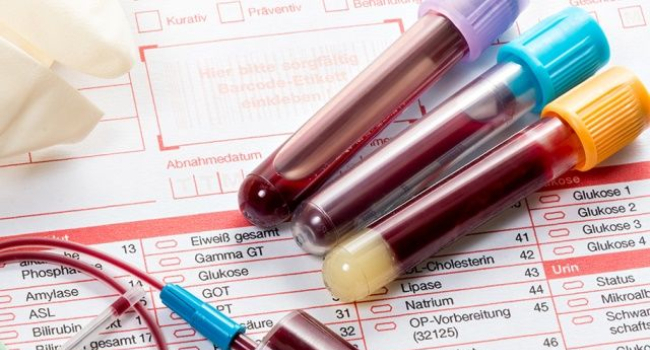
The U.S. Food and Drug Administration (FDA) has cleared a new blood test designed to detect Alzheimer’s disease at an early stage, according to News Medical Live Sciences.
The PrecivityAD2 test was developed and validated by C2N Diagnostics, a startup founded by researchers from Washington University School of Medicine in St. Louis. The test is based on technology originally developed by scientists at the university and is designed to identify amyloid plaques in the brain, one of the key biological hallmarks of Alzheimer’s disease.
Unlike some other FDA-cleared blood tests that rely on immunoassay techniques, PrecivityAD2 uses high-precision mass spectrometry to quantitatively measure several Alzheimer’s-related biomarkers.
A blood test is considerably less invasive than cerebrospinal fluid analysis and could make it easier to evaluate patients experiencing cognitive problems. Early diagnosis is becoming increasingly important as treatments capable of slowing Alzheimer’s progression are now available and tend to work more effectively when started at an earlier stage.
The technology behind PrecivityAD2 was initially developed by a team at Washington University School of Medicine led by neurologists Randall Bateman and David Holtzman. In 2007, the researchers and their colleagues co-founded C2N Diagnostics, which obtained exclusive commercial rights to patented technologies developed in their laboratories.
PrecivityAD2 measures the ratio of two forms of amyloid-beta, Aβ42 and Aβ40, along with two forms of tau protein, p-tau217 and total tau217. These biomarkers are associated with the pathological changes that occur in the brain in Alzheimer’s disease.
Previous studies have shown that the test can identify amyloid pathology with more than 90% accuracy and performs comparably to more invasive approaches, including cerebrospinal fluid testing and brain imaging, even in people with mild cognitive impairment.
The FDA clearance expands the test’s potential role in clinical practice. Physicians had already been able to order PrecivityAD2 for patients with mild cognitive symptoms, but the new regulatory decision could make it easier for more health care institutions to adopt and promote the test under FDA-cleared use. It may also facilitate insurance coverage, potentially making the analysis more accessible to patients.
Research conducted by Bateman and Holtzman has also contributed to the development of methods for studying how amyloid-beta is produced and cleared from the brain and cerebrospinal fluid. Their work helped establish the scientific foundation for today’s blood-based biomarkers for Alzheimer’s disease.
Follow NEWS.am Medicine on Facebook and Twitter

- Video



- Event calendar
- Archive
- Most read
month
week
day
- Cardiologists Urge Inclusion of Physical Exercise in Heart Disease Prevention 549
- Frontiers: Poor Sleep May Increase the Risk of Breast Cancer by 30% 537
- Stem Cell Reports: Nicotine Exposure During Pregnancy Permanently Weakens Offspring’s Immune Systems 533
- Nature: Researchers Link Faster Wound Healing to Female Sex Hormones 510
- BJN: Asparagus extract helps improve sleep and reduce anxiety 474
- Why Some People Avoid Alzheimer’s Despite Carrying a High-Risk Gene 297
- Nine-year study links changing loneliness patterns to increased heart disease risk 295
- LSD does more than disrupt brain rhythms: It speeds them up and increases signal complexity 285
- Tea May Benefit Heart Health — but Drinking It Scalding Hot Could Be Risky 276
- PLOS: Yogurt and Canned Beans May Help Reduce the Risk of Colorectal Cancer 256
- Noise-Canceling Headphones Reduced the Risk of Nausea After Gynecological Surgery by 32% 193
- AJOG: Birth Weight Is Linked to Later Performance in Math and Reading 185
- SciRep: Walking More Than 8,000 Steps a Day Is Linked to Better Attention 168
- Anesthesiology: Noise-Canceling Headphones Reduce the Risk of Nausea After Anesthesia 168
- Polyphenols in coffee and fruit linked to lower risk of telomere shortening 149
- Find us on Facebook
- Poll