


- Latest news▼
-
22:21, September 24 When Visual Signals Conflict, the Brain Works to Reach a Consensus

-
20:19, September 24 Coffee Can Disrupt Deep Sleep Even Without Keeping You Awake

-
18:15, September 24 GLP-1 Drugs Linked to Nutritional Deficiencies in Nearly 1 in 6 Children

-
16:11, September 24 Rare Pregnancy Infections Linked to Higher Risk of Autism

-
14:06, September 24 More REM Sleep Linked to Lower Risk of 83 Diseases

-
11:58, September 24 Flea-Borne Typhus Outbreak in Los Angeles Hospitalizes Six

-
08:49, September 24 IJO: Higher Body Weight in Adolescence Linked to Faster Biological Aging

-
22:51, September 23 JAMA: Congenital Infections Linked to Increased Risk of Intellectual Disability

-
20:41, September 23 NEG: 71% of People with Pulmonary Nodules Are Non-Smokers
-
18:50, September 23 AIM: Young People Are Drinking Less Alcohol, While Older Adults Are Drinking More Heavily

-
16:42, September 23 Nature: Scientists Compare Changes in the Female Brain at Three Major Stages of Life
-
14:30, September 23 Brain scans suggest long COVID may damage dopamine neurons

-
12:32, September 23 Flu Vaccination Has Started in Armenia: Foreign Nationals Can Also Get Vaccinated Free of Charge

-
10:37, September 23 Scientists Create a Battery That Can Be Swallowed: It Powers a Medical Device and Then Dissolves

-
08:35, September 23 Bone glue tested in a human for the first time: Material gradually replaced by new tissue

All materials
Why do we crave unhealthy food? Scientists discovered a process that leads to snacking
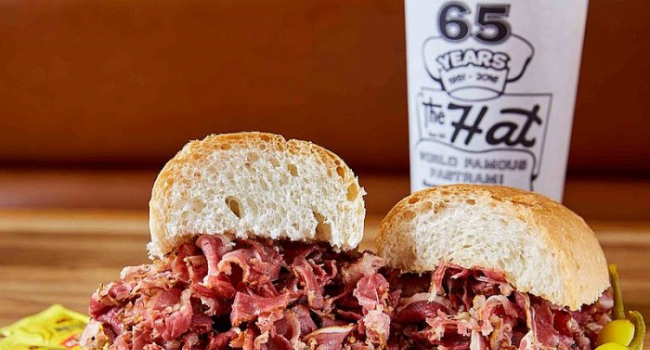
We know that certain types of foods are bad for us. And at the same time quite often we crave for high-calorie food like it is our only way to survive. Now scientists from the University of Waterloo in Canada have determined that it might have something to do with our brain. Suppression of the dorsolateral prefrontal cortex e brain region, responsible for self-control, leads to craving of unhealthy food.
We kind of know that when we lose control, we want to eat. And not just food – we are craving something super unhealthy. Scientists decided to see what is happening in our brain during such moments and so they used a technique called transcranial magnetic stimulation to temporarily suppress the dorsolateral prefrontal cortex of some participants. This bizarre technique is actually perfectly harmless, but allows seeing how human behaviour changes in such situations. And scientists found that started paying more attention to appealing images of high-calorie snacks. They found them more attractive and immediately wanted to eat this kind of food.
Of course, sometimes we all crave some foods and transcranial magnetic stimulation is not needed for that. But in this case participants reported that their urges to eat unhealthy foods were way higher than usual. Furthermore, scientists chose 28 young adult females for this study – all of them had frequent cravings for high-calorie foods, but were healthy. Scientists even used a placebo simulation on a control group and found that 89 % of participants consumed more high-calorie food after real simulation than after a placebo simulation. But of course, in real life, when we are craving some food, no one is stimulating our brain and measuring its activity. So what is happening?
Our brain is always stimulated by the things we do and transcranial magnetic stimulation is just a controlled way to replicate that in a lab. Cassandra Lowe, lead author of the study, explained: “Several lifestyle factors affect the function of the dorsolateral prefrontal cortex. For example, aerobic exercise has been shown to enhance it, while lack of sleep and stress can impair it – so there may be a link between these lifestyle factors and overeating via their impacts on the brain”. In other words, if you will exercise, you will reduce your cravings. And if you are under stress a lot or do not sleep well enough, you may experience stronger cravings for high-calorie food.
So it all comes back to your lifestyle. While occasional instances may not do you too much harm, frequent snacking is bad for you. However, even if you feel like you need an unhealthy snack, you really don’t – eat some fruit.
Follow NEWS.am Medicine on Facebook and Twitter





- Most read
month
week
day
- Study: Steps reduce the risk of early death, but walking speed also matters 770
- NBC News: U.S. surgeons successfully separate conjoined twin girls joined at the head 679
- Study: Light pollution during nighttime sleep negatively affects the human heart 648
- The Lancet: Wildfire smoke may be more harmful than pollution from urban traffic 583
- Frontiers in Physiology: Chocolate aroma helped increase exercise volume 565
- DNA changes shape after injury: scientists identify a mechanism essential for tissue regeneration 535
- Florida Records One of the Largest Dengue Outbreaks in Decades: One Person Has Died 491
- What Happens to the Body After a Cup of Coffee: Seven Unexpected Effects 490
- Springer Nature: Scientists show that boys and girls perceive the world differently from the first hours of life 487
- A&D: Residents of Two Amazonian Indigenous Communities Showed Unusually Low Rates of Dementia 450
- JAMA: High Salivary Cortisol Levels Are Associated With Memory Decline 411
- After 30 Years of Research, First Drug Developed for Rare Progressive Brain Disease 407
- PLOS Medicine: More REM Sleep Is Associated With a Lower Risk of 83 Diseases 399
- F&F: Green oat extract may protect eyes from dryness caused by sleep deprivation 395
- Stopping GLP-1 drugs may quickly reduce their heart-protective benefits 390
- Find us on Facebook
- Poll